

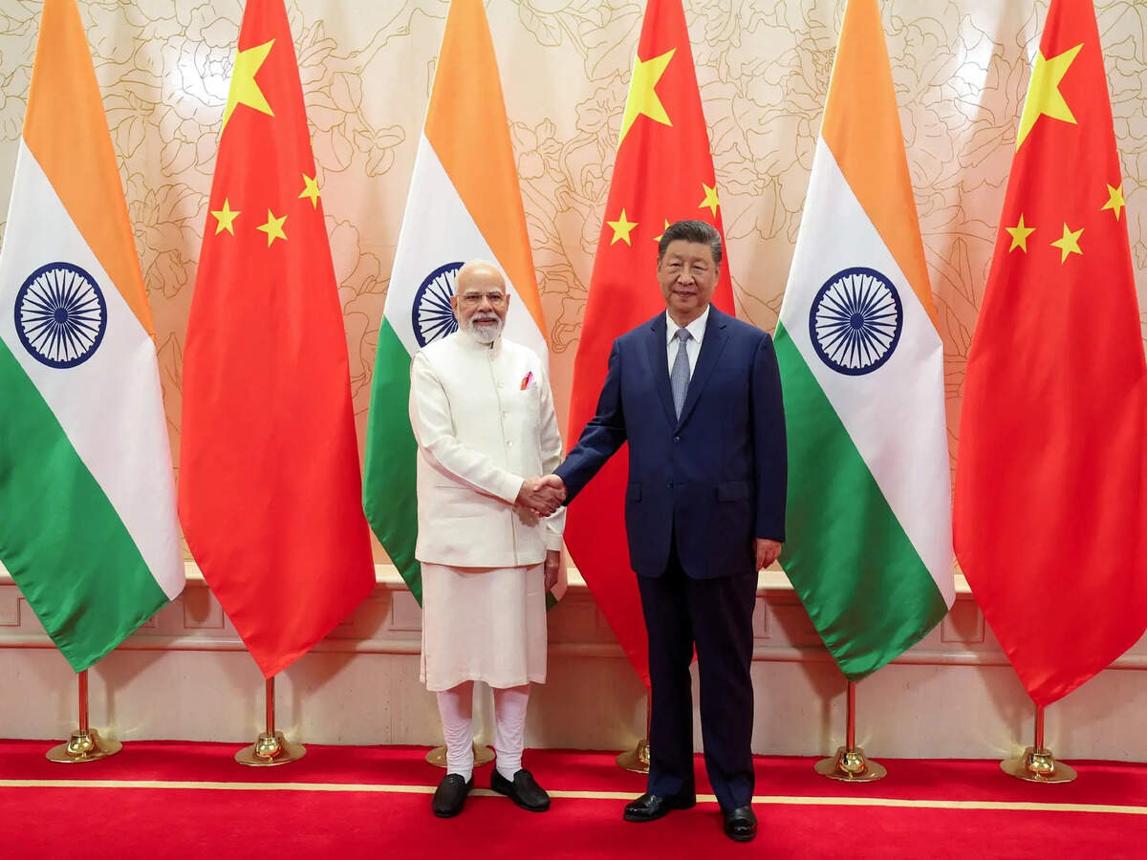
The second major India-related story dominating international and Indian coverage is Chinese President Xi Jinping’s expected visit to New Delhi for the BRICS summit, scheduled for September 12–13.
The visit is significant because Xi’s expected trip would be his first visit to India since 2019, before the devastating 2020 India-China border confrontation.
The Financial Times described the expected Modi-Xi engagement as an attempt by the two countries to rebuild relations between the world’s two most populous nations.
India is preparing to host the 18th BRICS Leaders’ Summit at Bharat Mandapam in New Delhi, with Russia’s Vladimir Putin and China’s Xi Jinping among the major leaders expected to attend. India Today reported that Delhi has been placed under a major security grid ahead of the summit, including preparations concerning VVIP movement and drone threats.
Why is Xi’s visit so important?
The significance goes far beyond a diplomatic visit.
India-China relations deteriorated dramatically after the 2020 Galwan clashes, in which at least 20 Indian soldiers were killed. The confrontation produced a prolonged military standoff along the Line of Actual Control and severely damaged political and economic relations.
Since then, New Delhi and Beijing have gradually attempted to stabilise relations.
There have been steps toward disengagement, restoration of patrolling arrangements and the reopening of some channels of communication.
But the relationship is far from completely normal.
A current assessment cited by NewKerala/ANI says disengagement and patrolling have resumed in parts of the border area, but de-escalation and troop de-induction remain incomplete.
That makes any Modi-Xi meeting particularly important.
The border issue remains central
India and China have held numerous rounds of military-level talks over the border.
The Indian Express reported that the two countries have conducted 23 rounds of Corps Commander-level meetings at the Chushul-Moldo border meeting point in eastern Ladakh.
The current diplomatic process is therefore not simply about improving trade.
India wants greater stability along the LAC while simultaneously trying to manage one of its most important economic relationships.
The key question is whether the Modi-Xi engagement can move relations from military de-escalation toward genuine strategic normalisation.
Trade is another major issue
Economic relations are becoming increasingly important.
The Financial Times reported that bilateral India-China trade reached approximately $155 billion last year, with trade rising another 23% during the first seven months of this year.
But there is a major imbalance.
India continues to run a huge trade deficit with China.
Ahead of the BRICS summit, Indian officials are reportedly preparing to raise concerns over Chinese restrictions affecting Indian companies and imports of critical technologies.
The Indian Express reported that India could flag problems involving Chinese Customs restrictions and investment barriers, particularly concerning high-tech imports.
The concerns extend to strategically important sectors such as:
- renewable energy;
- batteries;
- electronics;
- automobiles;
- critical technologies;
- power transmission;
- rare-earth-related supply chains.
The Indian Express reported that Chinese restrictions on technologies and components have become an important concern for Indian industry ahead of the summit.
Why the global context makes the visit even more important
The Modi-Xi meeting is happening at an unusually complicated geopolitical moment.
The United States is deeply involved in the escalating West Asia crisis, while India is attempting to maintain strategic relationships with Washington, Moscow, Beijing and other major powers simultaneously.
The BRICS summit consequently provides India with a platform to demonstrate what is often described as strategic autonomy.
The Times of India reported that BRICS countries collectively represent around 49% of the world’s population, 40% of global GDP and 26% of international trade.
For Beijing, Xi’s India visit also carries significance.
The Financial Times noted that the trip comes after years of cautious diplomacy aimed at repairing relations damaged by the 2020 border clashes. It also comes as global geopolitical tensions are forcing countries to reconsider their strategic alignments.
What should India watch for?
The most important question is not simply whether Modi and Xi shake hands.
The real indicators will be:
1. Border: Will there be further progress toward de-escalation and troop reduction?
2. Trade: Will India secure greater access to Chinese markets?
3. Technology: Will Beijing ease restrictions on critical technology and components?
4. Investment: Will restrictions affecting Indian businesses in China be reduced?
5. Flights and people-to-people ties: Will normal connectivity continue to expand?
6. Strategic messaging: Will both governments publicly signal that they want a stable relationship despite unresolved disputes?
Experts caution against expecting a dramatic breakthrough from a single meeting. NewKerala/ANI quoted China expert Srikanth Kondapalli as saying the relationship currently represents partial normalisation rather than comprehensive normalisation.