

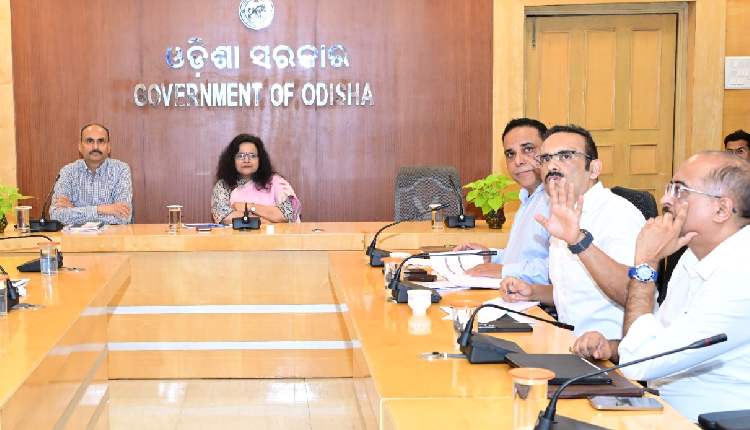
With a focus on decreasing demand for narcotics, intensifying law enforcement against drug trafficking, bolstering rehabilitation, and expanding public awareness, Odisha Chief Secretary Anu Garg reviewed the implementation of the Nasha Mukt Bharat Abhiyan (NMBA) in the state. The review meeting, organized by the Special Task Force (STF) of the CID-Crime Branch at Lok Seva Bhawan, covered coordinated activities between the Odisha Police, district administrations, and many departments to prevent drug misuse, help with treatment, rehabilitation, and social reintegration of those suffering from substance use.
The meeting was informed by STF Inspector General Himanshu Lal regarding the increased efforts to stop the narcotics trade after the seventh State Narco-Coordination Meeting, which took place in June. According to authorities, raids and awareness campaigns have been stepped up in blocks, gram panchayats, and villages in six identified narcotics hotspots, including Malkangiri, Koraput, Rayagada, Kandhamal, Gajapati, and Boudh. Authorities are also collaborating with Forest and Revenue officers as well as Panchayati Raj representatives to encourage alternative vocations in places where ganja cultivation is common.
It was stated during the meeting that, in order to improve the caliber of instances, enforcement against inter-state narcotics networks has been beefed up, with the creation of new investigation checklists and range-level task forces. Additionally, coordination with the Narcotics Control Bureau and neighboring states has improved. District-level Narcotics Coordination Committees are being strengthened, and an interstate video conference involving West Bengal, Tamil Nadu, Andhra Pradesh, and the NCB was conducted on September 10.
Under initiatives related to the National Action Plan for Drug Demand Reduction (NAPDDR), 41 integrated rehabilitation centres are presently operating in Odisha on the rehabilitation front. In addition, the process of establishing five additional DISHA rehabilitation centres is currently underway, and there are currently 11 such centres operating in ten districts. The leftover 16 districts will be phased in.
According to officials, rehabilitation efforts are being tied to opportunities for skill development and livelihood, such as tailoring, handicrafts, incense-stick production, and digital literacy. Through agriculture, horticulture, goat rearing, poultry, pisciculture, plantation, and skill development activities, Garg emphasized the importance of developing alternate livelihood possibilities for those engaged in ganja growing or the narcotics trade.