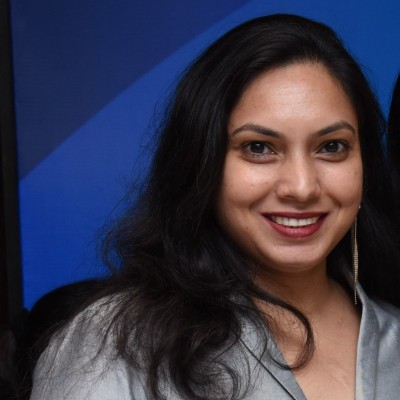
1. You come from a Chemical Engineering background and have worked in technology, apparel and branding before entering smart textiles. At what point did you see an opportunity where all these experiences could come together and how did that become doodledry?
My Chemical Engineering background taught me to understand materials, processes, formulations, performance, and how small changes at a technical level can create a meaningful difference in the final product. My experience in technology taught me to think about systems, innovation, scalability, and how products can solve real user problems. Apparel taught me about fabric behaviour, fit, comfort, manufacturing, and the way people actually use clothing. Branding taught me how to understand customers, communicate value, and build trust around a product. The opportunity became clear when I realised that my different experiences were not separate chapters; they were pieces of the same problem when I became a mother and had to take care of my baby’s healthy growth without compromising with my career goals.
Over the years, I saw one of the reasons a woman compromises or quits her career is when she embraces motherhood and decides to be a hands-on mother, full-time. I saw an opportunity to bring material science and functional technology into an intimate, everyday product without compromising softness, safety, comfort, or aesthetics by creating technology that cares for children while making everyday parenting simpler.
Today, doodledry sits at the intersection of science, technology, apparel, parenting, and brand experience.
2. Every successful product usually begins with a problem. What was the everyday parenting problem you personally noticed that made you think, “Why doesn’t something like this already exist?”
The problem came from my own experience as a mother of two.
I remember how much of early parenthood revolved around managing clothes drool, milk, food, sweat, spills, and unexpected diaper leaks. A baby could become uncomfortable or need a change within minutes, which meant more laundry, more drying, and constant vigilance. Instead of spending that time being fully present with my babies, I was often thinking about the next change of clothes, the next wash cycle, or whether I had packed enough spare outfits.
I was also apprehensive about going out to functions, parties, malls, or family gatherings. If my baby wet or soiled their clothes, finding a clean changing room was not always easy. I would carry multiple spare outfits and still worry about accidents, stains, discomfort, and how other people might react. That anxiety sometimes made ordinary outings feel difficult and made me hesitate before leaving home. I was used to carrying laptop bags and not diaper-bags!!
I often wondered: Why didn’t children’s clothing already help solve some of this? Why couldn’t everyday babywear be soft and comfortable, but also resist small spills, manage moisture, dry quickly, and reduce the urgency of every minor accident?
That question became deeply personal. I began imagining how much more quality time I could have spent cuddling, playing, travelling, or simply enjoying my babies if their clothes had been more practical. The goal was never to eliminate the need for changing or proper hygiene; it was to reduce unnecessary panic, discomfort, and repeated laundry caused by everyday messes.
This experience became the foundation for doodledry. Finally, one fine day, I set out to create clothing that combines comfort, safety, functionality, and smart textile technology so parents can feel more confident outside the home and spend less time managing mess.
doodledry was born from a mother’s frustration, which many mothers related to, but it is being built for families everywhere: technology that cares, so parents can spend more happy hours being present with their children, effortlessly.
3. For parents who are hearing about doodledry for the first time, what exactly happens when they put a doodledry garment on their child? What makes it different from an ordinary piece of kidswear?
Pasting some testimonials hear it from them directly:
Nalini – doodledry is a gift that every parent and caregiver should give to their babies and kids. I have already gifted five pieces and every parent has loved it. Soft fabric, amazing features and much more. I’m gonna buy one more
Priyabrata – Big thanks to doodledry for keeping our little champ Rishu comfy with this cool, water-repellent, moisture-wicking outfit
Anushka – Finally someone made clothes for children that also works for parents.
Radhika – After an entire evening of running around and playing, my girl was all comfy and full of smiles. Doodledry’s sweat absorbent and breathable fabric are just the right thing for active children.
Lavneeta – we did make her wear it and it was very comfortable. Our baby didn’t react in any uncomfortable way. She was normal. So I feel the product was good!
Rajesh – I am a repeat customer and keep gifting doodledry smart wear. The parents like the colour, features like absorbing moisture, repelling water are the favorites
Shamin – When they said that their outfits are anti-stain, I didn’t just believe them. My child tested it with ketchup, juice, chocolate and what not! What more could I have asked for!
4. Doodledry uses smart textiles and DWR technology to make children’s clothing mess-proof. Can you take us behind the product how does the technology work, and how did you move from an engineering idea to something a child can actually wear comfortably?
The idea behind doodledry was a simple engineering question: Could children’s clothing resist everyday problems like mess & stains while still feeling like soft, breathable cotton?
We use DWR durable water-repellent finish (prepared out of natural extracts a patented process) along with anti-stain and moisture-management properties. The finish helps liquids such as drool, milk, food, and small spills bead on the surface instead of immediately soaking into the fabric, giving parents time to wipe them away. It is designed to remain breathable and flexible, unlike a plastic-like barrier.
The tricky part was translating a technical textile concept into something a child could actually wear.
Our competing requirements were:
- Water and stain resistance without stiffness or a coated feel.
- Moisture management without losing softness or breathability.
- Performance finishes that remain effective through repeated washing.
- A comfortable fit that allows crawling, playing, stretching, and sleeping.
- Safe and carefully evaluated materials suitable for prolonged skin contact.
- Consistent quality when moving from laboratory samples to production.
The product had to pass the “child test” – Can the child move freely? Does the garment feel soft? Does it remain comfortable in warm weather? Can parents wash and reuse it easily?
That process taught us that innovation in children’s apparel is not about adding the maximum number of features. It is about achieving the right balance. Doodledry’s technology is successful only when the engineering becomes almost invisible: the child experiences comfort, while the parent notices fewer stains, fewer urgent changes, simpler cleaning, and a more practical everyday garment.
5. You call doodledry a preventive healthcare platform rather than simply a kidswear brand. That’s a fascinating shift. What does “preventive healthcare through clothing” actually mean, and where do you see this idea going?
We use “preventive healthcare through clothing” to describe a simple belief: “Prevention is better than cure”. We have grown-up with statements like; “Was your hands before eating”, “Change your clothes after coming back from the playground and wash your hands and feet”, “Change your clothes if it is wet”, and much more.
All these leads to prevention from infectious diseases caused through germs, viruses, etc. Children’s health is supported not only when they visit a doctor, but also through the comfort, hygiene, safety, and protection they experience every day and what if it is through a system that sticks 24×7 which is Clothing!
Doodledry began with Smart Wear to help reduce prolonged dampness, irritation, stains, and hygiene-related discomfort, common cold, while keeping the garment soft, breathable, and suitable for sensitive skin through its water repellency, moisture wicking, anti-stain protection, quick drying, and antimicrobial and antifungal performance.
The next layer is Smart Wearables: connected, child-friendly products that use sensors and IoT technology to support safety and early awareness. These will include features such as fall detection, location tracking, movement monitoring, and subject to clinical validation signals related to sleep, breathing, temperature, or other indicators of distress. Together, Smart Wear and Smart Wearables create a platform that combines textile science, wearable technology, and parental insight. Our focus is not to replace doctors or make unvalidated medical claims; it is to help parents notice potential concerns earlier and respond more quickly by making preventive care quiet, continuous, and non-intrusive.
6. When you’re designing something for babies and young children, comfort and safety cannot be compromised for technology. What were some of the biggest challenges you faced in making the fabric functional, skin-friendly, durable and sustainable at the same time?
When designing for babies and young children, the biggest challenge is not adding one performance feature—it is making several features work together without compromising the child’s comfort or safety, always. Few challenges that we overcame were; functionality with softness, skin safety, durability without creating unnecessary environmental impact and most importantly, manufacturing consistency.
My goal was to create a textile that could resist everyday mess while still feeling soft, light, flexible, and comfortable against delicate skin. This made me think about the entire product journey—from fibre and finishing to manufacturing, washing, reuse, and end-of-life and work closely with technical partners and manufacturers, test multiple iterations, and refine the process.
7. You’ve applied for a patent for doodledry’s textile technology. What is the innovation behind that patent, and what did the journey from identifying the problem to developing something protectable teach you about innovation?
The innovation behind doodledry is our functional textile technology, which integrates multiple performance properties into children’s clothing while retaining the softness, breathability, stretch, and comfort parents expect from cotton. Our garments combine water repellency, moisture wicking, stain resistance, antimicrobial and antifungal properties, breathability, quick drying, and durability, a total of 17 functional features. The objective is not to create a plastic-like barrier, but to engineer a comfortable textile that helps keep moisture and common messes from remaining against the child’s skin. doodledry uses natural cotton, Bluesign-approved textiles, and finishes designed to withstand repeated washing, up to 80 washes.
The patent application represents the protectable method and technology developed to bring these functions together in a everyday wear for the kids category.
8. You had already built The Signature Attire before doodledry. What did your first entrepreneurial journey teach you that you consciously brought into building doodledry and what did you have to completely unlearn?
Building The Signature Attire before doodledry gave me the foundation—and the humility—to build a stronger company the second time around. The first journey taught me the importance of deep customer understanding. I also carried forward an appreciation for product quality and execution. The Signature Attire also taught me that building a brand requires resilience. There are always unexpected challenges supplier issues, changing customer preferences, cash-flow pressures, and operational setbacks. I had to unlearn the belief that a founder must personally control every decision and the tendency to build from instinct alone. doodledry is being built with a sharper understanding of the customer, a more focused product proposition, and a stronger connection between commercial success and positive impact.
At doodledry, we pay greater attention to all the details from the beginning textiles, quality, inspection, certifications, testing, packaging, inventory, customer feedback, the need of a certain product before developing it, create systems, delegate responsibly, and bring in people with complementary strengths. In short, The Signature Attire taught me how to start and doodledry is teaching me how to build with greater discipline, openness, and purpose.
9. Doodledry sits at an interesting intersection of parenting, fashion, technology and sustainability. As you interact with parents and see how they respond to the product, what have you learned about what today’s parents actually want from children’s clothing?
The more we talk to parents and collect feedback, the more we understand that they want clothes to do more other than looking good or their children appearing cute. They are looking for products that make everyday parenting easier clothing that is comfortable, safe, durable, easy to wash, practical for active children, and thoughtfully designed.
Parents notice fabric softness, breathability, fit, seams, waistbands, labels, and whether their child is willing to wear the garment for long hours. A product may be sustainable, but if it is uncomfortable or difficult to use, parents will not repurchase it.
Parents value functionality over decoration. They want clothes that support play, movement, travel, school, and daily routines. Features that simplify dressing, improve comfort, reduce stains, withstand frequent washing, or extend the garment’s useful life are often more meaningful than purely decorative elements.
To zero down, we have learned that parents increasingly want better choices, not just eco-friendly claims.
10. If we look five years ahead, what do you want doodledry to become? Do you imagine it growing from mess-proof kidswear into a much larger ecosystem of smart textiles and preventive care for children?
There is a well-developed roadmap in front of us and all our ongoing work leads to that. Doodledry will have its own branded stores while being a part of major retail chains and hospital stores, catering to babies and kids. We will open up export channels and let the world enjoy parenting with a difference.
We are also working on our Smart Wearables (IOT) ready for early detections of certain disorders and more information on this can only be revealed later. And advancements of Technical Textiles like insect-repellent textiles are soon going to be launched in the platform.
Anything and everything that accounts for the health and hygiene of a child is thought-through and everything that leads to effortless parenting will be implemented.