

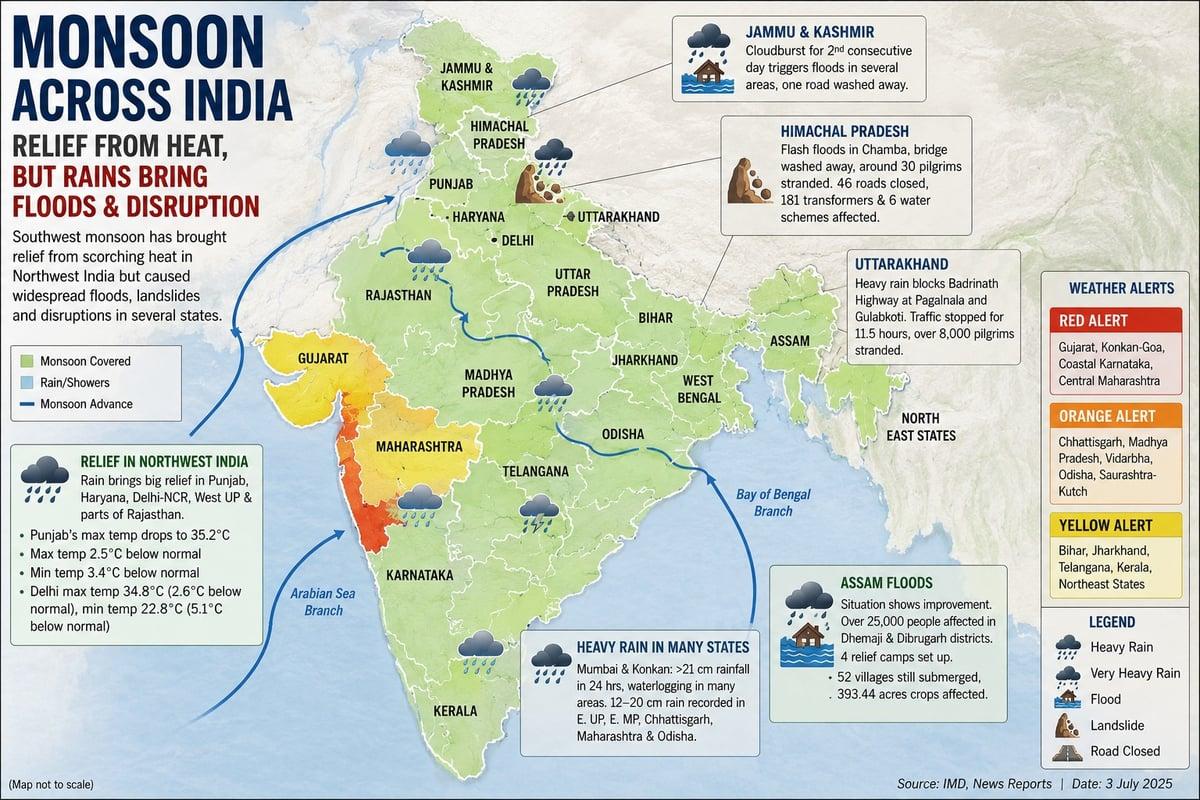
India’s southwest monsoon has begun its withdrawal from parts of western Rajasthan, marking the beginning of the seasonal retreat even as a substantial portion of the country continues to face rainfall deficits.
The India Meteorological Department said the monsoon withdrew from parts of west Rajasthan on September 19, broadly close to the normal withdrawal date of September 17.
The bigger concern is the uneven distribution of rainfall. As of September 19, around 43% of India’s geographical area remained rain-deficient, while cumulative rainfall across the country was about 15% below normal, at 695.6 mm.
The deficit has not been uniform. Several northeastern and southern states have experienced significant shortfalls, while some regions have simultaneously faced episodes of heavy rainfall.
The weather situation is expected to remain active despite the beginning of monsoon withdrawal. A low-pressure system over the North Andaman Sea is expected to strengthen and move towards the Odisha-Andhra Pradesh coast, with rainfall expected across parts of eastern India.
Odisha, West Bengal, Jharkhand, Chhattisgarh, Sikkim and coastal Andhra Pradesh are among the areas expected to receive moderate to heavy rainfall during the coming days.
This creates a complicated picture for India’s agricultural economy. Rainfall shortages can affect crop yields and water availability, while concentrated episodes of intense rain can cause flooding, crop damage and infrastructure disruption.
Maharashtra is also preparing a detailed review of drought conditions, with Deputy Chief Minister Devendra Fadnavis saying the state will begin the assessment within a week. The review is intended to identify areas facing serious rainfall and agricultural stress and determine potential relief measures.
The monsoon remains crucial to India’s rural economy because millions of farmers depend on seasonal rainfall for cultivation, particularly in regions without reliable irrigation.
With the withdrawal now beginning, attention will turn toward reservoir levels, winter crop preparation and the impact of rainfall distribution on agricultural production.
The end of the monsoon season does not mean the weather risk is over. India’s rainfall deficit, regional drought conditions and continuing heavy-rainfall systems could influence agriculture, water resources and food prices in the months ahead.