

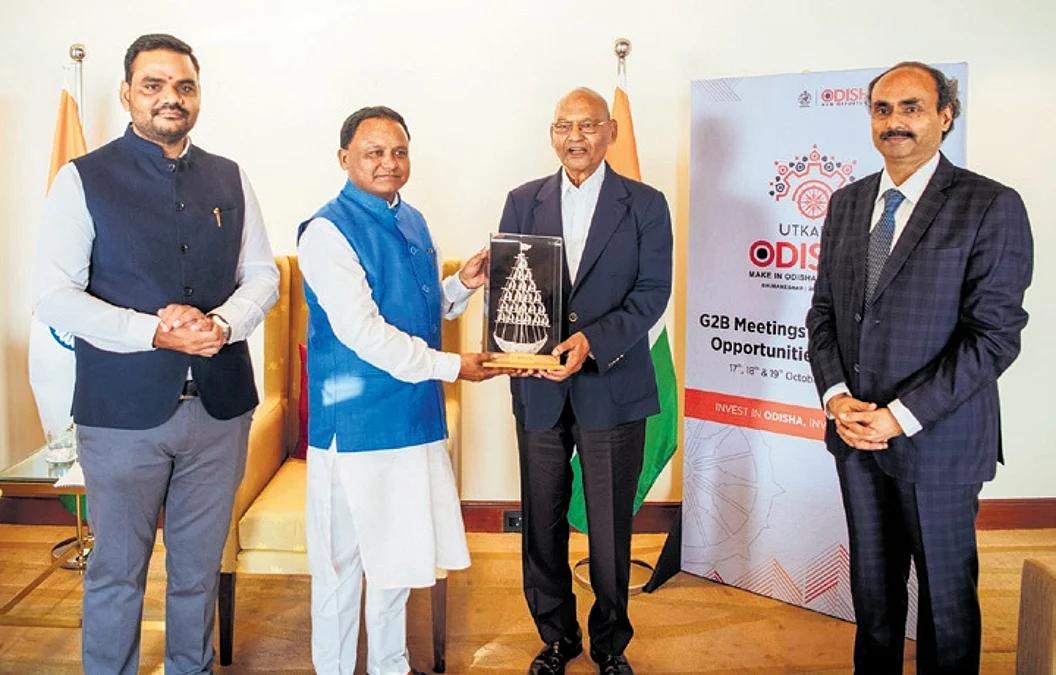
From Dhenkanal and Rayagada to Jharsuguda, Vedanta’s proposed expansion could deepen Odisha’s aluminium value chain, accelerate downstream manufacturing and create a new industrial ecosystem around metals, MSMEs and employment.
Odisha’s industrial growth story is entering another significant phase as Vedanta Group advances investment proposals worth around ₹1 lakh crore in the state, placing aluminium, alumina refining and downstream manufacturing at the centre of its expansion strategy.
Vedanta Group Chairman Anil Agarwal, during discussions with Odisha Chief Minister Mohan Charan Majhi, highlighted the company’s plans for large-scale industrial expansion and sought faster facilitation of its proposed projects.
At the heart of the plan are a proposed 3 million tonnes per annum (MTPA) aluminium smelter in Dhenkanal, a 6 MTPA alumina refinery in Rayagada, and further expansion of Vedanta’s existing aluminium operations at Jharsuguda.
The scale of the investment is striking. But its significance extends beyond the headline figure.
If implemented as envisioned, the projects could strengthen an integrated aluminium value chain connecting Odisha’s mineral resources with refining, primary metal production, downstream manufacturing, MSMEs, logistics, engineering and employment.
₹1 Lakh Crore Industrial Push
Vedanta’s proposed expansion represents another major corporate investment push in Odisha, a state that has steadily emerged as one of India’s most important destinations for metals, mining and mineral-based manufacturing.
The proposed 3 MTPA aluminium smelter at Dhenkanal would substantially expand Vedanta’s production footprint in the state. The company has also proposed a 6 MTPA alumina refinery at Rayagada, strengthening the upstream side of the aluminium value chain.
At Jharsuguda, where Vedanta already operates one of the world’s major aluminium smelting complexes, the company has proposed an additional 1 MTPA brownfield expansion.
Taken together, the projects could significantly increase Vedanta’s aluminium production capacity and reinforce Odisha’s position within India’s metals and manufacturing landscape.
Dhenkanal–Rayagada–Jharsuguda: Building an Aluminium Ecosystem
The geographical spread of the proposed projects is particularly important.
Rayagada could emerge as a major alumina-refining centre.
Dhenkanal could become a significant aluminium manufacturing and downstream-industry hub.
Jharsuguda already represents one of the most important centres of Vedanta’s aluminium operations.
Together with Vedanta’s existing refinery operations at Lanjigarh in Kalahandi, these locations could form interconnected nodes of a broader aluminium ecosystem across Odisha.
For the state, this presents an opportunity to move beyond the traditional model of mineral extraction and primary metal production.
The larger economic opportunity lies in converting Odisha’s resource advantage into higher-value manufacturing within the state.
Beyond Primary Aluminium: The Downstream Manufacturing Opportunity
One of the most important dimensions of Vedanta’s expansion strategy is its emphasis on downstream industries.
Aluminium produced in Odisha can serve as a critical raw material for manufacturers operating across automobiles, electric mobility, railways, aviation, construction, electrical equipment, renewable energy and advanced engineering.
The proposed Dhenkanal smelter is expected to support downstream aluminium parks, potentially providing manufacturers with closer access to primary metal.
Such industrial clustering can create a multiplier effect.
Large anchor industries provide manufacturing scale. Downstream companies transform primary aluminium into higher-value products and components. Around them emerge fabrication units, engineering companies, logistics providers, contractors, technology companies and service enterprises.
This is where a major metals investment can begin to influence a much wider regional economy.
MSMEs Could Become a Critical Link
For Odisha, the expansion of downstream industries could also create opportunities for micro, small and medium enterprises.
Instead of restricting the economic benefits of industrialisation to large plants, an integrated aluminium ecosystem can support smaller enterprises engaged in component manufacturing, fabrication, maintenance, industrial services, logistics and engineering.
Anil Agarwal has repeatedly emphasised the potential of small entrepreneurs and downstream businesses to participate in Odisha’s industrial development.
Creating strong linkages between large anchor companies and local MSMEs could therefore become an important factor in determining the wider economic impact of the investment.
Employment and Skill Development
Large-scale industrial expansion naturally brings the question of employment into focus.
The broader investment programme has been associated with the potential creation of more than two lakh direct and indirect employment opportunities as the proposed industrial ecosystem develops.
Employment could extend beyond the plants themselves.
Construction, engineering, transportation, logistics, maintenance, fabrication, industrial services and downstream manufacturing could all benefit from the expansion.
However, the long-term impact will depend not only on the number of jobs created but also on the ability to build a skilled local workforce capable of participating in increasingly sophisticated manufacturing operations.
Industry-academia collaboration, technical training and skill-development programmes could therefore become important components of the ecosystem.
Why Aluminium Matters to India’s Future Economy
Aluminium is increasingly becoming a strategic material for modern economies.
Its combination of light weight, strength, corrosion resistance, conductivity and recyclability makes it important across industries ranging from transportation to clean energy.
Electric vehicles require lightweight materials to improve efficiency and range. Renewable-energy infrastructure requires extensive transmission systems. Railways and aerospace increasingly depend on advanced lightweight materials. Construction and urban infrastructure remain major consumers.
India’s expanding digital economy creates another source of demand.
Data centres require substantial electrical infrastructure, cooling systems, heat exchangers and power-distribution equipment—areas where aluminium has important applications.
As India invests in electrification, mobility, renewable energy and advanced manufacturing, domestic demand for aluminium could continue to expand.
Odisha is particularly well positioned because it combines significant mineral resources with an established metals industry.
Vedanta’s Larger Odisha Investment Story
The ₹1 lakh crore proposals form part of a much larger Vedanta investment narrative in Odisha.
Earlier in 2026, Vedanta Aluminium outlined approximately ₹1.8 lakh crore in new investments in the pipeline across Odisha, while stating that more than ₹1 lakh crore had already been invested in the state.
The company has said its operations spanning aluminium, power, iron ore and related businesses make a substantial contribution to Odisha’s economy and public revenues.
Its long-term strategy increasingly points toward an integrated model connecting mining, refining, smelting, power and downstream manufacturing.
That distinction matters.
A standalone industrial plant creates production capacity. An integrated industrial ecosystem can generate supply chains, entrepreneurship, infrastructure, skills and secondary investment around it.
Industry Meets Social Infrastructure
Vedanta’s latest engagement with the Odisha government has also included proposals beyond industrial capacity.
Among the social-infrastructure initiatives discussed is a proposed 1,000-bed hospital in western Odisha, alongside ideas connected with education, research and healthcare infrastructure.
Such investments can become increasingly relevant in major industrial regions.
As manufacturing clusters expand, surrounding communities require stronger healthcare, education, housing, transport and civic infrastructure.
The long-term success of an industrial corridor therefore depends on more than production capacity alone.
Execution Will Be the Real Test
The scale of Vedanta’s proposed investment makes the announcement significant, but the ultimate economic impact will depend on execution.
Large industrial projects require land, statutory approvals, environmental clearances, connectivity, power infrastructure and sustained coordination between companies and government agencies.
Vedanta has sought faster facilitation for its proposed projects, while the Odisha government has signalled support for accelerating major industrial investments.
The pace at which the proposed projects move from investment plans to construction and eventually commercial production will therefore be closely watched.
For Odisha, timely implementation could help translate investment commitments into manufacturing capacity, employment and downstream economic activity.
From Mineral Wealth to Manufacturing Value
Odisha has long been recognised as one of India’s most mineral-rich states.
But the next chapter of its industrial development may be defined by something more ambitious: how successfully the state converts those natural resources into higher-value manufacturing, entrepreneurship and employment.
Vedanta’s proposed expansion represents an opportunity to test that transformation.
If new aluminium capacity attracts downstream manufacturers, MSMEs, engineering companies and technology-led businesses, its economic impact could spread well beyond the boundaries of individual plants.
Dhenkanal, Rayagada, Jharsuguda and Kalahandi could become important nodes in an increasingly integrated industrial network.
The ₹1 lakh crore figure may command the headlines today.
The larger story, however, is what Odisha can build around that investment.
As India seeks to strengthen domestic manufacturing and develop globally competitive industrial supply chains, Odisha has an opportunity to move from being primarily a mineral powerhouse to becoming one of the country’s most important value-added manufacturing destinations.
Vedanta’s next phase in the state could become an important part of that journey.