

Trina Kanungo is a dynamic individual from Hindmotor, West Bengal,whose life is a tapestry of diverse passions and achievements. Armed with a postgraduate degree in Mathematics from IIT ISM Dhanbad, she delves into the intricacies of numbers by profession, serving as an Assistant Manager (Scale 2) in ECGC Ltd, in Mumbai, under the Ministry of Commerce. However, her canvas extends far beyond the realms of mathematics, as she finds solace and expression in the vibrant strokes of Jamini Art painting. She also loves to explore the unexplored in the world of rhythm and poesy. Trina’s literary prowess shines through her co-authorship of over 20 books in both English and Bengali literature, showcasing her deep-rooted cultivation of Indian literature. Beyond her intellectual pursuits, she finds balance and tranquility in the practice of yoga, enriching her holistic approach to life.
Baisakhi in Punjab , and Pohela Boishakh in Bengal, is one of the most vibrant and significant festivals celebrated in these two Indian states.It marks the beginning of the New Year and is observed with great enthusiasm and fervour. The festival falls on the first day of the Bengali and Punjabi calendar month of Baisakh, usually in mid-April, coinciding with the harvest season, which adds to its joyous and festive atmosphere.

Baisakhi in Punjab is a vibrant harvest festival celebrated with great zeal. It marks the Sikh New Year and commemorates the formation of Khalsa Panth by Guru Gobind Singh Ji. People visit gurdwaras, participate in Nagar Kirtan processions, enjoy traditional music and dance like Bhangra and Giddha, and relish festive foods like langar and sweets. It’s a time of community, gratitude for the harvest, and religious reverence, uniting people in joyous celebrations across Punjab.
Baisakhi holds immense cultural and religious significance for the Bengali people, symbolizing the spirit of renewal, prosperity, and unity. It is a time for people to come together, offer prayers, exchange greetings, and indulge in various cultural activities that showcase the rich heritage of Bengal.
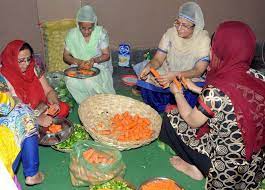
Festivity flow in Bengal:

The festivities begin with cleaning and decorating homes and establishments with colorful rangolis and alpanas. Women clad in traditional sarees, adorned with beautiful jewelry, gather to perform rituals and offer prayers at local temples. These prayers are usually dedicated to Goddess Lakshmi, the deity of wealth and prosperity, seeking her blessings for a prosperous year ahead.
Festivity flow in Punjab:
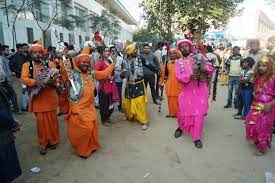
In Punjab, Baisakhi rituals commence with early morning visits to gurdwaras for special prayers and kirtan. Sikhs gather in large numbers to participate in the Amrit Sanchar ceremony, reenacting the initiation of the Khalsa by Guru Gobind Singh Ji. Nagar Kirtan processions featuring the Panj Pyare lead joyful marches through the streets, accompanied by vibrant music and chanting. Langar, a community meal, is served to all, symbolizing equality and unity. Families come together to share traditional Punjabi dishes and sweets. Baisakhi in Punjab epitomizes spiritual renewal, communal harmony, and gratitude for the bountiful harvest, fostering a sense of shared identity and joy. Colorful processions called Nagar Kirtan feature Sikh martial arts demonstrations, music, and traditional folk dances like Bhangra and Giddha. People adorn themselves in traditional attire, showcasing intricate embroideries and vibrant colors. Markets bustle with activity as stalls offer handicrafts, food, and other festive delights. Families gather to share special meals, featuring Punjabi delicacies like makki di roti and sarson da saag. Baisakhi fosters a sense of community, cultural pride, and reverence for Punjab’s rich heritage.
Cultural events in Bengal:
One of the highlights of Baisakhi celebrations in Bengal is the elaborate cultural programs organized in communities and public spaces. These programs feature traditional Bengali music, dance performances, theatrical presentations, and poetry recitations, reflecting the artistic prowess of the Bengali culture. Rabindra Sangeet, songs composed by the Nobel laureate Rabindranath Tagore, are often sung during these gatherings, adding a touch of literary elegance to the festivities.
Another integral part of Baisakhi celebrations is the colorful processions known as ‘Prabhat Pheri’ or ‘Mangal Shobhajatra,’ where people march through the streets dressed in vibrant attire, singing and dancing to the beats of traditional music. These processions not only symbolize joy and merriment but also serve as a means of social cohesion, bringing people from diverse backgrounds together to celebrate their shared heritage.
The culinary aspect of Baisakhi is equally significant, with families preparing traditional Bengali delicacies to share with friends and relatives. Sweet dishes like ‘rosogolla,’ ‘sandesh,’ and ‘mishti doi’ are particularly popular during this time, symbolizing sweetness and abundance in the coming year.
In addition to its cultural significance, Baisakhi also holds agricultural importance as it marks the beginning of the harvest season in Bengal. Farmers celebrate the occasion by offering prayers for a bountiful harvest and thanking the gods for the abundance of crops. It is a time when communities come together to rejoice in the fruits of their labour and express gratitude for nature’s blessings.
Overall, Baisakhi festival in both Bengal and Punjab is a joyous occasion that brings people together in celebration of their culture, traditions, and heritage. It embodies the spirit of unity, renewal, and prosperity, making it one of the most cherished festivals in the Bengali and the Punjabi calendar.
