Dikhyaa Mohanty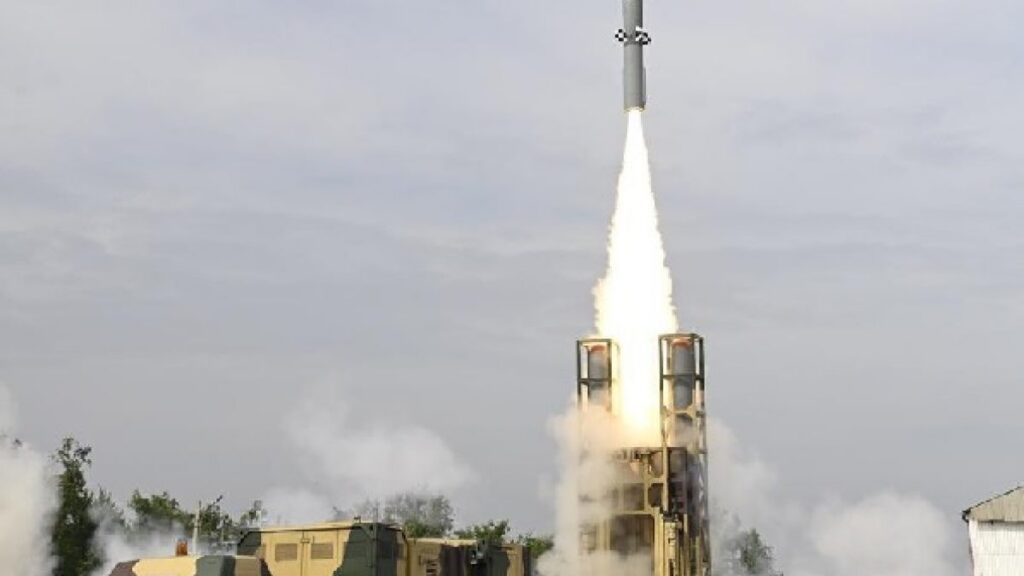
The Long Range Land Attack Cruise Missile (LRLACM) was tested in flight for the first time on Tuesday from a mobile articulated launcher at the Integrated Test Range (ITR), Chandipur, off the coast of Odisha, by the Defence Research and Development Organization (DRDO). A press release from the Ministry of Defence states that every sub-system met the main mission goals and operated as expected throughout the test. To guarantee full coverage of the flight path, ITR placed a number of range sensors, including radar, an electro-optical tracking system, and telemetry, at various points to track the missile’s performance.
The missile showed its capacity to execute a variety of maneuvers while flying at different heights and speeds, and it used way point navigation to follow the intended course. Additionally, the missile has sophisticated software and avionics to guarantee improved and dependable performance.
The Aeronautical Development Establishment, Bengaluru, developed LRLACM with assistance from other DRDO labs and Indian businesses. The two LRLACM Development-Cum-Production-Partners involved in missile development and integration are Bharat Dynamics Limited in Hyderabad and Bharat Electronics Limited in Bengaluru. Senior scientists from many DRDO labs, as well as officials from the three Services and system users, saw the test.
LRLACM is a Mission Mode Project that has been accepted by the Defense Acquisition Council and sanctioned by the Acceptance of Necessity. It is set up to launch from frontline ships using a universal vertical launch module system and from the ground using a mobile articulated launcher. DRDO, the Armed Forces, and the industry have received praise from Raksha Mantri Rajnath Singh for the successful first flight test. According to him, it opens the door for next domestic cruise missile development initiatives. Dr. Samir V. Kamat, Chairman of DRDO and Secretary of the Department of Defence R&D, thanked the whole DRDO team on the successful first launch of LRLACM.