
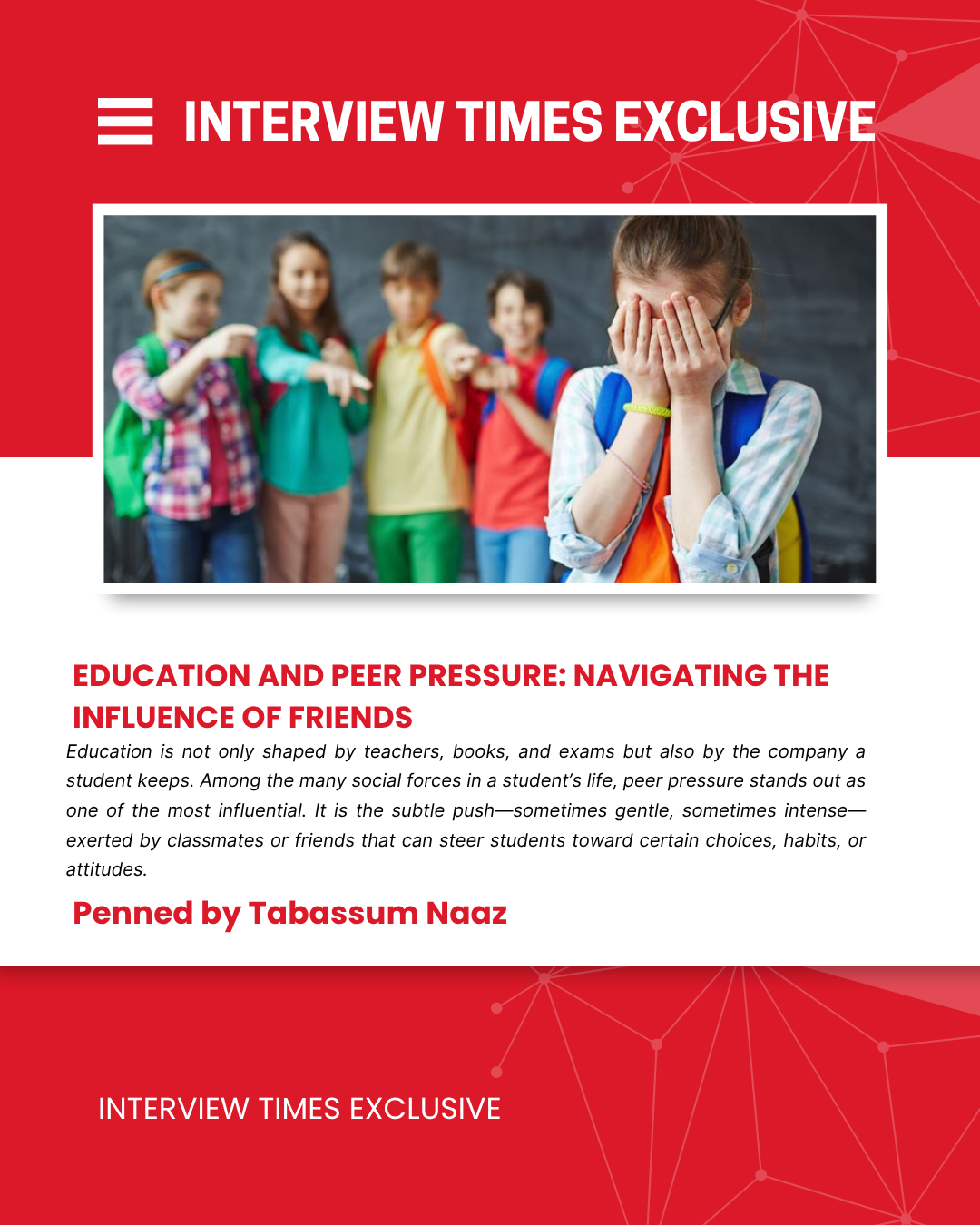
Education is not only shaped by teachers, books, and exams but also by the company a student keeps. Among the many social forces in a student’s life, peer pressure stands out as one of the most influential. It is the subtle push—sometimes gentle, sometimes intense—exerted by classmates or friends that can steer students toward certain choices, habits, or attitudes. Understanding this influence is essential for ensuring that it helps, rather than hinders, academic success.
From the first day a child steps into school, they begin interacting with peers. These relationships are a natural part of learning and growing, but they can also affect how a student approaches education. Peer pressure is not always about dramatic situations; often, it is about the little, everyday choices—whether to finish homework on time, participate in class, or spend time in the library instead of hanging out aimlessly.
One unique aspect of peer pressure in education is how it shapes personal ambitions. Students surrounded by friends who value learning tend to adopt similar priorities. They may feel encouraged to try new subjects, join study groups, or aim for higher achievements. When the influence is encouraging, peer interactions become a source of motivation, making learning a shared and enjoyable process.
However, the opposite can also occur. A student who wants to excel might hold back to avoid being teased for being “too serious” or “teacher’s pet.” Some may choose activities that offer instant approval from friends but carry no long-term benefit, such as spending class hours chatting or avoiding assignments altogether. Such patterns can quietly reduce a student’s potential without them even realizing it.
The challenge with peer pressure is that it operates silently. Unlike clear academic rules, it has no formal boundaries. It works on emotions—on the need to belong, to be accepted, and to be valued within a group. Because of this, students may find it hard to recognize when they are making decisions for themselves and when they are simply following the crowd.
Educational institutions can play a crucial role in guiding students through this. Teachers can design activities where teamwork is valued over rivalry, and where diverse skills are celebrated. By showing students that there is no single “right” way to succeed, they can reduce the need for conformity. Mentorship programs, where older students share their academic journeys, can also help younger ones see that making independent choices is possible and rewarding.
For parents, the role is equally significant. Encouraging open conversations about school life allows children to discuss their struggles and pressures without fear of judgment. When students feel supported at home, they are better equipped to resist harmful influences and stay committed to their personal learning goals.
Ultimately, peer pressure in education is like a strong current—it can either carry a student toward growth or pull them away from their path. The key is not to fear it, but to learn how to swim with it wisely. When managed well, the influence of peers can inspire collaboration, creativity, and a lifelong love for learning.
