
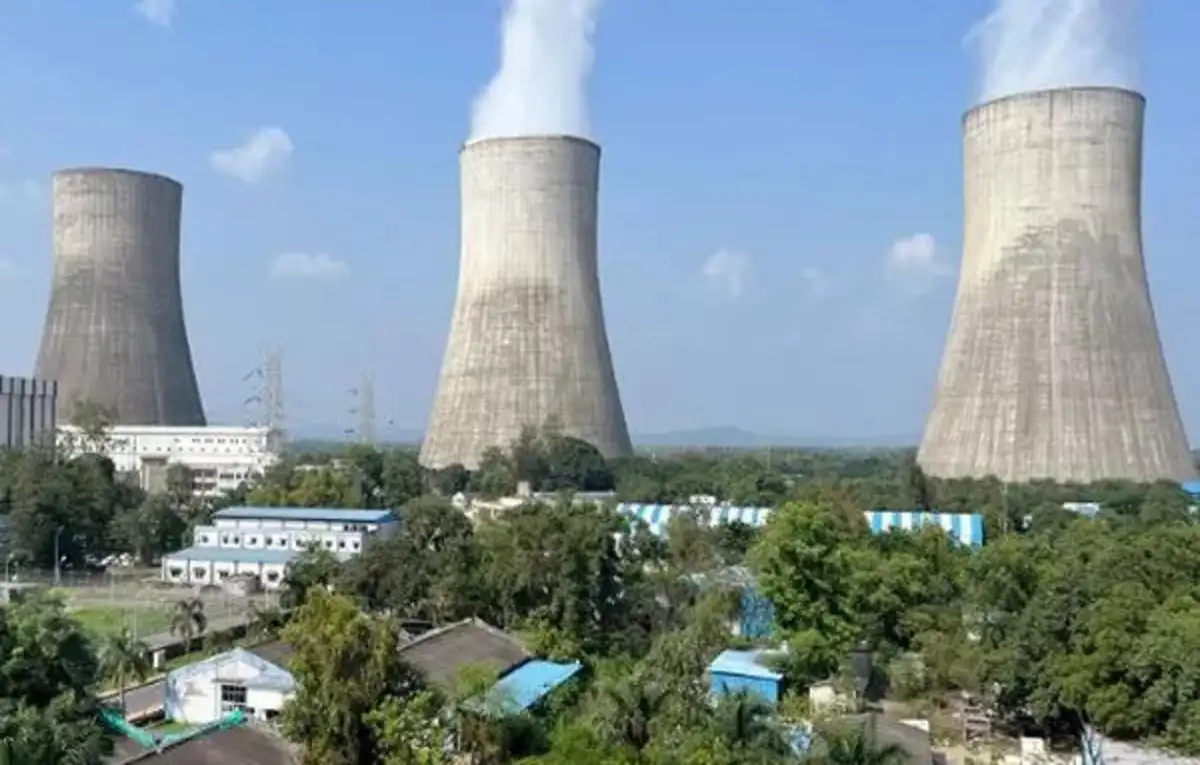
In keeping with the “Viksit Bharat” vision, the government has set a goal of generating 100 GW of nuclear power capacity by 2047, which will greatly improve India’s long-term energy security and help the country reach its clean energy targets, Union Minister of Power Manohar Lal Khattar said on Monday. Speaking before a meeting of the Ministry of Power’s Consultative Committee, the minister stated that India now runs 25 nuclear reactors in seven different locations, totaling 8,880 MW of installed capacity. These reactors provide around 3% of the nation’s power. Ten further reactors with a 7,000 MW capacity are in the pre-project phase, while eight reactors with a 6,600 MW capacity are currently being built.
India is committed to reaching net zero carbon emissions by 2070, and the Minister underlined that increasing the proportion of non-fossil fuel-based power generation is essential to this goal during the discussion of the “Roadmap for Development of Nuclear Power Generation.” Given that the power industry accounts for more than 40% of worldwide energy-related emissions, he noted, nuclear energy, a reliable and non-fossil power source, would become more and more significant on India’s path toward sustainable development.
The Minister went on to explain that nuclear energy can help India’s larger energy transformation objectives by providing non-electric uses including desalination, process steam, hydrogen production, and space heating in addition to producing electricity. In order to facilitate more involvement from the corporate and public sectors, the Minister also described the major obstacles and tactical measures needed to scale up nuclear energy, such as modifying the Atomic Energy Act of 1962 and the Civil Liability for Nuclear Damage Act of 2010.
Other steps being made to speed up projects included facilitating quicker land acquisition through brownfield expansions, reusing decommissioned thermal facilities, and simplifying regulatory approval procedures to shorten project timetables. In addition, he explained, measures were being considered to diversify technology choices through competitive bidding, promote indigenous manufacturing under the “Make in India” label, and introduce tax concessions, green power classification, and long-term financing to ensure competitive nuclear tariffs.
