
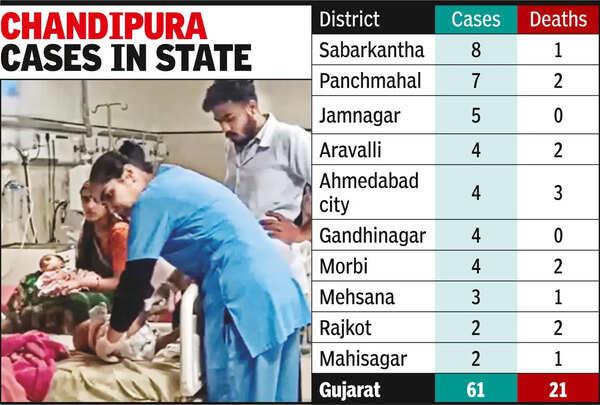
A deadly virus that has repeatedly emerged in India has resurfaced in Gujarat during the 2026 monsoon, raising fresh concerns over a disease that can progress from fever to severe brain inflammation within a matter of hours. As of August 28, Gujarat has reported 324 suspected Chandipura cases, of which 42 have been laboratory-confirmed, and 28 children have died. That means roughly two out of every three laboratory-confirmed patients have died in the current outbreak.
Chandipura virus (CHPV) is not a new virus. It was first identified in 1965 in Chandipura village in Maharashtra, and it belongs to the same Rhabdoviridae family as rabies, although it causes a very different illness. It is primarily associated with Acute Encephalitis Syndrome (AES) — a condition involving inflammation of the brain — and children, particularly those under 15, are disproportionately affected.
How does it spread?
The virus is primarily associated with the bite of infected sandflies, particularly Phlebotomus species. Other vectors such as mosquitoes and ticks have also been investigated, but sandflies remain the principal suspected vector in Indian outbreaks. Importantly, there is currently no evidence of routine human-to-human transmission through coughing, sneezing or ordinary physical contact.
The risk tends to increase during the monsoon, when environmental conditions can favour sandfly activity. Poor housing conditions, cracks in walls, damp surroundings, animal shelters and areas with organic waste can provide suitable environments for these insects. Recent epidemiological research from the 2024 Gujarat outbreak also found associations between severe disease and factors including poor housing conditions and undernutrition.
Why has it returned in 2026?
The important point is that Chandipura hasn’t really disappeared. It is a recurring, seasonal threat in parts of India. Major outbreaks have occurred periodically, particularly during monsoon seasons. The World Health Organization has noted that Gujarat has seen a rise in Chandipura outbreaks roughly every four to five years.
The most recent major outbreak was in 2024, when India reported 245 AES cases and 82 deaths, with 64 cases laboratory-confirmed as Chandipura virus. It was described as India’s largest Chandipura outbreak in two decades.
Now, after two years, the virus has resurfaced again. The first case in the current surveillance period was reported on June 30, 2026, and cases subsequently appeared across Gujarat and in neighbouring Rajasthan. By early August, the Centre had deployed a National Joint Outbreak Response Team to Gujarat and Rajasthan to investigate transmission and strengthen surveillance.
But there is still a major unanswered question: scientists have not definitively established the exact vector or animal reservoir responsible for the current outbreak. Investigators are collecting samples from sandflies and other insects, as well as animals, to understand how the virus is circulating.
Why is it so dangerous?
Chandipura can begin with symptoms that resemble an ordinary viral infection — high fever, vomiting and other flu-like symptoms — but in severe cases it can rapidly progress to seizures, altered consciousness, coma and brain inflammation. WHO notes that severe illness can lead to death within 48–72 hours of symptom onset, particularly among children.
There is currently no licensed vaccine or specific antiviral treatment for Chandipura. Treatment is largely supportive, which makes early recognition, rapid hospitalisation, intensive care and prevention of insect bites particularly important.
The bigger concern
The 2026 outbreak is a reminder that Chandipura is not simply a disease of the past. It continues to reappear when environmental and seasonal conditions favour transmission, while scientists are still trying to understand exactly why some years produce much larger outbreaks than others.
And this year, the numbers are already stark:
324 suspected cases.
42 confirmed infections.
28 confirmed-patient deaths.
66.7% case-fatality proportion among confirmed cases.
For a virus first identified more than six decades ago, the fact that India still has no specific vaccine or antiviral treatment makes its recurring return especially concerning.
