Far from the crowded industrial belts and startup hubs that dominate India’s entrepreneurial imagination, a quiet manufacturing facility near the banks of Odisha’s River Birupa is attempting to redefine what modern business can look like. At the centre of this journey is Swaroop Singh, a young entrepreneur who chose not to follow the conventional roadmap of building a company in metropolitan spaces or established industrial corridors. Instead, he helped build something deeply rooted in community, sustainability, and local identity.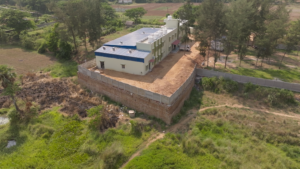
As the Chief Executive Officer of Debaki Water Bottling Private Limited, Swaroop represents a generation of founders who view entrepreneurship not merely as profit-making, but as a way of creating long-term social and environmental impact. While many startups prioritise visibility and urban expansion, Debaki Water chose Hasadia, Mulabasant, Kuanpal in Cuttack district, a village landscape nearly 64 kilometres from Bhubaneswar as the home for its manufacturing plant. The decision was intentional. The company wanted to create employment opportunities within a rural ecosystem while building an enterprise that could grow alongside the local community. Nestled close to the historically significant River Birupa, the facility reflects a blend of industrial ambition and environmental consciousness. The Birupa is more than just a river flowing beside the factory.  For centuries, it has remained tied to Odisha’s cultural and spiritual history, serving as a route connected to Buddhist pilgrimages and maritime journeys to places like Ceylon and Java. Nearby heritage sites such as Ratnagiri and Udaygiri continue to preserve that historical legacy. In many ways, the company’s presence near the river feels symbolic of a modern enterprise rising beside a landscape shaped by centuries of history. The company itself carries a deeply personal identity. The name “Debaki” was chosen as a tribute to a co-founder’s mother, giving the venture emotional roots rarely seen in today’s corporate branding culture. That sense of emotional grounding extends into the company’s philosophy as well. Built as a women-led enterprise, Debaki Water combines pharmaceutical-grade manufacturing standards with a strong emphasis on sustainability, inclusivity, and local empowerment. Inside the fully automated green facility, the company produces packaged drinking water and alkaline water through advanced ionization technology designed to optimise hydration and mineral balance. Yet what distinguishes the brand most is its commitment to environmentally responsible innovation. Debaki Water introduced biodegradable bottles capable of naturally decomposing within 180 days, alongside reduced-plastic packaging solutions and recyclable aluminium-lid containers aimed at lowering carbon footprints. In a market where sustainability often remains a branding exercise, the company has attempted to integrate eco-consciousness into the production process itself.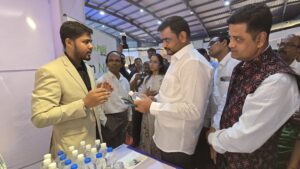
At the same time, the business has embraced flexibility and customization in a way that reflects changing consumer and hospitality trends. Through its white-label manufacturing division, Debaki Water allows hotels, cafés, resorts, restaurants, and beverage brands to create fully customized hydration solutions tailored to their own identity. From bottle shapes and sizes to caps, labels, and packaging aesthetics, clients can personalize nearly every aspect of the product. The company offers a range of sleek bottle formats from compact 200ml short-neck bottles to premium 750ml and Water in a transparent can, packaging designed not only for utility but also for brand presentation and customer experience.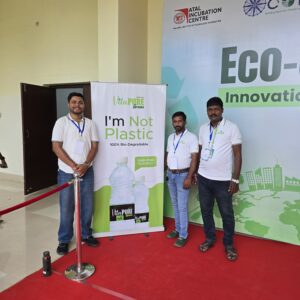
This customizable approach has transformed the company from a traditional bottling business into a strategic packaging and branding partner for hospitality and beverage enterprises. For many businesses, the product is no longer just water; it becomes part of their visual identity and consumer experience.
Swaroop’s own journey mirrors this willingness to think differently. Educated in marketing at XIM University and later trained at Indian Institute of Management Udaipur, he consistently gravitated toward unconventional problem-solving rather than predictable corporate pathways. Under his leadership, the company scaled rapidly, launched multiple commercially active brands, and earned recognition among the Top 20 startups in the country at the Tetra Pak Startup Challenge. Yet beyond the numbers and recognition lies a more compelling story that of a young entrepreneur building with intention. In a quiet village near the River Birupa, away from the noise of mainstream startup culture, Debaki Water Bottling is attempting to prove that industrial growth, environmental responsibility, local employment, and emotional values do not have to exist separately. They can flow together, much like the river beside which the company chose to build its future.