
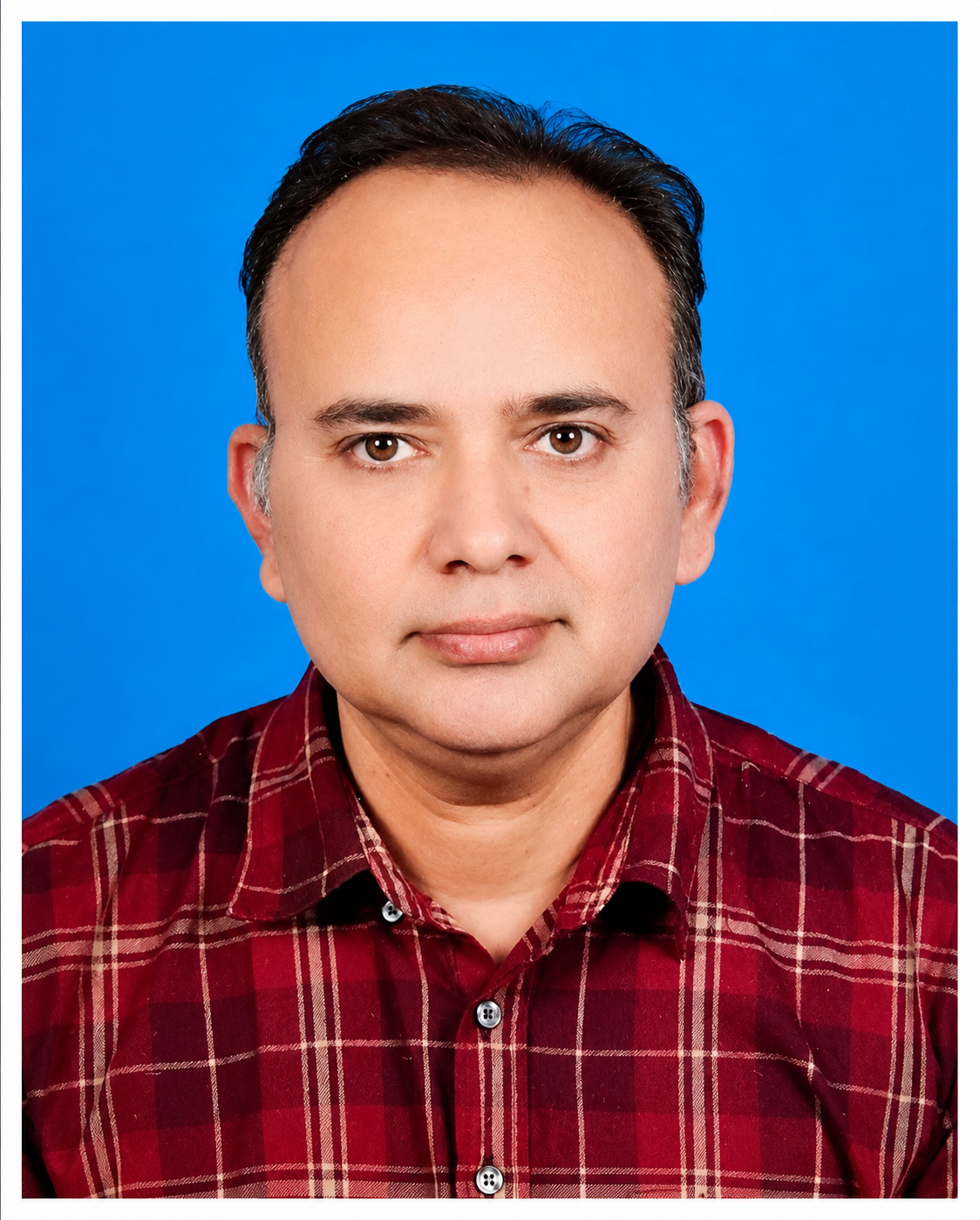

A Builder at Heart: The Journey of Sumeet Singh Thakur
Sumeet Singh Thakur is the CEO and Managing Director of Livera Track Private Limited, a technology company specializing in Fleet Management and GPS Tracking Solutions. With over 24 years of experience spanning embedded systems, SaaS, IoT, and AI integration, Sumeet’s career is a story of relentless problem-solving — turning operational challenges into scalable technology solutions.
His journey didn’t follow a straight line. It began close to the ground — in production engineering and operations — where he witnessed firsthand the inefficiencies that process changes alone couldn’t fix. That exposure became the seed of everything that followed: automation, software tools, connected hardware, and eventually a full-fledged digital product company. The hardest skill along the way wasn’t coding or electronics. It was product thinking — learning what users truly need, making trade-offs, and building things people actually pay for. Technical knowledge can come from documentation and practice; judgment comes from execution and honest feedback.
Building Livera Track: From Tracking to Operational Control
 At the heart of Livera Track is a simple but powerful insight: fleet management is not a tracking problem — it’s a visibility and execution problem.
Most fleet operators already had GPS. What they lacked was operational control. Information was scattered — vehicle locations in one system, fuel records in another, driver updates over phone calls and WhatsApp, maintenance logged in spreadsheets, and trip status living inside people’s heads. The result was delays, idle time, fuel leakage, poor accountability, and reactive decision-making at every level.
Livera Track addressed this by building a unified operations layer — one that moved fleets from asking “Where is my truck?” to answering “What is happening in my operation right now?” Real-time trip monitoring, exception alerts for deviations and overspeed, driver accountability dashboards, automated reporting, and centralized visibility across dispatch and management became the foundation. Once teams stopped chasing updates and started managing exceptions, operational efficiency improved — and scaling became possible.
Today, Livera Track serves both enterprises and government organizations, each with distinct dynamics. Enterprise engagements are outcome-driven and commercially focused, moving quickly when value is clear. Government projects demand greater compliance, documentation, long-term reliability, and trust built through consistent execution. Operating effectively in both worlds — with startup agility and enterprise-grade discipline — has become one of the company’s defining capabilities.
Doing More with Less: Leading a Lean Team
Running a product company with a team of eight people requires disciplined prioritization. At Livera Track, that discipline is built around three principles: keeping existing customers successful first, building only features that solve problems across multiple customers, and protecting dedicated time for long-term product development regardless of short-term support pressure.
The operating model is intentional — roughly half the team’s energy goes toward the core product and roadmap, about thirty percent to customer support and implementation, and the remainder to experiments, technical improvements, and strategic requests. Every feature request is evaluated against three questions: Will multiple customers use it? Does it increase retention or revenue? Can it be maintained without increasing complexity? The goal is not to ship the most features — it is to create the highest operational leverage per engineer.
Hardware, IoT, and the Art of Building for the Field
Sumeet’s work spans some of the most technically demanding territory in IoT — solar-powered GPS loggers, WinCE-based embedded devices, and connected hardware built for harsh real-world environments. The philosophy behind Livera Track’s hardware development process is straightforward: fail early in the lab so you don’t fail in the field.
The process moves from problem definition and rapid proof-of-concept through engineering validation, firmware and backend integration, real-world field pilots, and finally production readiness. No product is standardized until it has been tested across multiple environments, failure logs have been analyzed, and support can handle deployments without requiring engineering intervention every time.
A guiding principle: prototype until the hardware works, pilot until operations work, and productize only when support can scale independently.
Where AI Fits Into Fleet Management
Artificial intelligence in fleet management is not a distant vision — it is an emerging operational layer. Sumeet frames AI in three distinct stages.
The first is visibility — GPS, trips, alerts, fuel, and historical reporting. This answers the question: what happened? The second is intelligence — ETA prediction, driver behavior scoring, fuel anomaly detection, route recommendations, and predictive maintenance. This answers: what will happen? The third and most advanced stage is autonomous operations — auto-created schedules, dynamic dispatch recommendations, natural-language dashboards, and AI systems that tell operators what to do next rather than waiting to be asked.
The highest-return AI applications in fleet tech are rarely the flashiest. Predictive maintenance, trip delay prediction, fuel anomaly detection, driver coaching, and operations assistants that turn thousands of telemetry events into clear actions — these are where real value lives. The benchmark is simple: if users still need dashboards to discover problems, AI hasn’t gone far enough.
Building from Bhubaneswar: Constraint as Competitive Advantage
Sumeet built Livera Track from Bhubaneswar, Odisha — not from a metro tech hub. Early on, this felt like a limitation. Over time, it became a set of operating strengths.
Lower operating costs created longer runway and more room to experiment. Smaller teams developed broader ownership, with engineers working across product, implementation, and customer conversations rather than staying in narrow roles. Being outside the usual tech corridors brought closer exposure to industries like logistics, mining, infrastructure, and public-sector operations — markets that are often underserved by metro-focused companies.
The challenges are real: senior talent density is lower, enterprise credibility requires more proof, and ecosystem support is thinner. But the operating mindset is clear — don’t compete on location. Compete on speed, reliability, and customer outcomes. When enterprise customers see deployment quality and measurable ROI, geography becomes far less relevant than most people expect.
Lessons from a Broad Portfolio
Livera Track’s portfolio spans telematics, ERP, stock analytics, and government automation. That breadth has produced deep learning — and some honest failures.
Some solutions arrived technically ready before customers were operationally prepared, requiring longer market education than anticipated. Custom projects occasionally masqueraded as products, fragmenting the roadmap as different customers pulled in different directions. Expanding horizontally across multiple product categories created support, onboarding, and sales complexity that compounded over time. And strong technology sometimes underestimated adoption friction — behavior change, it turns out, is harder than engineering.
The framework that emerged from these experiences: experiment widely to learn quickly, pilot selectively to validate economics, productize ruthlessly for only repeatable wins, and retire aggressively anything that no longer creates leverage. A useful internal test — “If we had to rebuild today, would we choose to build this again?” — surfaces what deserves continued investment and what needs to be simplified.
Unsuccessful bets, it turns out, are rarely wasted. They become capabilities, customer understanding, and infrastructure that makes the next successful product possible.
Looking Further: IoT, Space, and What Comes Next
Sumeet’s personal aspirations include space travel to the Moon — and the connection to his professional work runs deeper than it might seem. IoT, remote monitoring, and embedded systems are fundamentally about extending human capability into environments where people cannot constantly be present. Space operates by the same principles: observe remotely, operate reliably, automate decisions, and function within severe power and communication constraints.
A solar-powered tracker deployed in a remote mining site and a spacecraft subsystem are vastly different in scale, but they share engineering DNA — collect the right data, survive harsh conditions, remain operable from a distance, and recover autonomously when things go wrong.
The technologies being built today for industrial IoT — embedded intelligence, digital twins, autonomous operations, edge computing — are the same foundations that will define how future space infrastructure is built and managed. What is space-grade engineering today has a history of becoming everyday infrastructure tomorrow.
