
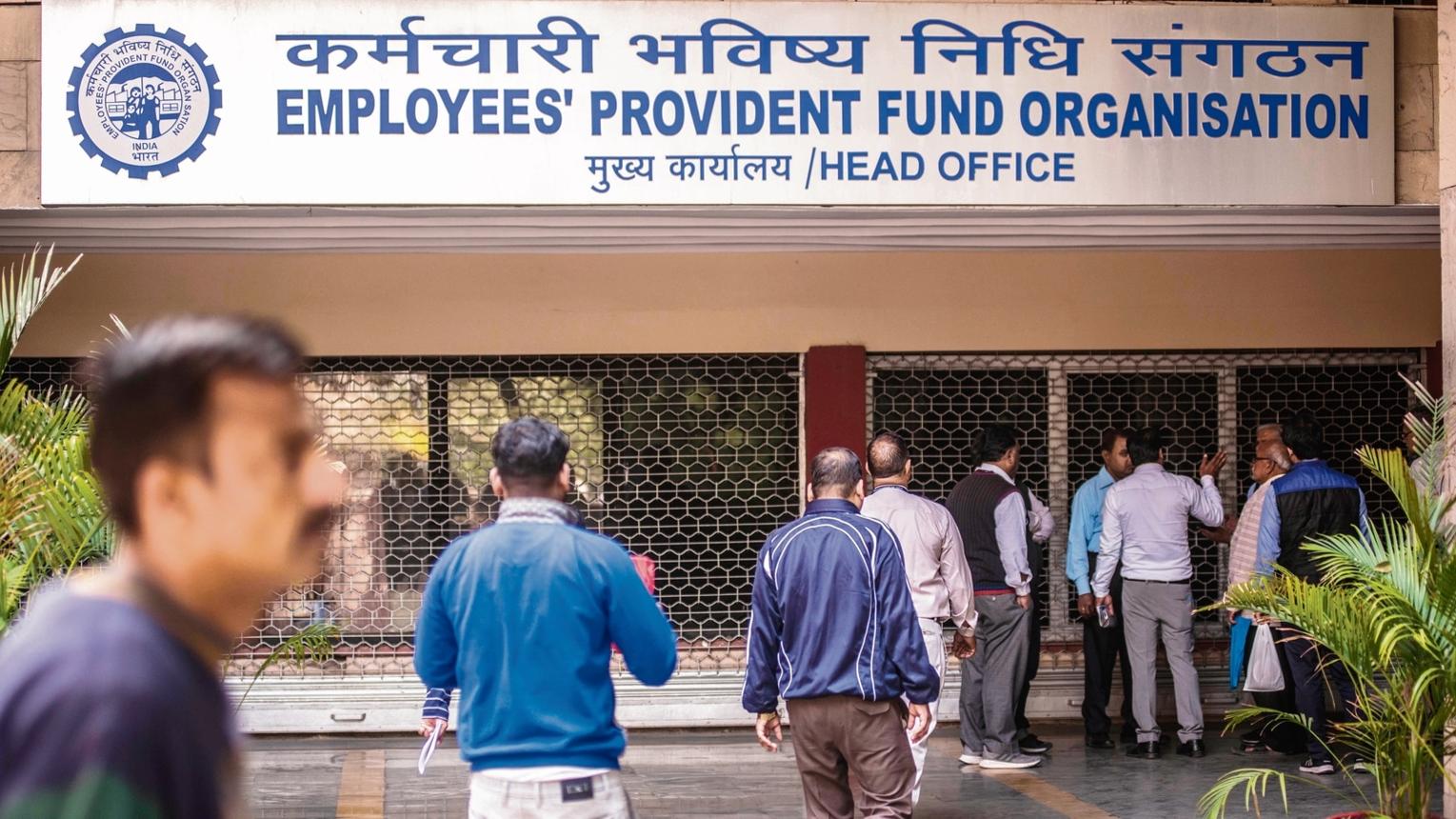
The Union government’s decision to increase the wage ceiling for mandatory coverage under the Employees’ Provident Fund Organisation (EPFO) from ₹15,000 to ₹25,000 per month has emerged as one of India’s most significant labour and social-security developments this week. The decision was approved by the Union Cabinet and is expected to bring more than 51 lakh additional employees into mandatory EPFO coverage.
The previous ceiling of ₹15,000 had remained unchanged since September 2014. The government has said that the increase reflects changes in wage levels, rising incomes and the expansion of formal employment during the intervening years.
Under the revised framework, employees earning up to ₹25,000 per month who fall within the applicable mandatory-coverage conditions will be brought into the statutory EPFO system. This is particularly significant for workers whose wages had previously placed them above the ₹15,000 threshold but below the new limit.
The EPFO system is an important component of India’s formal social-security structure. It provides retirement savings through provident-fund contributions and is connected with pension and insurance-related benefits under the broader EPFO framework.
According to the government’s announcement, more than 51 lakh additional employees are expected to come under mandatory EPFO coverage as a result of the revised ceiling. The government estimates that the decision will involve additional annual expenditure of approximately ₹11,339 crore, compared with existing budgetary support of around ₹10,250 crore.
The change is also significant from the perspective of India’s formal employment landscape. Government officials have linked the expanded coverage to the broader objective of ensuring that formal employment is accompanied by social-security protection.
For employees, inclusion in EPFO can mean greater access to structured retirement savings and associated statutory benefits. For employers, the expansion means that more employees will fall within the framework of mandatory social-security contributions where the revised rules apply.
The decision also comes at a time when policymakers are increasingly focusing on formalisation of employment, digital employment records and portable social-security benefits. The government has described the measure as part of a longer-term effort to strengthen retirement security and widen the social-security net.
The financial effect on an individual employee will depend on salary structure, applicable EPFO rules and the respective employee and employer contributions. Therefore, the increase in the ceiling should not automatically be interpreted as a direct ₹10,000 increase in every employee’s PF contribution or take-home salary.
The decision is especially relevant to workers in India’s growing formal-sector economy who earn between ₹15,000 and ₹25,000 a month. It could also affect employers as they adjust payroll and compliance systems to accommodate the expanded coverage.
The revised ceiling is scheduled to come into force from September 17, 2026, making the announcement immediately relevant to employers, employees and payroll departments across the country.
