
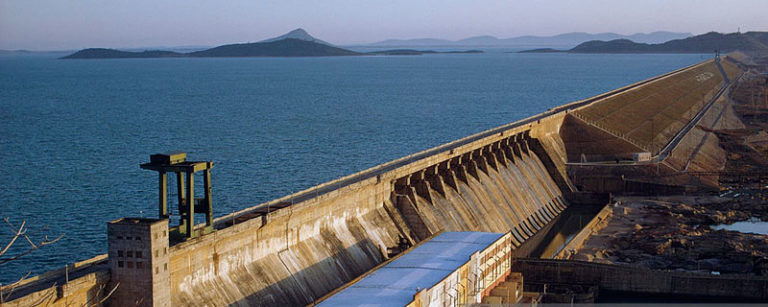
BHUBANESWAR: The Mohan Majhi government in Odisha has announced plans to undertake a major restoration project at the Hirakud dam, focusing on revitalizing its aging canal system. Over the next four years, Rs 855 crore will be invested in the renovation, aimed at repairing and upgrading the extensive network that plays a crucial role in irrigating farmlands in western Odisha.
The Hirakud dam, located at the confluence of the Mahanadi and Ib rivers, is one of India’s most significant post-independence projects. Built in 1957, about 15 kilometers upstream from Sambalpur, it is the longest earthen dam in the country. Its primary purpose was to control flooding in the delta areas, while also generating power and providing irrigation for the region.
The canal irrigation system associated with the dam, which became operational in 1967, is vital to the agricultural productivity of the area. Spanning 3,406 kilometers, the canal network irrigates 1.59 lakh hectares of land during the Kharif season and 1.12 lakh hectares during the Rabi season. This network serves the districts of Sambalpur, Bargarh, Bolangir, and Sonepur, delivering water to fields through a maze of main canals, distributaries, and smaller branches. However, due to the aging infrastructure, it can take as long as 10 to 15 days for water to reach the farthest ends of the network.
Despite these challenges, the Hirakud canal system has been instrumental in enhancing agricultural intensity in the region. Over the past 60 years, cropping intensity in the command area has increased from 110% to 187%, reflecting a significant rise in agricultural output. The restoration project, therefore, aims to improve the efficiency of water distribution, ensuring that farmers receive water more quickly and consistently.
The government’s decision to invest in the canal system demonstrates a commitment to supporting the region’s agricultural sector, which relies heavily on the dam for irrigation. This restoration effort is expected to modernize the system, making it more reliable and better equipped to handle the demands of today’s farming practices. It is also seen as a step towards enhancing the resilience of the agricultural sector, especially in the face of climate change and unpredictable rainfall patterns.
