
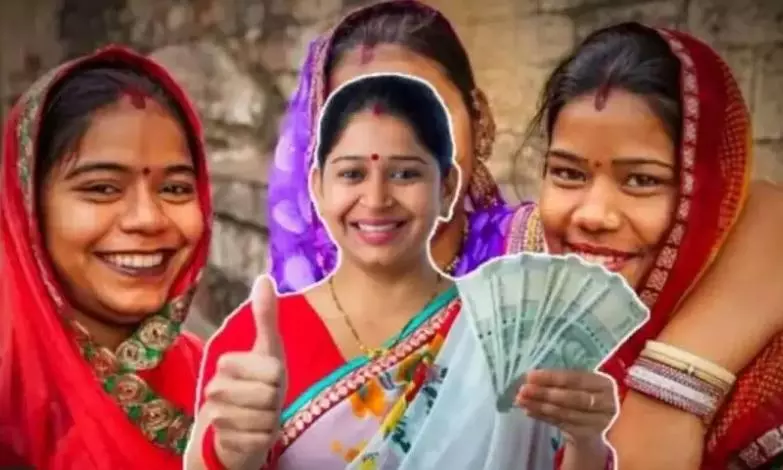
Chief Secretary Manoj Ahuja presided over a high-level monitoring and review meeting of the Subhadra Yojana today at Lok Seva Bhavan to evaluate the program’s implementation status and plan for its next stage. The conference brought together top officials from the Women and Child Development Department and other relevant agencies to analyze the reach, effect, and operational efficiency of the initiative.
Chief Secretary Ahuja began the evaluation by praising the Women and Child Development Department for implementing the Subhadra Yojana effectively within 100 days of Cabinet approval and for using an integrated government system to provide financial aid in two timely payments. In order to assist Subhadra recipients in achieving complete economic empowerment, he also underlined the significance of utilizing other welfare programs.
Providing a comprehensive implementation update, Women and Child Development Director Monisha Banerjee stated that the plan has received 1.09 crore applications thus far. Of these, the first installment was given to 1.02 crore women, while the second installment was given to more than 1.0096 crore recipients. She also disclosed that over 5.82 lakh women were disqualified on the basis of 15 qualifying factors, including four-wheeler ownership, greater family income, government work, and pension receipts. In addition, the third installment for FY 2025–2026 did not include 93,792 women who were 60 years of age or older. In order to potentially include these elderly beneficiaries in alternative assistance programs, a suggestion was presented to connect them with the Social Security and Empowerment of Persons with Disabilities Department.
Operational issues including facilitating beneficiary data changes at nearby Sarpanch office helpdesks and continuing scheme financial audits were also discussed at the meeting. The “Subhadra Review” program, a joint effort by the Higher Education Department, the Women and Child Development Department, and IIM Sambalpur, was the subject of much criticism. Early results show a promising trend: a large number of recipients are using the funds to launch their own businesses, which supports the program’s goal of encouraging women to become self-sufficient.
