
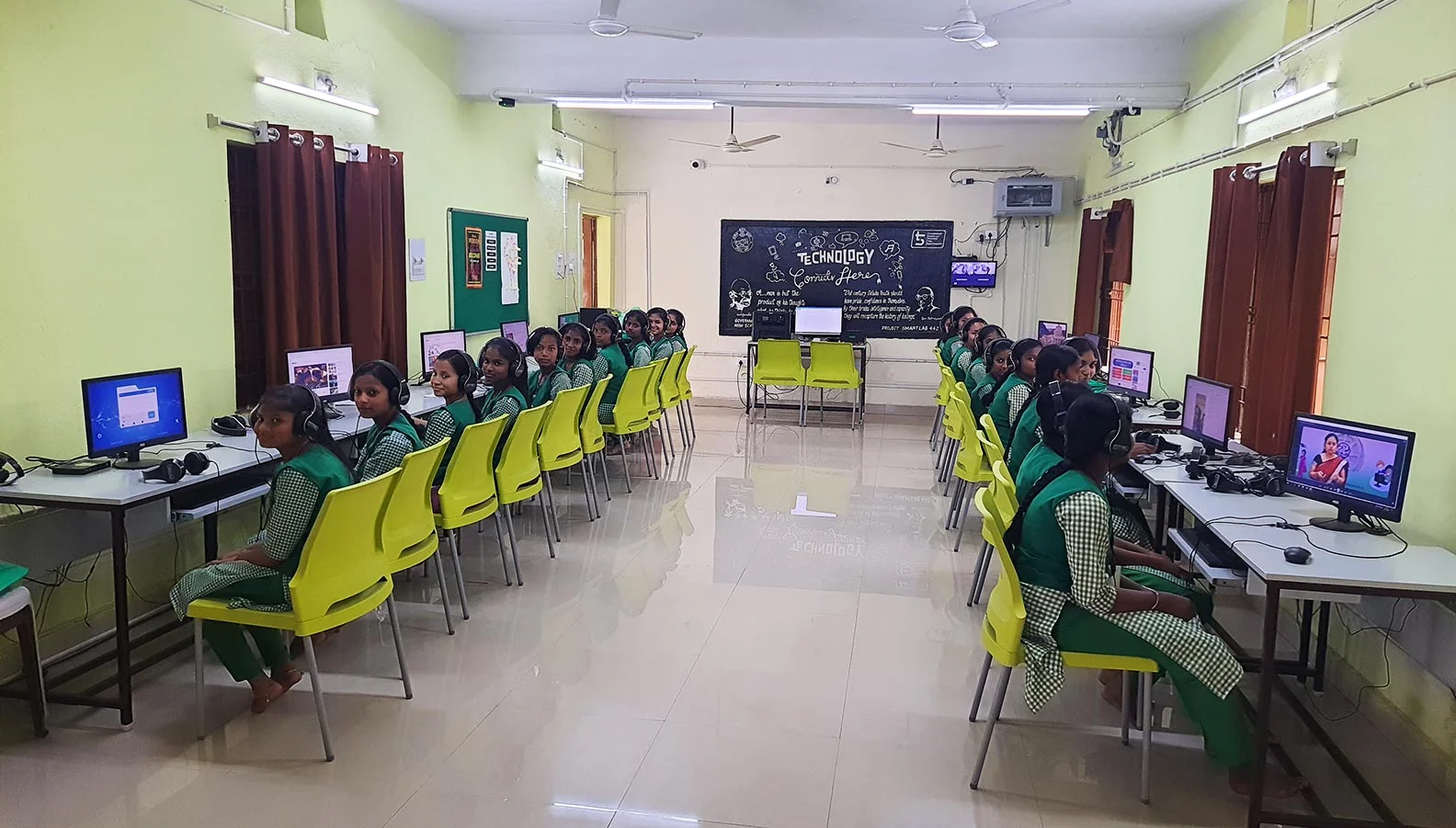
The Odisha government has unveiled a major initiative to introduce artificial intelligence (AI)-powered classrooms in over 5,000 schools across the state. The proposal took concrete shape during a high-level meeting chaired by Chief Minister Mohan Charan Majhi and attended by Chief Secretary Anu Garg and senior officials. A memorandum of understanding (MoU) is expected to be signed with an Indian artificial intelligence firm for the project.
“Odisha became the first state in the country to adopt an AI policy in 2025. With the introduction of AI-enabled schools, our students will gain advanced technological skills. This initiative aims to transform the learning ecosystem and bridge educational gaps, particularly for students in rural and underprivileged areas,” CM Majhi said after the meeting.
The project, being implemented by the School and Mass Education (SME) department through the Odisha School Education Programme Authority (OSEPA), will cover 5,370 government and government-aided secondary and higher secondary schools. Officials said the initiative is designed to help students understand concepts more quickly and effectively through engaging digital content and AI-driven learning tools.
As part of the plan, AI-powered virtual classrooms will be connected to four central broadcasting studios in Bhubaneswar and Cuttack, along with eight regional studios located at zonal headquarters across the state. These studios will deliver interactive lessons and digital content in Odia and English for students from Classes VI to XII. Students will have virtual access to lectures by state-level subject experts, while teachers will be able to conduct live classes using desktops, laptops or smartphones.
A key feature of the initiative is a digital assessment platform that will track student participation and attention levels in real time. This system will provide teachers with data-driven insights into students’ academic progress, enabling more personalised and effective instruction. In addition to classroom teaching, the platform will also be used for teacher training, extracurricular learning and skill development programmes, broadening its impact across the education ecosystem.
The project will adhere to the Digital Personal Data Protection Act, 2023. To safeguard the identities of students—most of whom are minors—the application will generate avatars instead of using photographs, ensuring that no personal images are displayed in reports or dashboards.
