
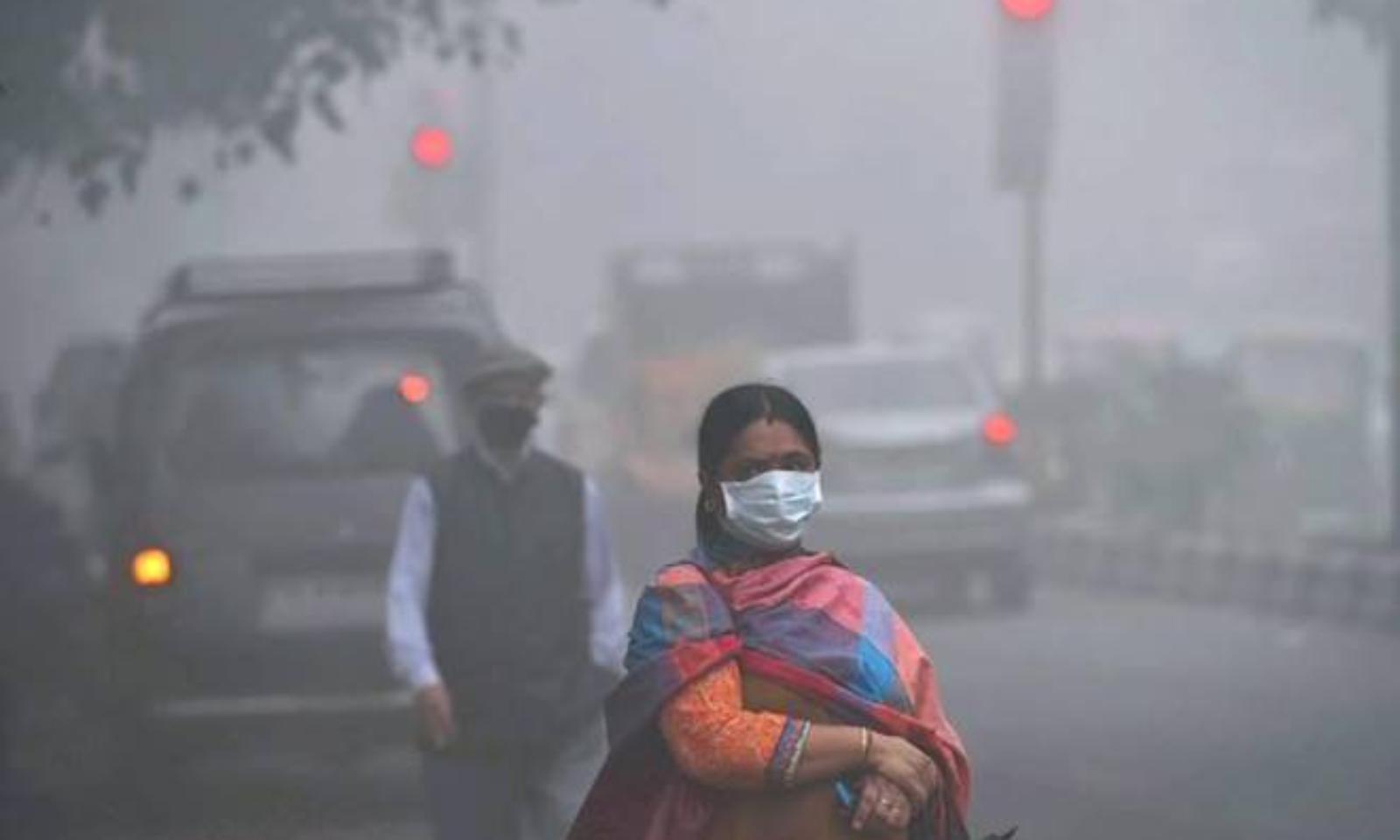
Following the Diwali celebrations on Sunday, Bhubaneswar, the capital of Odisha, is also experiencing a sharp drop in air quality, while New Delhi is choked with pollution. All attempts to reduce pollution appear to have failed, despite this year’s restrictions on the use of firecrackers issued by the Twin City Commissionerate Police and the Supreme Court.
Prior to Diwali, Bhubaneswar’s PM2.5 and PM10 levels, as well as the average daily Air Quality Index (AQI), were all in the moderate range. The AQI in Bhubaneswar was 80 in April 2023, but on Sunday it reached 142.
The AQI in Bhubaneswar ranged from 103 to 130 from November 1 to November 4. On November 1, the PM10 (particles with a diameter of 10 micrometers or less) was measured at Chandrasekharpur at 145 mg/m3. On November 2, the OSPCB monitoring station at Unit VIII recorded 104 mg/m3, while on November 3, Khandagiri recorded 140 mg/m3 and Palasuni recorded 101 mg/m3. On November 4, it was discovered to be 124 mg/m3 in the Capital police station area and 121 mg/m3 in the IRC village, respectively.
The level of PM2.5, another major pollutant in the air, was also said to be poor in parts of the city on November 7. However, the AQI has dropped drastically after Sunday evening, primarily owing to the random use of firecrackers violating all rules. The Odisha State Pollution Control Board (OSPCB) added that temperature inversions, particularly in the winter, further inhibit the rise and dispersal of pollutants from the lower atmosphere, resulting in longer airborne suspension times for PM2.5 and PM10 pollutants.
The Centers for Disease Control and Prevention stated that although the fine particles can enter your bloodstream and cause asthma attacks and coughing fits, the coarse particles can irritate your eyes, nose, and throat.
