

 FEATURE: In the golden light of an Odisha evening, Dr. Priyanka Mohanty moves through a tribal village with the quiet assurance of someone who knows every face, every story. The children call her “Didi Doctor,” their voices ringing through the dusty lanes as they clutch the sanitary pads she’s brought—simple objects that represent revolution in these parts. This is where medicine meets movement, where a stethoscope becomes a symbol of social change.
Her story begins in Bhawanipatna, where a young Priyanka would play with her grandfather’s medical instruments, the cold steel of the stethoscope warming in her small hands. Those childhood games took root in unexpected ways. Though her first dream was to soar through clouds as a pilot, life had other plans—her petite frame grounding her aviation dreams but launching her toward an even greater calling.
Medical school at HiTech College revealed more than anatomy textbooks ever could. During her internship, while her peers rushed through rotations, Priyanka lingered at old-age homes, using her meager stipend to buy medicines for those who couldn’t afford them. But it was in Kalahandi’s tribal heartland that her life’s work crystallized. There, she encountered women exiled to menstrual huts, girls dropping out of school at puberty, and entire communities trapped in cycles of misinformation.
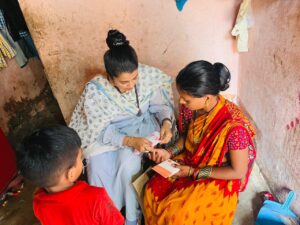
For Dr. Priyanka Mohanty, the stethoscope was just the beginning—her true mission lay in shattering silence. Every woman she met became family, every girl a friend waiting to be empowered. She didn’t just treat patients; she ignited revolutions in huts and schoolyards, transforming period shame into safe, dignified practices—one conversation, one village, one generation at a time.
The realization struck like lightning: healing required more than prescriptions—it demanded dismantling centuries of stigma.
Thus began Period Talk Odisha, not with fanfare but with quiet determination. In villages where menstruation was whispered about like a curse, Priyanka staged open conversations under mango trees. She recruited unlikely allies—police officers and village elders—to normalize discussions about women’s health. Her most viral moment came unexpectedly when a gruff farmer proudly bought pads for his daughter, the video sparking a statewide conversation. Today, her initiative has reached 50,000 girls, reduced period-related school dropouts by nearly a third, and turned government policy in her state.
Yet Priyanka’s vision extended beyond menstrual health. In the same villages, she noticed women chewing tobacco not out of habit but hunger—a cheap way to suppress appetite. Her Revolution De-Addiction Centers took shape through Sunday tele-counseling sessions and vocational training, offering alternatives to addiction. The results spoke volumes: a 40% drop in tobacco use in Borda block, women rediscovering their self-worth through tailoring cooperatives.
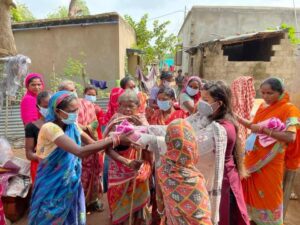
The road wasn’t smooth. As a young female doctor, she faced patients who doubted her expertise, colleagues who dismissed her advocacy as attention-seeking. But Priyanka turned skepticism into fuel. When maternal mortality rates dropped in Sakhigopal under her watch, when her research on tribal healthcare expenses earned international recognition in Bangkok, the numbers spoke louder than prejudice.
Even as accolades pile up—from international awards to viral social impact—Dr. Mohanty’s eyes remain fixed on horizons far beyond personal recognition. Her vision for Odisha’s healthcare future is as precise as a surgeon’s incision: “Systems don’t heal people; people heal systems.”
By 2025, she plans to launch Project Arise Maitri, a mobile health unit network staffed by tribal women trained as community paramedics. “Imagine a village where the midwife who delivers babies also screens for cervical cancer,” she says, sketching maps of Kalahandi’s remotest hamlets. Parallelly, her research on tribal healthcare economics—fresh from Bangkok’s ICOH-CVD conference—will inform state policy to slash out-of-pocket medical expenses by 40%.
But her most radical blueprint? Turning menstrual health into a electoral agenda. “When village councils allocate funds for pads before petitions for roads, we’ll know we’ve won,” she declares. It’s this alchemy of pragmatism and idealism that defines her next chapter—one where the stethoscope becomes a symbol of systemic rebellion.
Now pursuing advanced studies in community medicine, Priyanka’s days oscillate between global conferences and grassroots clinics. She’s become a bridge—translating research into real-world solutions, turning policy into practice. The awards lining her shelves, from the Pad Girl of Bhubaneswar to Rotary’s Covid Warrior, matter less to her than the handwritten note from an 80-year-old tribal man: “You treat our bodies and our hearts.”
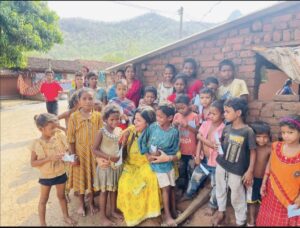
As dusk falls over another village visit, Priyanka pauses to watch a group of girls practice the Odissi dance she taught them—a reminder that healing comes in many forms. Her message to the next generation of changemakers is simple yet profound: “Medicine isn’t just science—it’s the art of seeing people. Not cases, not numbers, but human beings with stories waiting to be heard.”
In Dr. Priyanka Mohanty’s world, every clinic becomes a classroom, every patient a teacher, and every challenge an opportunity to rewrite the narrative of healthcare in rural India. Her story continues to unfold, one village, one life, one quiet revolution at a time.
