
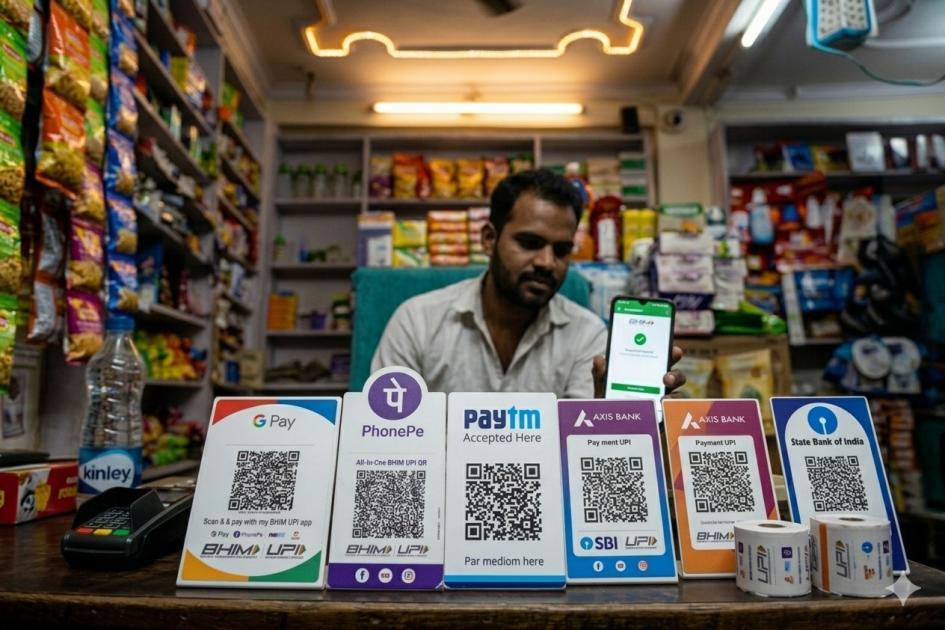
India’s hugely popular UPI payment system is entering a significant new phase. The National Payments Corporation of India (NPCI) has announced a 0.4% Merchant Discount Rate (MDR) on UPI merchant transactions above ₹2,000, effective October 15, 2026.
The development is significant because UPI has operated for years without a conventional merchant transaction fee and has become one of the most widely used digital-payment systems in the world. In August alone, UPI processed about 24.5 billion transactions worth nearly ₹29.8 trillion.
The important point for ordinary users is that the announced MDR is not supposed to be directly passed on to consumers. Person-to-person UPI payments will continue to remain free, while transactions of up to ₹2,000 are protected from charges. The new framework primarily concerns larger merchant payments.
For general merchant transactions above ₹2,000, the rate is set at 0.4%, with a maximum MDR of ₹300 per transaction. Certain sectors—including railways, fuel, telecom and insurance—will have a different flat-fee structure.
The policy is aimed at creating a more sustainable financial model for UPI. Maintaining India’s enormous digital-payment infrastructure requires substantial spending on cybersecurity, fraud prevention, settlement systems and technological upgrades.
The change nevertheless marks an important psychological shift: India’s most recognisable free digital-payment network is beginning to develop a formal revenue model. The government and NPCI are simultaneously trying to ensure that small merchants and everyday consumers are not pushed away from digital payments.
