
A potentially serious development for India’s trade and foreign-policy interests emerged in Washington on Tuesday.
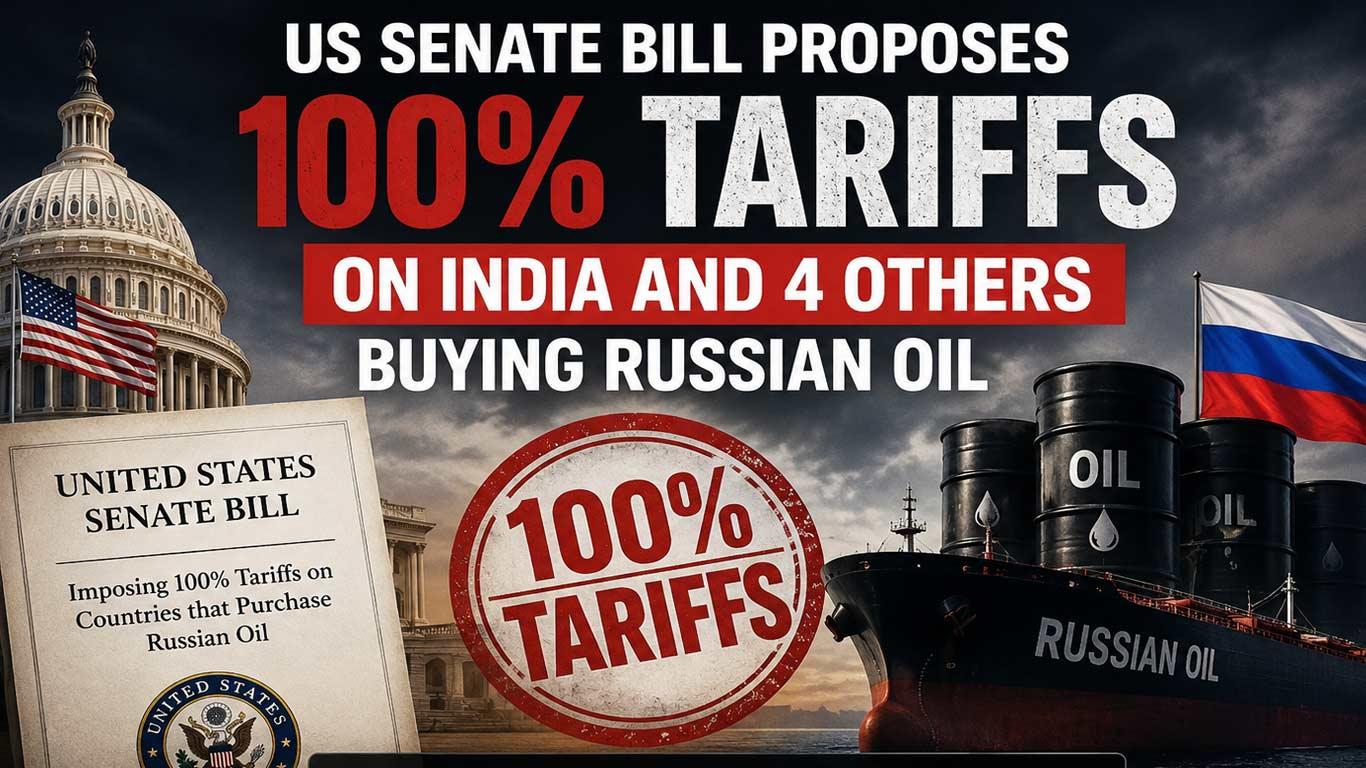
US lawmakers have introduced competing amendments to a sweeping Russia sanctions bill, with one proposal specifically seeking to name India and other major Russian oil-trading partners as potential targets for tariffs of up to 100%.
The proposed measure comes as Washington continues to pressure countries maintaining significant economic ties with Russia. India remains one of the major buyers of Russian crude oil, and that relationship has repeatedly become a point of tension between New Delhi and Washington.
The proposed legislation would give US President Donald Trump the authority to impose extremely high tariffs on countries that continue trading with Russia. However, this is currently a legislative proposal—not a 100% tariff imposed on India. Competing amendments are also being considered, including one that would remove the tariff provision altogether.
The timing makes the development particularly important. India has been attempting to maintain strategic relationships with both Washington and Moscow while protecting its energy interests. Russian crude has been an important component of India’s energy-import strategy, particularly because discounted supplies can help reduce pressure on domestic fuel costs and the current account.
A tariff of this magnitude, if ultimately imposed, could have consequences well beyond oil. It could affect Indian exporters, supply chains, investment sentiment and the broader India-US economic relationship.
For now, the biggest takeaway is uncertainty rather than an immediate economic shock. The House still has to consider the legislation, and the final text could change substantially. Nevertheless, the fact that India has been explicitly named in a proposed US sanctions framework makes this one of the most consequential India-related international developments of the day.
