

FEATURE: In a historic political comeback, the Bharatiya Janata Party (BJP) reclaimed power in Delhi after nearly three decades, securing a decisive victory in the assembly elections. However, what truly turned heads was the party’s bold and unexpected decision to appoint Rekha Gupta as the Chief Minister. A first-time MLA from Shalimar Bagh, Gupta’s elevation over seasoned political heavyweights signals a strategic shift in the BJP’s leadership approach. Her appointment not only reshapes Delhi’s political landscape but also carries broader implications for the party’s influence in states like Bihar and Uttar Pradesh. But why did the BJP place its trust in a relatively new face? Let’s break down the factors that led to this game-changing decision.
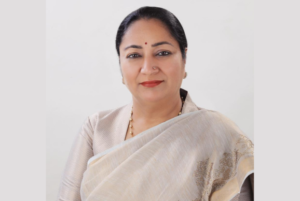
Empowering Women Leadership
Rekha Gupta’s appointment strengthens the BJP’s positioning as a party that prioritizes women’s leadership. She is the fourth woman CM of Delhi, following in the footsteps of Sushma Swaraj, Sheila Dikshit, and Atishi. By placing a woman at the helm, the BJP not only boosts its gender representation narrative but also counters the Trinamool Congress’ (TMC) claim that West Bengal is the only state with a woman chief minister. This move has national significance, particularly as the BJP seeks to consolidate women voters ahead of upcoming elections in other states.

Consolidating Vaishya and OBC Support
Rekha Gupta’s background as a member of the Vaishya community played a crucial role in her selection. The Vaishya community, which constitutes around 8% of Delhi’s electorate, has historically been a strong supporter of the BJP. Moreover, nearly 30% of Delhi’s population is associated with the business class, a key demographic that Gupta represents. Her appointment is seen as an attempt to solidify this vote bank, particularly in light of the upcoming Bihar Assembly elections, where OBC voters form around 63% of the electorate. By choosing an OBC leader in Delhi, the BJP aims to weaken the hold of the Rashtriya Janata Dal (RJD) in Bihar and expand its reach in Uttar Pradesh, where OBCs constitute nearly 52% of the electorate.

Long-Standing RSS and ABVP Roots
Gupta’s deep connections with the Rashtriya Swayamsevak Sangh (RSS) and its student wing, Akhil Bharatiya Vidyarthi Parishad (ABVP), made her a natural choice for the BJP leadership. Having joined ABVP in 1992, she was elected as the President of the Delhi University Students’ Union (DUSU) in 1996-97. Over the years, she has held several key positions within the party, including General Secretary of the Delhi BJP and National Vice President of the BJP Mahila Morcha. Her long-standing association with the RSS ensures ideological alignment with the BJP’s core principles and reassures the party’s cadre.

A Strategic Move Against AAP
Gupta’s appointment serves as a direct challenge to the Aam Aadmi Party (AAP) and its leader, Arvind Kejriwal. With her roots in the Vaishya community—just like Kejriwal—Gupta’s rise presents a stark contrast to the AAP’s governance model. The BJP aims to portray her tenure as a corrective measure against what it describes as AAP’s mismanagement and governance failures. Additionally, her victory over a three-time AAP MLA, Bandana Kumari, with a margin of over 29,000 votes in the Shalimar Bagh constituency, solidified her position as a formidable leader.

Political Ramifications Beyond Delhi
The BJP’s decision to appoint Gupta extends beyond the national capital. Her selection is expected to influence the party’s prospects in states like Bihar and Uttar Pradesh, where OBC and business-class voters play a decisive role. By elevating a woman from the Vaishya community, the BJP aims to reinforce its appeal among these crucial voter blocs. The party is strategically positioning itself as a champion of business communities and backward classes, countering the influence of regional parties like RJD in Bihar and the Samajwadi Party (SP) in Uttar Pradesh.

A New Face for a New Era
Rekha Gupta’s rise as a first-time MLA to Chief Minister symbolizes the BJP’s willingness to bet on fresh leadership. While seasoned politicians like Parvesh Verma and Manoj Tiwari were in the running, the party opted for a leader with a long but largely under-the-radar political career. This decision underscores the BJP’s commitment to grooming new leadership and broadening its political appeal beyond conventional power centres.

Rekha Gupta’s appointment as Delhi’s Chief Minister is a calculated political move designed to achieve multiple objectives. It bolsters the BJP’s commitment to women’s leadership, strengthens its influence among Vaishya and OBC voters, reinforces its ideological roots with the RSS, and challenges the AAP’s dominance in Delhi. Additionally, her selection has wider implications for Bihar and Uttar Pradesh, where the BJP is looking to expand its voter base. By choosing Rekha Gupta, the BJP has demonstrated its ability to blend political strategy with electoral pragmatism, setting the stage for its next phase of governance in Delhi and beyond.
