Subhechcha Ganguly
Exclusive Feature about Ratha Yatra by Eminent Author Trina Kanungo
Ratha Yatra, also known as the Festival of Chariots, is a prominent Hindu festival celebrated mainly in the city of Puri, Odisha, India. It commemorates the annual journey of Lord Jagannath, along with his siblings Balabhadra and Subhadra, from the 12th-century Jagannath Temple to the Gundicha Temple, a distance of about 3 kilometers.
This festival, is rich with episodes and symbolism that resonate deeply in Hindu mythology and tradition. Here are key episodes associated with Ratha Yatra:
Lord Jagannath’s Journey: The primary episode is the annual journey of Lord Jagannath, along with his siblings Balabhadra and Subhadra, from the Jagannath Temple to the Gundicha Temple in Puri. This symbolic journey represents Lord Jagannath visiting his aunt’s house, as per a mythological narrative.
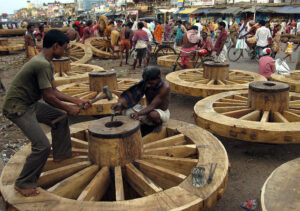
Construction of the Chariots:
Another significant episode is the construction of the massive chariots (rathas) for Lord Jagannath, Balabhadra, and Subhadra. These chariots are built a new each year using traditional methods and materials, involving skilled artisans and craftsmen.
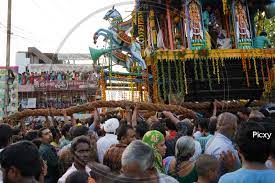
Chariot Pulling by Devotees:
A highlight of Ratha Yatra is when thousands of devotees gather to pull the ropes of the chariots, transporting the deities through the streets of Puri to the Gundicha Temple. This act of pulling the chariots is believed to be highly auspicious and grants blessings to those involved.
Equality and Inclusiveness:
One of the underlying themes of Ratha Yatra is the concept of equality and inclusiveness. Devotees from all walks of life, irrespective of caste, creed, or gender, come together to participate in pulling the chariots and receiving the blessings of Lord Jagannath.
Subhadra’s Marriage: According to some versions of mythology, the Gundicha Temple is considered the maternal home of Lord Jagannath’s consort, Subhadra. The journey to Gundicha Temple symbolizes her annual visit to her maternal home.
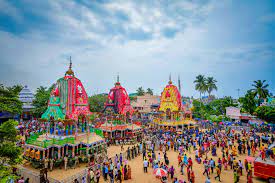
Return Journey (Bahuda Yatra):
After spending about a week at the Gundicha Temple, Lord Jagannath, Balabhadra, and Subhadra return to the Jagannath Temple in a procession known as Bahuda Yatra. This event marks the conclusion of the festival.
These episodes and rituals associated with Ratha Yatra highlight the spiritual significance, cultural richness, and communal celebration that characterize this grand festival in Puri, Odisha.
Five key points about Ratha Yatra:
Annual Journey of Deities:
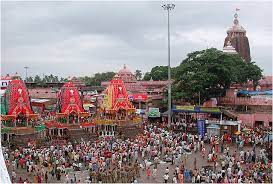
Ratha Yatra is an annual Hindu festival celebrated primarily in Puri, Odisha, where Lord Jagannath, Balabhadra, and Subhadra are ceremoniously transported on elaborately decorated chariots from the Jagannath Temple to the Gundicha Temple.
Chariot Construction:
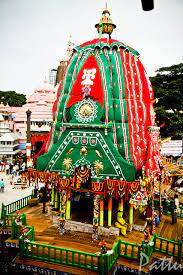
The festival involves the construction of gigantic chariots (rathas) for each deity: Nandighosa for Jagannath, Taladhwaja for Balabhadra, and Darpadalana for Subhadra. These chariots are made anew every year with traditional materials and techniques.
Chariot Pulling:
A significant aspect of Ratha Yatra is the pulling of the chariots by thousands of devotees. This act is considered highly auspicious, and participants believe it purifies the soul and brings blessings from the deities.
Equality and Participation:
Ratha Yatra promotes equality among devotees, as people from all backgrounds participate in pulling the chariots. It symbolizes unity and devotion towards the deities, regardless of caste, creed, or social status.
Spiritual Significance:
The festival signifies various spiritual themes, including the journey of the soul towards divinity, the importance of devotion and service, and the renewal of spiritual energy. It is a vibrant display of faith, culture, and community spirit, attracting millions of pilgrims and tourists annually.
Mahaprasad:
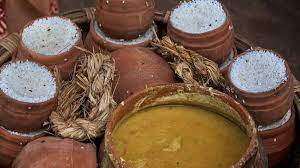
During Ratha Yatra, prasad holds profound significance in Hindu culture and spirituality. Known as Mahaprasad, it is considered highly sanctified and carries the blessings of Lord Jagannath. The preparation and distribution of prasad are integral parts of the festival rituals.
Mahaprasad typically includes a variety of food items that are offered to the deities first and then distributed to devotees as a form of divine blessing. The menu often consists of rice, dal (lentils), various vegetable curries, sweets such as khaja (a crispy sweet pastry) and pitha (rice cakes), and fruits. These items are meticulously prepared in the temple kitchens with strict adherence to religious guidelines and purity rituals.
The prasad distribution during Ratha Yatra is a communal affair where devotees eagerly wait to receive a portion of Mahaprasad as it is believed to purify the soul and bring spiritual upliftment. The act of partaking in prasad signifies participation in the divine grace of Lord Jagannath and fosters a sense of unity among the devotees.
Mahaprasad from the Jagannath Temple is especially revered, and pilgrims often take it back home as a form of sacred souvenir. The process of offering prasad to the deity and then receiving it back as a blessing is a profound expression of devotion and gratitude in Hindu religious practice, emphasizing the sacred bond between the divine and the devotee.
Nobo Kolebar:
“Nobo Kolebar” is a ritual associated with Ratha Yatra in Puri, Odisha, where Lord Jagannath, Balabhadra, and Subhadra receive new clothes. It signifies a symbolic change or renewal. The deities are adorned in fresh attire before embarking on their journey from the Jagannath Temple to the Gundicha Temple. This ritual is considered auspicious and adds to the festive atmosphere of Ratha Yatra, reflecting the devotion and reverence of the devotees towards the divine siblings. The new clothes are meticulously chosen and crafted, enhancing the grandeur and spiritual significance of the occasion.
Bahuda Yatra:
Bahuda Yatra is the return journey of Lord Jagannath, Balabhadra, and Subhadra from the Gundicha Temple to the Jagannath Temple in Puri, Odisha. It follows the Ratha Yatra and takes place around a week later. Devotees eagerly gather to witness this procession, where the deities travel back on their chariots amidst chanting, music, and celebrations. Bahuda Yatra symbolizes the conclusion of the divine siblings’ visit to their aunt’s house and their return to their abode. It is believed that witnessing this journey grants immense spiritual merit and blessings to the devotees, marking the culmination of the annual Ratha Yatra festival.
Ratha Yatra in Mahesh , Serampore:
Beside Puri in Odisha, Ratha Yatra is celebrated with similar passion ,though in not so enormous scale, in Mahes, Serampore in West Bengal. The Rathayatra of Mahesh is the biggest Rathayatra in the world after Puri’s Trio Rath Yatra and the most popular in Bengal, having been celebrated since 1396. It is held in Mahesh, a historical locality within Serampore in the Indian state of West Bengal.
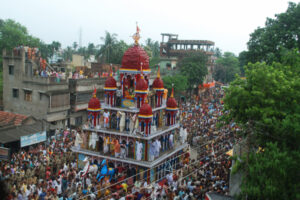
During fourteenth century, Drubananda Brahmachari, a great Bengali sage went to Puri on a pilgrimage. He had a desire to offer Lord Jagannath ‘Bhoga’ with his own hands. But the Temple authority prevented him do so.
Heart-broken Drubananda decided to fast until death. On the third day, he heard the Lord’s voice in his dream, “Drubananda, go back to Bengal. At the bank of river Bhagirathi, you will find a place called Mahesh. There I shall send you a huge Daru-Brahma (Neem trunk). Make the idols of Balarama, Subhadra and mine with this trunk. I am eager to have ‘Bhoga’ in your hand.”
Drubanada returned to Mahesh and started his spiritual Sadhana. Then on a scary rainy night, Daru-Brahma, the Neem trunk, appeared in Mahesh. He jumped into the water and received it. Then he made the Idols of the Holy Trinity and built a Temple there.
After taking Sanyasa, Sri Chaitanya Mahaprabhu left for Puri. On his way, he reached Mahesh. After visiting Drubananda’s Temple, he lost his sense, and went into deep samadhi. Sri Chaitanya named Mahesh as ‘Naba Nilachal’ meaning the ‘New Puri’.
Few Manuscripts by Smt Nanibala Kanungo (A Vaishnava cult follower).
Devotees believe that pulling the ropes of the chariot and having the darshan (sight) of the deities during Ratha Yatra is highly auspicious and grants blessings. The festival attracts millions of pilgrims and tourists from all over the world, making it one of the largest religious gatherings.
Ratha Yatra is not just a religious event but also a cultural extravaganza, with traditional music, dance performances, and street plays adding to the festive atmosphere. It symbolizes unity in diversity and the spiritual journey towards self-realization and divine grace.