Interview Times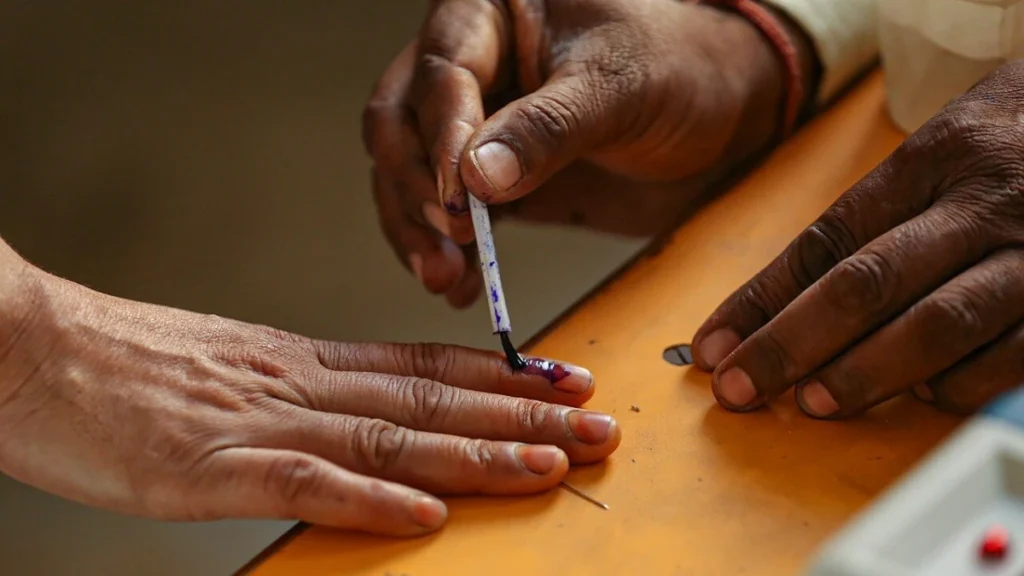
BHUBANESWAR: The second phase of the Jammu and Kashmir Assembly elections began on a positive note Wednesday morning, with voters turning out in large numbers across multiple polling booths. Voting, which commenced at 7 AM, was held amidst tight security arrangements and continued smoothly during the early hours, according to election officials.
Early reports indicated brisk polling, with long queues forming at several locations. Notably, heavy voter turnout was observed in the Chrar-e-Sharif constituency in Budgam district, along with the two constituencies in Ganderbal district. However, in Srinagar district, polling activity started at a slower pace but was expected to pick up later in the day.
Polling in this phase is spread across 26 assembly constituencies, with 13 in the Kashmir Valley and 13 in the Jammu division. The constituencies in Srinagar district include Hazratbal, Khanyar, Habbakadal, Lal Chowk, Channapora, Zadibal, Central Shalteng, and Eidgah. In Budgam district, voters are casting their ballots in Budgam, Beerwah, Khansahib, Chrar-I-Sharief, and Chadoora. The two Ganderbal constituencies are Kangan (ST) and Ganderbal.
In the Jammu division, polling is being held in seats such as Gulabgarh (ST), Reasi, Shri Mata Vaishno Devi, Kalakote-Sunderbani, Nowshera, Rajouri (ST), Budhal (ST), Thannamandi (ST), Surankote (ST), Poonch Haveli, and Mendhar (ST).
This phase of the election will decide the fate of 239 candidates, including former chief minister Omar Abdullah, who is contesting from both Budgam and Ganderbal. Other prominent candidates include Jammu and Kashmir Pradesh Congress Committee (JKPCC) president Tariq Hamid Karra, running in Central Shalteng, and BJP’s J&K chief Ravinder Raina, who is vying to retain his Nowshera seat in Rajouri district.
In Srinagar district alone, 93 candidates are competing, while Budgam has 46 contenders, Rajouri 34, Poonch 25, Ganderbal 21, and Reasi 20. To facilitate the voting process, the Election Commission of India set up 3,502 polling stations across these constituencies, including 1,056 in urban areas and 2,446 in rural regions.
Security has been a primary focus, with police, armed forces, and central paramilitary personnel deployed around polling stations. A multi-tier security blanket has been established to ensure a safe voting environment.
As the day progresses, polling will continue until 6 PM, after which the results of this crucial phase will set the course for the future of the region.