Subhechcha Ganguly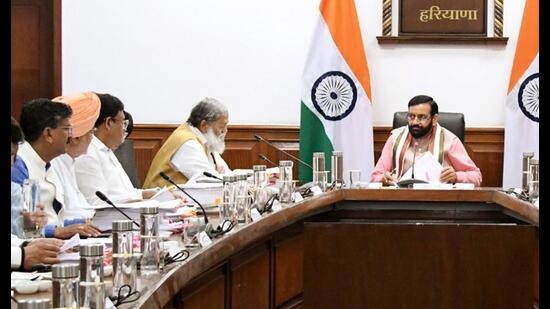
The Haryana Cabinet on Monday approved a new excise policy for 2025–27, effective from June 12, 2025, to March 31, 2027, marking a significant shift by aligning future excise years with the financial year. The revamped policy includes a range of stringent reforms aimed at promoting responsible liquor retailing across the state.
Under the new guidelines, liquor sub-vends will no longer be allowed in villages with a population of 500 or less — a move affecting 152 existing sub-vends in over 700 villages. Officials say this decision is aimed at addressing public concerns in smaller communities.
Taverns (L-52 licensees) will now be allowed to operate only from enclosed premises approved by the excise department, ensuring they are not visible to passers-by. Additionally, live music, dancing, and theatrical performances inside taverns have been banned to maintain a regulated drinking environment.
In urban areas, liquor vends will now be prohibited from opening before 4 am — a tightening from the previous 8 am allowance. The minimum distance of liquor shops from bus stands, schools, colleges, and religious places has been increased from 75 to 150 meters. Vends will also not be allowed to be directly visible from national or state highways.
A tiered license fee will now apply for establishing ahatas — designated spaces for consuming liquor — with a new area cap of 1000 square meters. The fee is set at 4% of the license cost in Gurugram, 3% in Faridabad, Sonepat, and Panchkula, and 1% in other districts.
The policy enforces a blanket ban on all liquor advertisements, including within licensed zones. Violations will incur steep penalties: ₹1 lakh for the first offence, ₹2 lakh for the second, ₹3 lakh for the third, and further breaches may lead to license cancellation.
The state has set an excise revenue target of ₹14,064 crore for 2025–26, up from ₹12,700 crore collected in 2024–25, exceeding the previous target of ₹12,650 crore.
- WB: According to the residents, the firecracker factory where the explosion occurred created crude bombs
- Alarming Surge in Pollution Levels Across India Amidst Growing Concerns
- No Second Marriage Without Permission, Says Assam Government
- “Electoral Bonds A Success Story, Everyone Will Regret Its Scrapping” Says PM Modi