Subhechcha Ganguly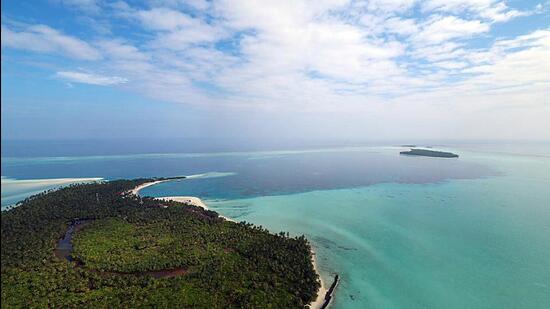
Lakshadweep MP Mohammed Hamdulla Sayeed has strongly objected to a recent order by the Union Territory’s education department that excludes Arabic and Mahal (Divehi) languages from the three-language formula under the National Education Policy (NEP). In a letter addressed to UT Administrator Praful K. Patel, the Lok Sabha MP demanded the immediate withdrawal of the May 14 order and the reinstatement of the two languages as optional subjects in schools.
Arabic, taught as an optional language across all islands of Lakshadweep, and Mahal—a dialect of the Maldivian Divehi language spoken exclusively in Minicoy—have been integral to the cultural and educational fabric of the UT. The MP emphasized that these languages are not just academic tools but vital to the region’s cultural identity, community life, and early literacy.
Highlighting that Arabic is the primary language for religious education among the Muslim-majority population and often the first language children learn to read and write, the MP said the new directive replaces Arabic and Mahal with Hindi as the third language, alongside English and Malayalam as the compulsory languages.
Sayeed criticized the timing of the order, issued during school summer vacations and without consultation with parents, teachers, or community stakeholders. He warned that enforcing the language shift for students from Classes I to IX would cause educational disruption, especially for those lacking proficiency in Hindi.
The order has triggered widespread protests across Lakshadweep, particularly in Minicoy. The MP cautioned against turning the education system into “a vehicle for cultural exclusion or academic disruption,” urging authorities to preserve the linguistic heritage of the island territory.
- Rising Suicide Rates in India: The Impact of Escalating Stress
- BJP Will Change The Constitution If They Come To Power Again : Priyanka Gandhi
- Shocking: 6 Factory Workers Killed And 22 Critically Ill After Inhaling Toxic Gas In Gujarat Factory
- India’s First ‘Atal Study Centre’ To Start At Banaras Hindu University