Suparjya swain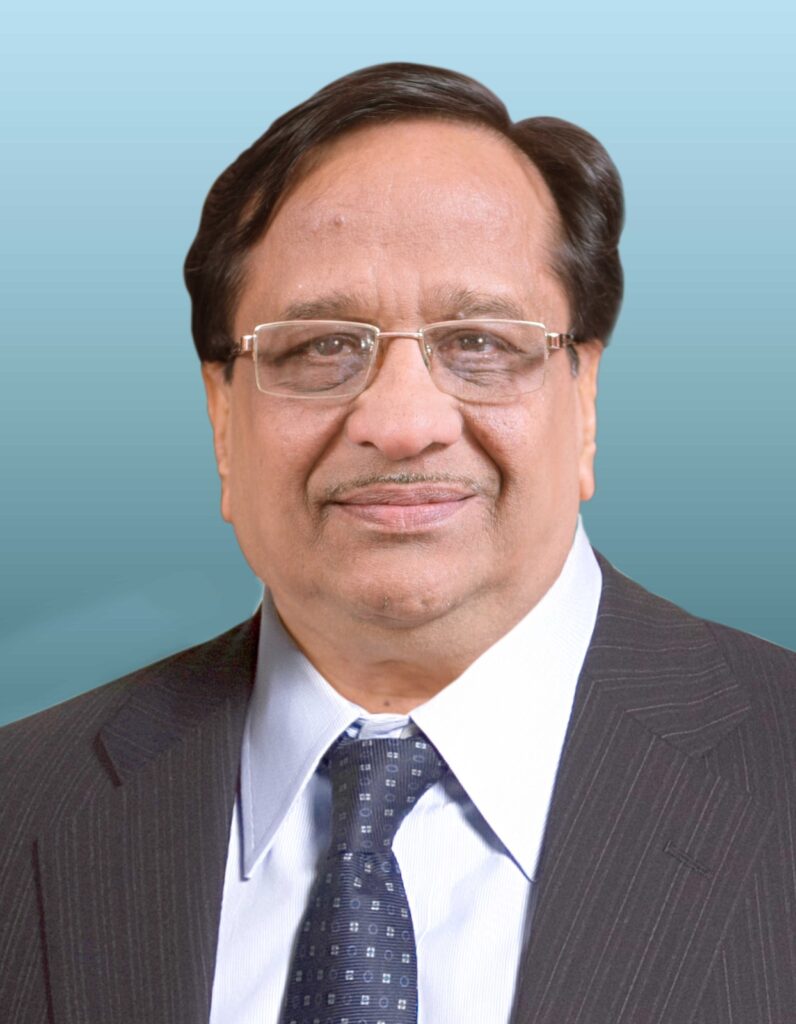
 Feature: In an age that often measures success in valuations and headlines, Shri Ganesh Prasad Bagaria’s life is a quiet rebuke — a story that insists legacy is built in small, steady acts of integrity, service, and painstaking attention to craft. From a single bag of salt bought for ₹30 in 1975 to a diversified group that touches the lives of thousands, his is not merely the arc of an entrepreneur; it is the unfolding of a belief that business must serve a broader social purpose.
Born on 16 February 1953 in Rourkela, Shri Bagaria inherited neither easy fortune nor a blueprint for scale. His family ran a respected grocery, Murali Ansari, and the rhythms of trade around that shop seeded his earliest lessons. Tragedy came early: his father passed away in 1974, before the young man could get his blessing for expanding the family enterprise. What followed might have been retreat — instead it became resolve. With a flour chakki lying unused behind the shop and a fierce will to make things right, Shri Bagaria launched Grihasthi Udyog. He started small — selling salt and later turmeric, chilli, and coriander sourced from local markets — but he always kept one uncompromising standard: purity.

The insistence on purity is not a marketing line for Shri Bagaria. For him, masala is akin to medicine — something that enters the body and therefore must be beyond reproach. That conviction shaped early operational choices that would later mark Grihasthi’s reputation: double-stitched packets rather than loose sale, a hand on every stage of grinding and packing, and a refusal to cut corners even when resources were thin. By 1984, his venture had moved into a rented unit and installed grinding machinery. Thirty to forty labourers worked long hours; quality control was hands-on and exacting. Over time, the enterprise that began with one man and a bag of salt grew into a house of brands — more than 150 SKUs, showrooms in Bhubaneswar and Rourkela, and an annual turnover reported at ₹72 crore.
But numbers tell only half the story. The other half is the lived ethic behind the brand: family stewardship, community commitment, and spiritual practice woven into daily work. Shri Bagaria’s wife, Smt. Manju Devi, is more than a director on paper; she is the guardian of product quality, personally testing items before they reach the market and driving product innovation. Their son, Shri Gokul Anand Bagaria, now manages operations as MD, marrying modern strategies with the company’s core values. Three daughters, family ties, and a cadre of long-standing employees complete a business that is as much a household as a corporation.
That sense of household extends to how work is lived. Grihasthi’s factory sits near the Koel river; grounds are kept immaculate, a garden blooms beside portraits of gods and goddesses, and the daily ritual of bhajans — a half-hour every evening — brings the entire staff together. An ‘Akhanda Dipa’ has burned since the company’s founding, a physical emblem of continuity and intention. These are not ornaments but the scaffolding of a workplace culture where dignity, reverence, and community matter as much as productivity.
Service to animals, particularly cows, is where Shri Bagaria’s convictions become most visible. Since 1985 he has been a pillar of go-seva. Shri Gomandir Goshala, established and supported largely by him, houses more than 200 cows; the Nand Gaon Goshala, run in association with the Rourkela Municipal Corporation, cares for nearly 400 animals. The daily choreography of care is meticulous: cows bathed and cleaned twice a day, music — flute and tabla — played in their presence, and a unique ritual of chhapan bhog (56 items) offered regularly. Simple acts — feeding 5,000 rotis daily to abandoned cows and street dogs for years; distributing 1,000 food packets during the height of the COVID lockdown; offering calf celebration and respectful last rites — articulate a larger moral world where compassion meets duty.
Shri Bagaria’s personal discipline underpins these programmes. For the last five years he has chosen to live modestly, in a small room within the factory compound, aligning his life with the creatures and the workers he serves. His daily routine begins with go-pujan; he consumes go-mutra as part of an Ayurvedic regimen and even bathes with a traditional mixture of gobar and soil — practices that to outsiders may seem austere, but to him are expressions of consistency between belief and behaviour.
His public life has been equally hands-on. From 1969 he served as head trainer at the RSS’s Shivaji Sakha in Rourkela and later took responsibility as secretary of Saraswati Sishu Mandir. He currently chairs the Swadeshi Jagran Manch, Rourkela unit, and has led the Youth Hostels Association of India, Rourkela — roles that reflect a longstanding commitment to civic engagement, cultural education, and indigenous enterprise. He is also a member of the Lions Club of Vedvyas, joining civic-minded peers in community projects and relief efforts.
This combination of entrepreneurship and activism has not gone unnoticed. Awards and recognitions have followed, from NSIC excellence honours to a Corporate Excellence award presented by the Chief Minister of Odisha in 2020, and go-seva awards from national organizations. Academic recognition has come in a different register: case studies of Grihasthi Udyog have entered curricula at educational institutions including IITs and IIMs, and IIM Ahmedabad has circulated a publication acknowledging the company’s model — a rare institutional endorsement of a regional, value-based enterprise.
Perhaps the most striking statistic is the company’s social footprint. Grihasthi Udyog and its goshala together employ around 250 people, seventy percent of them women. That gender balance is deliberate: Shri Bagaria has long believed that empowerment happens through livelihood. Celebrations at the factory are family affairs; pujas and national festivities include workers’ families, turning employment into a social architecture that supports lives beyond the production line.
And yet Shri Bagaria’s vision is not about resting on laurels. Grihasthi Dairy — a strategic extension of the go-seva work — is a vision of a modern, ethical dairy that supplies pure cow’s milk and milk-based products that mirror a mother’s milk in purity. Plans are afoot for expansion, investment in sustainable practices, and technology that safeguards animal welfare while scaling supply. This is continuity: the same commitment to purity that shaped spices now informs dairy ambitions.
What are the lessons for today’s entrepreneurs? Shri Bagaria’s life suggests several. First, scale is possible without surrendering principle: insistence on quality need not hurt margins in the long run; it builds brand capital. Second, leadership is an artifact of consistency: living the values you promote changes workplace dynamics and consumer trust. Third, social responsibility need not be an external add-on; when integrated into the business model it strengthens resilience — whether through a committed workforce, community goodwill during crises, or the moral clarity that attracts partners and customers.
Those who have worked with him describe Shri Bagaria as humble but firm, devotional but practical — a man who prays in the morning and signs cheques in the afternoon. He keeps a small memorial garden where his parents’ cremated remains are preserved, a daily reminder of roots and responsibility. He cherishes the “Manokamna Brikshya” in the goshala grounds — a tree where visitors tie threads and seek blessings — and treats every act, from product testing to feeding a stray, as part of a single vocation: to make business and life cohere.
For readers and aspiring leaders, his story is an invitation. It invites us to measure success differently: not by the speed of growth alone but by the durability of the institution built and the grace with which it is stewarded. In a world that can be transactional, Shri Bagaria’s enterprise is relational. In an era of engineered quick wins, his is the patient work of craft — testing, refining, packing double-stitched packets of masala that carry not just flavour but trust.
As Grihasthi Udyog moves forward under a generational handover — with Smt. Manju Devi anchoring quality and Shri Gokul Anand Bagaria steering expansion — the company looks set to scale its reach while keeping its center steady. Shri Bagaria, meanwhile, continues to live the principle he’s always preached: that business must nourish body, spirit, and community. His is not a story of dramatic leaps; it is the cumulative power of choices made consistently, over decades, in service of a larger good.
When the dust settles and the lamps remain lit, what remains visible is a life that married commerce to conscience. For those who seek models of leadership that combine ambition with empathy, Shri Ganesh Prasad Bagaria offers a template — modest in presentation but monumental in consequence. His life is an argument that true enterprise is measured not only by balance sheets, but by the breadth of lives it uplifts.