Dikhyaa Mohanty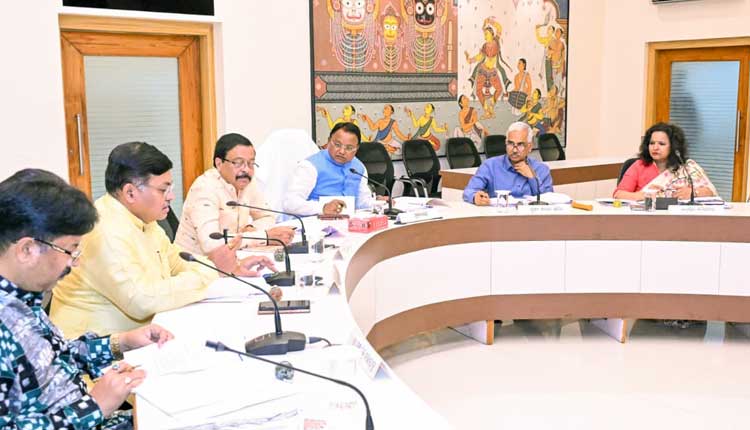
The Odisha Cabinet authorized the extension of the “Crop Diversification Programme” for an additional three years, from 2025–2026 to 2027–2028, with an anticipated expenditure of ₹1,523.98 crore on Saturday. This is a significant step towards sustainable agriculture and increased farmer income. The initiative, which is run by the Department of Agriculture and Farmers’ Empowerment, was originally introduced as a trial project under the Mega Lift Irrigation Projects during Kharif 2021 to assist farmers in upland and medium-land areas to switch from paddy to non-paddy crops. Due to its effectiveness, it was expanded in FY 2022–2023 with two further elements: the development of high-value non-paddy crops and indigenous aromatic rice.
The recently authorized phase represents a major extension of the program and reaffirms the State’s emphasis on better farmer livelihoods, effective water management, and sustainable soil health. As part of the plan, the government hopes to:
- Cover 11.50 lakh hectares of rice fallow areas under pulse crops,
- Diversify 1.95 lakh hectares of upland and medium land paddy to non-paddy and high-value crops, and
- Convert 1.97 lakh hectares of regularly cultivated paddy land to indigenous aromatic rice varieties with export potential.
- Officials said the programme — the first of its kind in Odisha — is designed to promote balanced cropping systems that will revive soil health, increase micro-fauna, preserve the chemical and biological integrity of the soil, and enhance nutritional security and income for farmers across all 30 districts of the state.
- Supported through the State Plan Scheme, the initiative aligns with the government’s broader goal of achieving climate-resilient, diversified, and high-value agriculture, contributin