Manaswini Mohapatra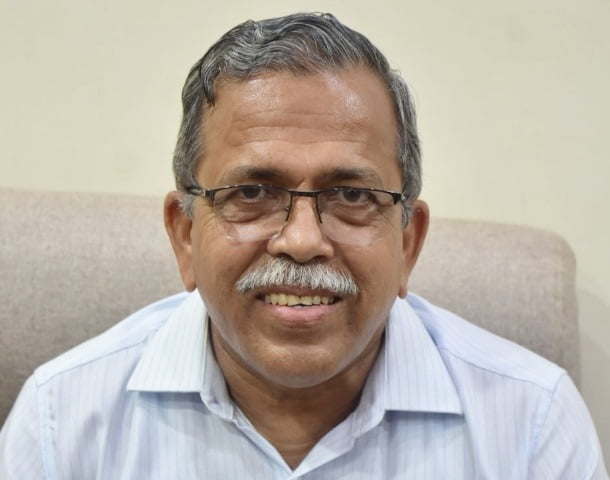

Over a distinguished 31-year career in higher education in Odisha, the Vice Chancellor has made profound contributions to academia, transitioning from an initial focus in science to becoming a passionate advocate for human resource management and organizational behavior. Believing that teaching is a noble profession because it essentially “builds human beings,” he has successfully balanced rigorous academic administration with a deep love for teaching and research. A cornerstone of his academic philosophy is the promotion of the Indian Knowledge System. He strongly urges scholars to pursue indigenous & original research to solve local issues rather than blindly adopting Western development models, reminding students that ancient Indian figures like Chanakya and Panini were early pioneers of management & medicine. This dedication to local contexts also inspired him to author 13 textbooks infused with Indian examples, replacing the foreign case studies that previously alienated local students.
His transformative leadership has continually reshaped higher education institutions across the state. As the Director of the College Development Council at Utkal University, he oversaw nearly 400 affiliated colleges, championing NAAC accreditation, autonomous status, and the implementation of the Choice Based Credit System (CBCS) to ensure academic degrees translated into practical, employable skills. Later, taking charge as the Vice Chancellor of Fakir Mohan University in 2021, he dedicated himself to elevating the institution’s global and national standing through grueling 14-hour workdays. Part of his vision involved extensive campus beautification, which included transforming the university into a green campus where fossil fuel vehicles are restricted. Under his guidance, the university spearheaded groundbreaking, localized research initiatives centered around “Dhana, Paan, Mina” (rice, betel, and fish), collaborating with national institutes to develop drought-proof rice, mosquito repellents, and new hybrid fish varieties. Expanding on these ecological efforts, the university established a major research center (OMBRIC) backed by a ₹10 crore government grant to study horseshoe crabs, alongside coastal mangrove research to mitigate cyclone damage. Furthermore, his administration placed a strong emphasis on language research to honor the legacy of Fakir Mohan Senapati. By reviving historical magazines, publishing vital texts, and instituting a national literary award, the university actively championed the preservation of the Odia language and Odia Asmita (Odia pride).
The interviewer posed a particularly striking question that highlights the core values of his administration: “The ‘Each One Teach One’ program and village adoption schemes are grassroots ideas. What inspired you to bring them into a university setting?”
In response, the Vice Chancellor explained his deeply held belief that true national progress is impossible without rural development. Noting that the university is situated in a rural area where local children were working in stone quarries instead of attending classes, he launched the “Back to School” program. This initiative successfully reintegrated dozens of children into the education system by actively counseling their parents & providing essential school supplies. Recognizing that uneducated parents might struggle to see the value of schooling, he also established 12 evening schools under the “Each One Teach One” initiative to teach local adults’ basic literacy & bank operations.
His grassroots commitment extends far beyond the classroom, involving organized health checkup camps and rural football tournaments designed to scout village sports talent and funnel them into district and state-level matches. Furthermore, his active advocacy with the grassroots “Agami Odisha” movement successfully helped bring premier educational institutions like an IIT, an IIM, and a Central University to the state. Ultimately, he leaves young educators and researchers with a powerful parting message: embrace & integrate the Indian Knowledge System across all disciplines – whether in science, technology, humanities, or languages. By incorporating India’s rich intellectual heritage into education, we can build a more rooted, relevant, & globally competitive higher education system. Such efforts will not only deepen our understanding of India but also contribute to the nation’s progress. Together, through collaboration, innovation, & a shared commitment to excellence, we can help realize the vision of Vikasit Bharat 2047 and Vikasit Odisha 2036. Let’s go together to grow together, and contribute meaningfully to the future of our country.