
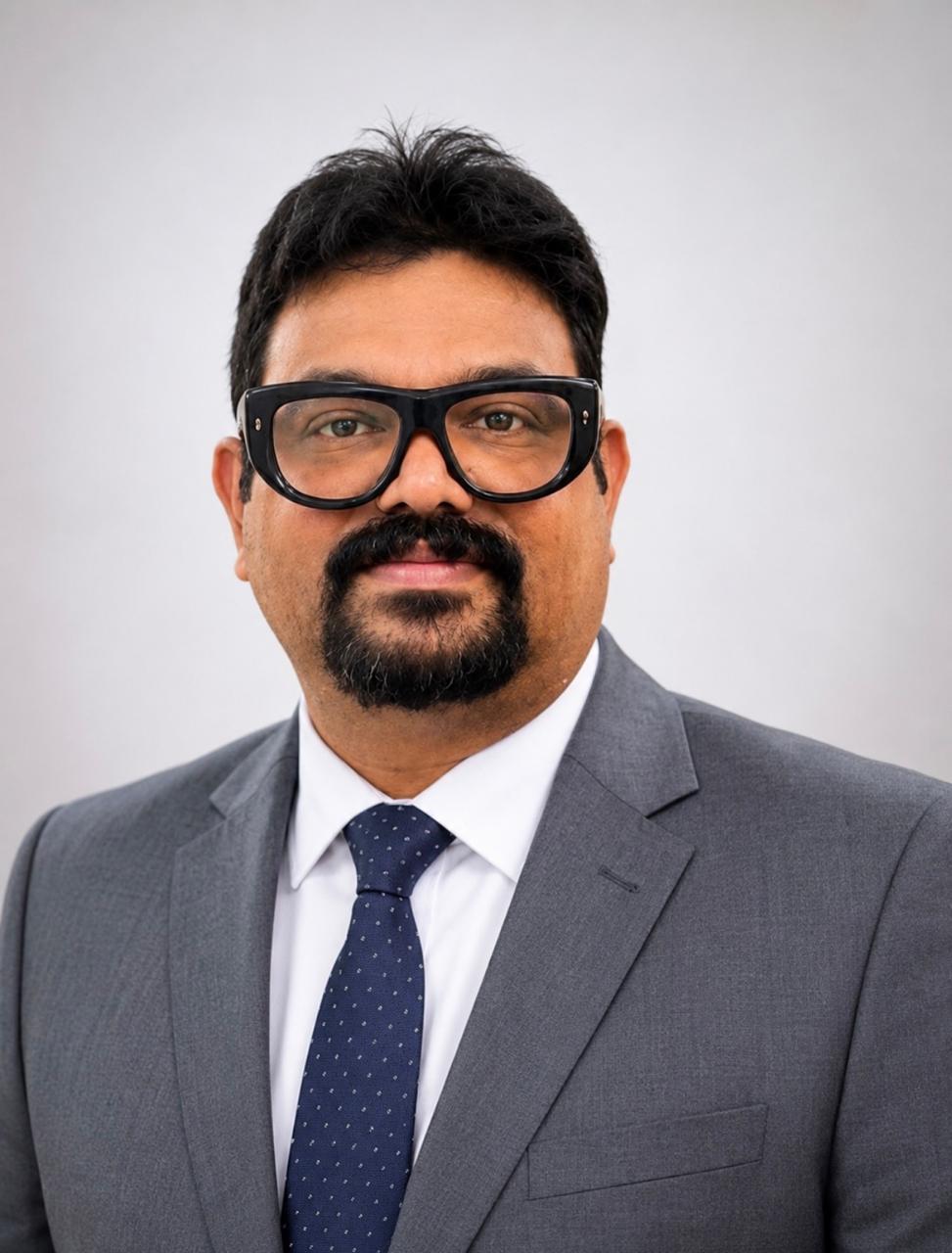
For Shaji Sivadasan, engineering was never just a career choice — it was the pull of watching an idea take physical shape. A drawing turns into a structure, a machine roars to life, and eventually an entire power plant begins to perform. That transformation, he says, is what first drew him into the field, and it is a fascination that has never left him even after two decades of leading some of India’s most complex EPC projects in the power sector.
His journey to founding Usha Projects India Private Limited was not born of a single dramatic moment but of years spent understanding an industry that, in his words, is about far more than engineering alone. It is about people, discipline, execution, safety, and the willingness to take responsibility when plans go awry. As a first-generation entrepreneur with no inherited business or ready-made platform to lean on, Sivadasan had to earn every order, every relationship and every ounce of reputation from scratch. Usha Projects, he reflects, was never meant to be just a company — it was meant to be an organisation people could trust.
That trust has been tested across more than 100 major projects, spanning thermal power plants, ash handling systems and water treatment facilities. Yet when asked to single out the most demanding assignment of his career, Sivadasan points to a nearly 100-kilometre iron ore slurry pipeline project that cut across railways, roads, bridges, rivers and mountainous terrain, executed using the Horizontal Directional Drilling method. The engineering, he notes, was only one dimension of the challenge; logistics, environmental conditions and at times serious security concerns demanded that decisions be made on the ground rather than from behind a desk. The experience crystallised a lesson he now carries into every project: execution is about anticipating problems rather than merely reacting to them, and technology can solve technical issues, but only ownership and accountability ultimately carry a project to success.

Running two organisations simultaneously — as CEO and Chairman of Usha Projects and COO of Inflonova — has shaped Sivadasan’s approach to leadership in equal measure. Rather than attempting to control every decision personally, he sees his role as setting direction, building the right team and instilling a culture where expectations are clear. He spends considerable time engaging directly with ground-level teams, believing that a well-functioning system should surface a problem long before it escalates into a crisis. Delegation, in his view, is not about offloading responsibility but about ensuring that whoever takes a decision also owns its outcome — a philosophy that, he says, is what allows an organisation to eventually become bigger than any single individual.
Underpinning all of this is a personal creed Sivadasan describes not as a slogan but as a lived practice: “Service before self. Respect all. Help all.” In an industry defined by tight deadlines, commercial pressure and high-stakes technical decisions, he insists on keeping sight of the larger picture — placing the work, the client and the team ahead of personal interest, and extending genuine respect to everyone from senior executives to site workers, who he believes often hold the most valuable on-ground information. Helping others, he adds, rarely requires grand gestures; sometimes it is simply standing beside someone during a difficult moment.
That same instinct toward service extends well beyond the boardroom. Sivadasan has been involved in community initiatives that have touched more than 3,000 lives, including eye-screening camps, blood donation drives and disaster relief efforts following the devastating 1999 Super Cyclone in Odisha. The scale of human suffering he witnessed during the cyclone left a lasting impression, reinforcing his belief that social responsibility is not separate from business but woven into what it means for an organisation to exist within a community. For him, the true measure of a company lies not in the volume of business it transacts but in the number of lives it improves along the way.
Looking ahead, Sivadasan sees the EPC landscape entering a decade of significant transformation, shifting from conventional execution toward technology-driven, data-led and sustainable infrastructure. Digital monitoring, automation, predictive maintenance and artificial intelligence, he predicts, will become standard components of project execution, while sustainability moves from being a separate consideration to an integral part of engineering itself. Rather than seeing conventional engineering fade away, he expects it to grow smarter — and Usha Projects, he says, is building itself to combine engineering capability, execution strength and emerging technology to remain relevant to the industry’s future needs.
To young engineers and aspiring first-generation entrepreneurs eyeing India’s infrastructure and power sector, Sivadasan’s counsel is unambiguous: chase capability before success, not the other way around. He urges newcomers to spend time at the site, understand how machinery and projects truly function, and resist the temptation to rush. Protecting one’s integrity, he stresses, matters more than any single order, since reputation in infrastructure travels far faster than a business card, and trust once lost is exceedingly difficult to rebuild. Above all, he leaves young professionals with a reminder that success should make a person more humble, never less — and that the people who helped along the way should never be forgotten.
