
With ₹5,800 crore worth of projects already cleared, a 5,500-acre tourism land bank and stronger incentives for hospitality investors, Odisha is positioning tourism as a serious pillar of its next phase of economic growth.
By – Snigdha Mishra

BHUBANESWAR: Odisha’s tourism story is increasingly becoming an investment story.
Long celebrated for the Jagannath culture of Puri, the architectural grandeur of Konark, Chilika’s vast ecosystem, tribal heritage, forests and an expansive coastline, the state is now attempting to convert its tourism assets into a larger hospitality and investment economy.
The scale of that ambition is becoming clearer.
Chief Minister Mohan Charan Majhi has said Odisha has received new tourism investment proposals of around ₹11,500 crore, while projects involving approximately ₹5,800 crore have already secured single-window clearance.
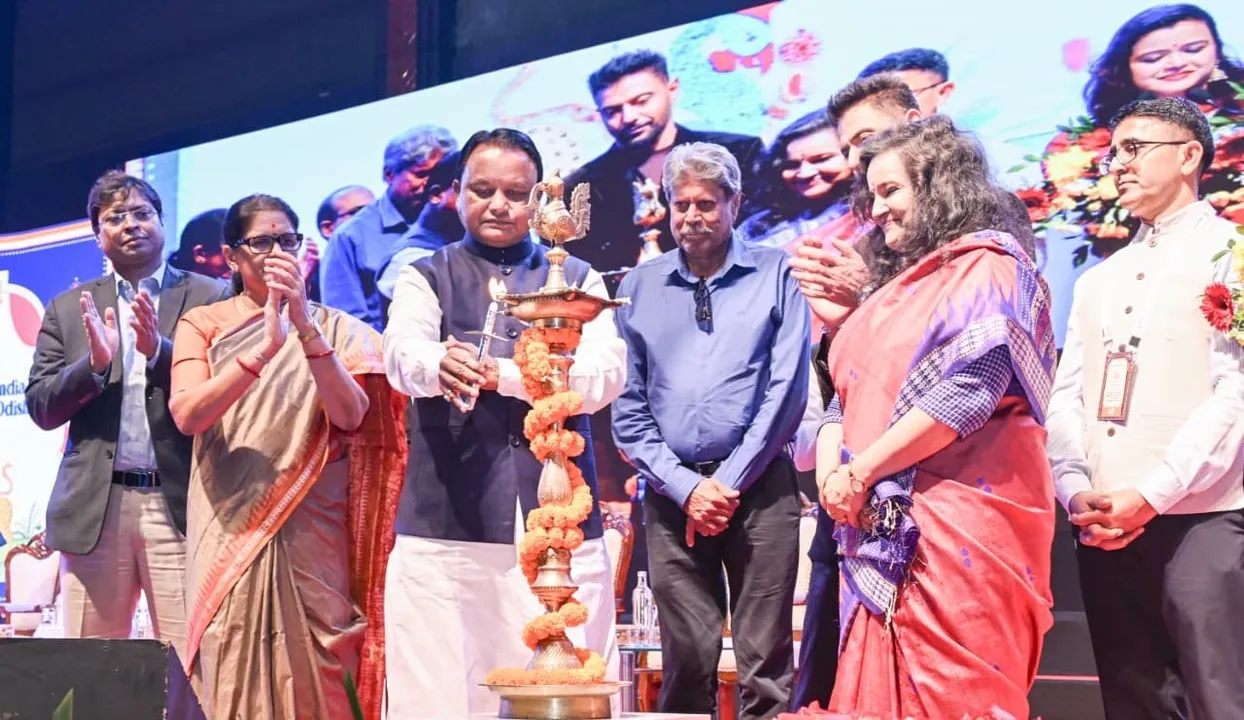
The announcement comes alongside the seventh edition of Odisha Travel Bazaar 2026 in Bhubaneswar, where the state is courting domestic and international tourism operators, hospitality brands and investors.
The numbers give Odisha’s tourism push a distinctly different character: this is no longer only about attracting more visitors. It is increasingly about hotels, resorts, infrastructure, private capital, employment and creating investable tourism destinations.
From Destination Marketing to Investment Destination
For years, Odisha has possessed many of the ingredients of a major tourism economy. What it has often lacked is the depth of hospitality infrastructure and international visibility enjoyed by India’s established tourism destinations.
The state government is now trying to narrow that gap.
At Odisha Travel Bazaar, Majhi invited national and international investors, hospitality brands and tourism partners to explore opportunities across the state. The government’s strategy combines destination development with incentives, land availability, safety infrastructure and digital facilitation. Chief Minister of Odisha
One of the most significant components is a 5,500-acre tourism land bank, designed to make suitable land more readily identifiable for tourism-related projects.
For investors, that matters. Land availability and project clearances are often among the biggest hurdles in developing large hotels, resorts and destination projects.
₹1,500 Crore Government Push
Private investment is being accompanied by a substantial policy push.
The Odisha government has made a ₹1,500-crore provision for the 2026–31 period to support tourism development.
It has also revised investment conditions to attract a wider range of hospitality projects. The minimum room requirement for star-category hotels has been reduced to 10 rooms, while capital subsidy support has been enhanced to as much as ₹120 crore, depending on applicable conditions. Chief Minister of Odisha
Together, these measures signal an attempt to attract not just large luxury chains but potentially boutique hotels and differentiated hospitality concepts.
The larger objective is to create an ecosystem in which tourism investment extends beyond a handful of established destinations.
Odisha Wants Tourism Beyond the Golden Triangle
Odisha’s tourism economy has traditionally been heavily associated with the Bhubaneswar–Puri–Konark Golden Triangle.
That geography remains crucial, but the next phase of growth is expected to be broader.
The state has been working on a One District–Multiple Tourism Initiatives approach under which five to 10 smaller tourism destinations could be developed in each district. Officials have indicated that the initiative could eventually cover around 150 to 200 destinations across Odisha. The New Indian Express
This could open opportunities around eco-tourism, nature destinations, heritage properties, adventure tourism, community-based experiences and lesser-known cultural circuits.
Economically, decentralising tourism is important because the benefits of visitor spending can then travel deeper into districts through accommodation, transport, food, handicrafts, guides and local enterprises.
A Digital Door for Tourism Investors
Odisha is also attempting to simplify the investment journey itself.
During the Travel Bazaar, the government launched a new Odisha Tourism Portal as well as a Tourism Investment Incentive Management System.
The intention is to provide investors with a more streamlined mechanism for accessing information and navigating incentives rather than dealing with fragmented processes.
The government has also announced a dedicated Tourism Investment Roundtable, aimed at directly connecting potential investors with emerging opportunities in the state. Chief Secretary Anu Garg has emphasised that Odisha wants to move beyond being an under-discovered destination and strengthen its visibility in the tourism marketplace. The New Indian Express
That shift—from merely promoting destinations to actively facilitating capital—is arguably the most important aspect of the current strategy.
Safety and Visitor Experience Enter the Investment Equation
Tourism infrastructure is not limited to hotels.
Odisha says Tourist Police are being deployed at 29 destinations, while 1,000 lifeguards have been trained through OSWALI.
These interventions matter commercially as well. A destination seeking higher-value domestic travellers, international tourists and major hospitality investment needs more than attractive landscapes; it needs safety, connectivity, predictable services and a reliable visitor experience. Chief Minister of Odisha
For Odisha, improving this supporting ecosystem could determine whether investment announcements translate into sustained tourism growth.
The Bigger Economic Opportunity
Tourism has a distinctive economic multiplier.
A new industrial plant may directly transform one location, but a successful tourism destination can support an entire local ecosystem—hotels, restaurants, taxis, tour operators, artisans, photographers, guides, event businesses, food producers and numerous MSMEs.
That is particularly relevant for Odisha.
A tourism strategy that spreads beyond major cities and established destinations could generate economic activity in regions where conventional large-scale industry may have a smaller footprint.
The state’s recent focus on smaller district destinations also specifically envisages livelihood opportunities for women, young people and MSMEs. The New Indian Express
This makes the ₹11,500-crore investment pipeline significant not simply because of its headline value, but because of the type of local economic ecosystem tourism can create.
The ₹11,500 Crore Question: Proposals Must Become Projects
There is, however, an important distinction.
₹11,500 crore represents investment proposals—not ₹11,500 crore already invested on the ground.
For Odisha, the real measure of success will therefore be conversion.
The more encouraging number at this stage is the approximately ₹5,800 crore worth of projects reported to have received single-window clearance.
From here, attention will shift to land allocation, financing, construction, implementation timelines and eventual commissioning.
That distinction is crucial because tourism ambitions are ultimately measured not by announcements but by hotel rooms created, destinations developed, visitors attracted, jobs generated and local businesses sustained.
Can Odisha Build Its Next Big Economic Brand?
Odisha’s industrial identity is already firmly associated with steel, aluminium, mining, power, ports and mineral-based manufacturing.
Tourism offers a very different growth proposition.
The raw material is not extracted from the ground. It lies in the state’s coastline, forests, wildlife, cuisine, crafts, festivals, architecture and cultural heritage.
The challenge is to transform those advantages into globally competitive experiences without compromising the environmental and cultural assets that make the destinations valuable in the first place.
The ₹11,500-crore proposal pipeline suggests investors are taking a closer look.
Now Odisha has to turn that interest into operating assets.
If the state succeeds, the next chapter of Odisha’s investment story may not be written only inside factories, mines and industrial parks.
It could also be written along its beaches, inside its forests, around its heritage destinations and across a new generation of hotels and resorts.
