
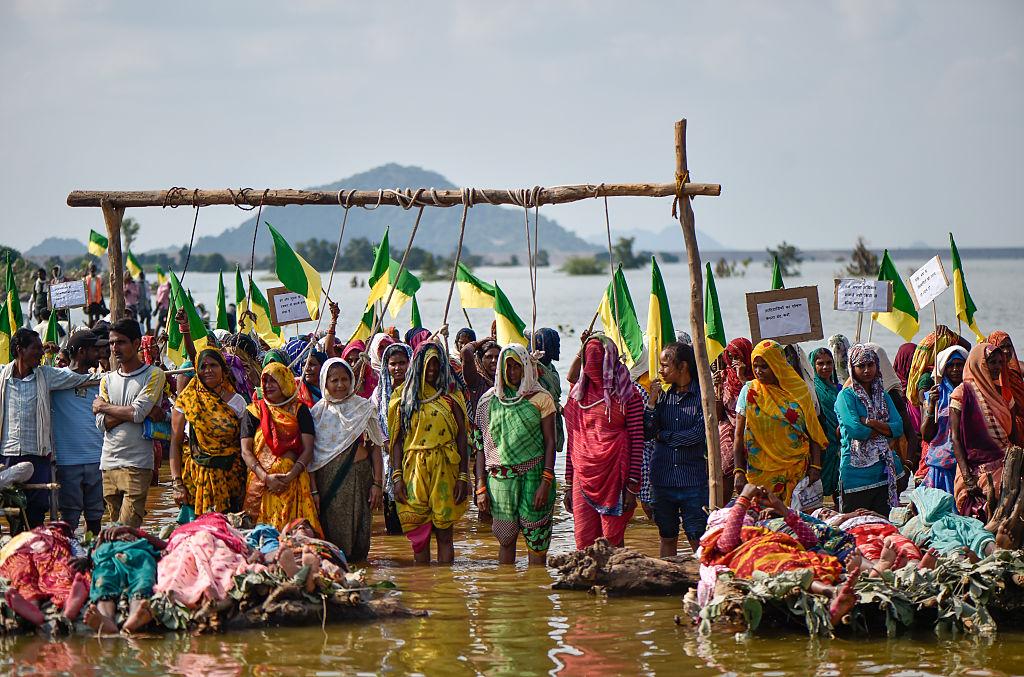
AJAYGARH, MADHYA PRADESH — India’s ambitious river-linking programme is facing renewed scrutiny as tribal residents in Madhya Pradesh protest against the loss of homes, agricultural land and places of worship associated with dam construction under the Ken–Betwa River Linking Project. The dispute has brought questions of compensation, rehabilitation, environmental protection and water security into sharp focus.
In a report published on 12 October, Reuters documented protests near the Majhgawan Dam, where affected residents say rising water levels are threatening settlements and disrupting livelihoods built around ancestral land. The confrontation highlights a central challenge facing large infrastructure projects: how to deliver promised public benefits without leaving vulnerable communities to bear disproportionate costs.
## A National Water-Security Ambition
The Ken–Betwa Link Project is the first major implementation of India’s long-standing river-interlinking programme under the National Perspective Plan. It is designed to transfer water from the Ken basin in Madhya Pradesh to the Betwa basin, which extends into Uttar Pradesh.
The broader river-linking vision seeks to connect around 30 rivers through a network of dams, reservoirs, canals and related infrastructure. Supporters argue that moving water between river basins could improve irrigation, strengthen drinking-water supplies and reduce the vulnerability of drought-prone regions.
The Bundelkhand region, which spans parts of Madhya Pradesh and Uttar Pradesh, has long faced water scarcity and agricultural uncertainty. Improved water availability could support farmers, strengthen rural incomes and provide more dependable supplies to communities.
However, the first major project is also demonstrating how complicated water redistribution can become when construction affects inhabited landscapes, forests and established sources of livelihood.
The Ken–Betwa project’s first phase has an estimated cost of approximately $4.6 billion, according to Reuters. It forms part of a wider national river-linking ambition whose estimated overall investment is considerably larger.
## Why Villagers Are Protesting
For affected families, the debate is not simply about the future distribution of water. It is also about what happens when the land on which their lives depend is submerged or acquired.
Reuters reported that tribal resident Bitti Bai Kondar joined other villagers in protesting in the Ken River, using mud to symbolise her connection to land her family has cultivated for generations. Other demonstrators have used symbolic funeral-pyre protests to express their opposition to displacement without what they consider adequate rehabilitation.
Residents argue that compensation for land alone does not necessarily cover the full cost of rebuilding a life. Families may lose agricultural income, access to forest resources, community networks, homes and religious spaces. For people whose livelihoods depend on local ecosystems, relocation can create long-term economic insecurity even after a compensation payment has been received.
Reuters quoted local priest Dhaniram Bhatnagar, who said the temple where he worked had been submerged. He argued that compensation for his home did not adequately address the loss of his livelihood.
Such accounts illustrate why rehabilitation requires more than calculating the market value of land. It must also consider income, housing, access to services and the cultural importance of places that cannot easily be recreated elsewhere.
## Compensation Remains a Point of Contention
According to Reuters, the government offered residents at least ₹12.5 lakh per hectare, an increase from an initial offer of ₹5 lakh per hectare.
District administrator Usha Parmar told Reuters that compensation had already been paid to more than 90% of people covered by the relevant process. Some residents nevertheless maintain that the amount offered does not cover all their losses.
The distinction matters. A reported compensation payment rate does not automatically establish whether every affected household has received the correct amount, whether all eligible families have been identified, or whether rehabilitation arrangements are adequate.
The government has also defended its approach publicly. In an August statement reported by the Press Information Bureau, the Ministry of Jal Shakti said allegations that eligible families had been left uncompensated or without rehabilitation were misleading, adding that most eligible families had received benefits and that certain procedural matters remained outstanding.
The competing accounts underline the need for transparent beneficiary lists, independent verification and accessible grievance procedures.
## Environmental Questions Add to the Challenge
The project has also attracted criticism from environmentalists concerned about the impact of the proposed Daudhan Dam on forests and wildlife.
Reuters reported that the dam could inundate approximately 9,000 hectares, including a significant portion of the Panna Tiger Reserve. The government has acknowledged that environmental impacts require mitigation and has referred to measures such as tree planting and wildlife conservation.
Critics have also questioned the hydrological assumptions behind the project, particularly the premise that the Ken basin has surplus water available for transfer while the Betwa basin faces a deficit. Water availability can vary by season and year, making assessments of river flows, ecological needs and future climate conditions essential to evaluating large-scale transfers.
These questions are especially significant in a country where water demand, agricultural needs and changing rainfall patterns place increasing pressure on rivers and groundwater.
## What Happens Next?
The Ken–Betwa project now faces a test that extends beyond engineering. Its long-term credibility will depend on whether the promised water and agricultural benefits can be achieved alongside fair rehabilitation, environmental safeguards and meaningful consultation with affected communities.
For policymakers, the dispute highlights the importance of assessing social and ecological costs before construction advances. For affected residents, the immediate concern remains whether compensation and relocation arrangements will allow them to rebuild secure lives.
The larger national question is whether India’s river-linking programme can balance water security with the rights of the people and ecosystems located along its route.
Development cannot be measured solely by the volume of water transferred or the number of hectares brought under irrigation. The security of displaced families, the preservation of ecological systems and the transparency of public decision-making are also essential measures of its success.
