
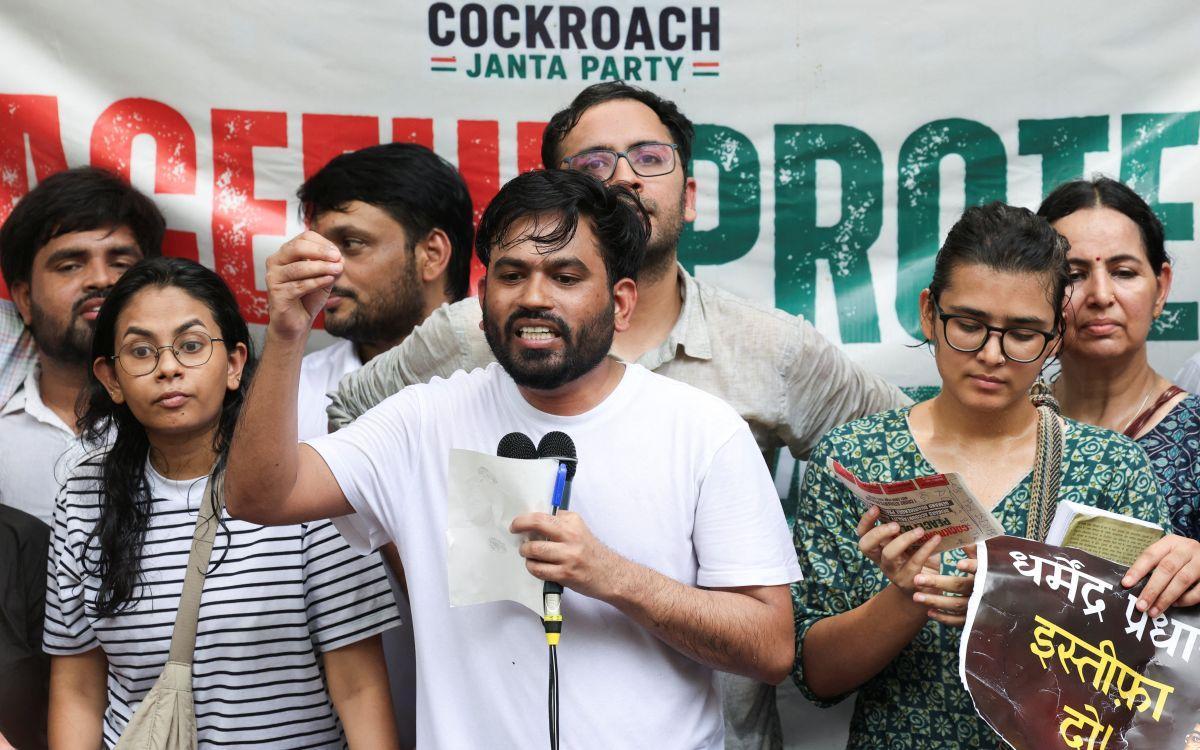
Protests demanding the resignation of Chief Election Commissioner Gyanesh Kumar have intensified scrutiny of India’s electoral roll revision process, following demonstrations in New Delhi and other cities and the detention of hundreds of protesters.
The demonstrations, involving the youth-led Cockroach Janta Party (CJP) and other groups, have raised questions about voter registration, peaceful assembly and the responsibilities of institutions overseeing elections. The Election Commission and the ruling Bharatiya Janata Party (BJP) have rejected allegations that electoral revisions were manipulated to favour the government.
The Associated Press reported on 12 October that leaders of the protest movement had been released from detention and pledged to continue their demonstrations. The developments have made electoral transparency and the handling of public demonstrations central issues in the national debate.
## What Triggered the Demonstrations?
The immediate dispute concerns revisions to electoral rolls and allegations that the process has unfairly affected sections of the electorate.
Electoral rolls are the official lists used to determine who is eligible to vote. They must be updated to account for deaths, changes of residence, duplicate entries and other legitimate changes. At the same time, eligible citizens who are mistakenly removed must have an effective way to correct their records and retain their voting rights.
The scale of the recent revision has attracted attention. According to figures cited by the Associated Press from Election Commission data, approximately 130 million names had been removed during the verification exercise. The reported reasons included around 28 million deceased voters, 63 million people who had relocated and 30 million people who could not be traced.
These figures describe the categories cited by the Commission; they do not, by themselves, establish how many deletions were incorrect. The distinction is important because the debate involves both the administrative need for accurate voter lists and the protection of eligible voters from wrongful exclusion.
Opposition parties and protest organisers have alleged that the revisions disproportionately disadvantage groups less likely to support the BJP. The Commission has denied favouring any political party, while the BJP has argued that legitimate electoral procedures are being wrongly portrayed as an attempt to undermine democracy.
Those allegations remain contested and should not be treated as established findings.
## Why Has the Cockroach Janta Party Attracted Attention?
The CJP has emerged as a distinctive youth-led protest movement using an unconventional name and political messaging to attract attention to education, employment and governance concerns.
According to news reports, the movement has organised demonstrations around issues including government-school infrastructure and job opportunities for young people. Its recent mobilisation has expanded into the dispute over electoral rolls and the demand for Kumar’s resignation.
The movement’s leadership was among those detained after arriving in Delhi ahead of the planned gathering at Jantar Mantar. The Associated Press reported that founder Abhijeet Dipke and other senior leaders were subsequently released.
Their release did not resolve the underlying disagreement over electoral revisions. Instead, the movement pledged to continue its demonstrations.
The episode illustrates how youth-led movements can move from social-media visibility to physical mobilisation. It also raises questions about how authorities should manage demonstrations while safeguarding public order and the rights of participants.
## Detentions and the Question of Peaceful Assembly
Police detained hundreds of protesters in Delhi during the demonstrations. News reports said that approximately 2,400 people had been detained on Saturday, most of whom were released that night.
Small demonstrations were also reported in Mumbai, Kolkata, Panaji and Pune.
Some protesters and political groups alleged that detainees had been assaulted. Those allegations require independent verification and should not be presented as proven facts without corroboration.
Journalists covering the protests were also among those reportedly detained. The Supreme Court, in proceedings described in news coverage, recorded assurances concerning the ability of lawyers and journalists to carry out their duties.
Authorities restored mobile internet services and reopened metro stations after restrictions imposed during the demonstrations. The United Nations human rights office called for respect for peaceful assembly, while India’s Ministry of External Affairs criticised the statement as unwarranted interference in the country’s internal affairs.
The developments underline a difficult balance for law enforcement: preventing violence and disruption while ensuring that peaceful protesters and journalists are not subjected to unlawful restrictions.
## Why Electoral Roll Accuracy Matters
The reliability of electoral rolls is fundamental to representative government. If records contain deceased or duplicate entries, election administrators have legitimate reasons to correct them. If eligible voters are incorrectly removed, however, those individuals may be prevented from exercising their voting rights.
A credible revision process therefore requires clear documentation, transparent criteria, accessible appeals and timely correction of errors. Voters need to know how to verify their status and what steps to take if their names are missing.
Public confidence also depends on the consistent application of rules across regions and communities. Independent scrutiny and clear communication can help distinguish legitimate administrative corrections from errors or disputed decisions.
The current controversy is consequently about more than the number of names deleted. It concerns whether the revision process is transparent, whether mistakes can be challenged effectively and whether institutions can demonstrate that decisions are made impartially.
## What to Watch on 12 October
The political and legal developments remain fluid. CJP representatives have indicated that they intend to seek permission for another peaceful protest, while opposition leaders have announced plans to march towards the Supreme Court over the voter-list dispute.
The Election Commission’s response, the progress of any judicial proceedings and the availability of effective procedures for restoring wrongly deleted names will be important developments to follow.
For now, the allegations of political bias remain disputed. The central public-interest question is whether the electoral system can demonstrate both accurate voter registration and meaningful protection for every eligible voter.
The coming days may help clarify the next steps, but the immediate priority is factual transparency: clear explanations of the revision, reliable access to voter records and lawful handling of peaceful public demonstrations.
