
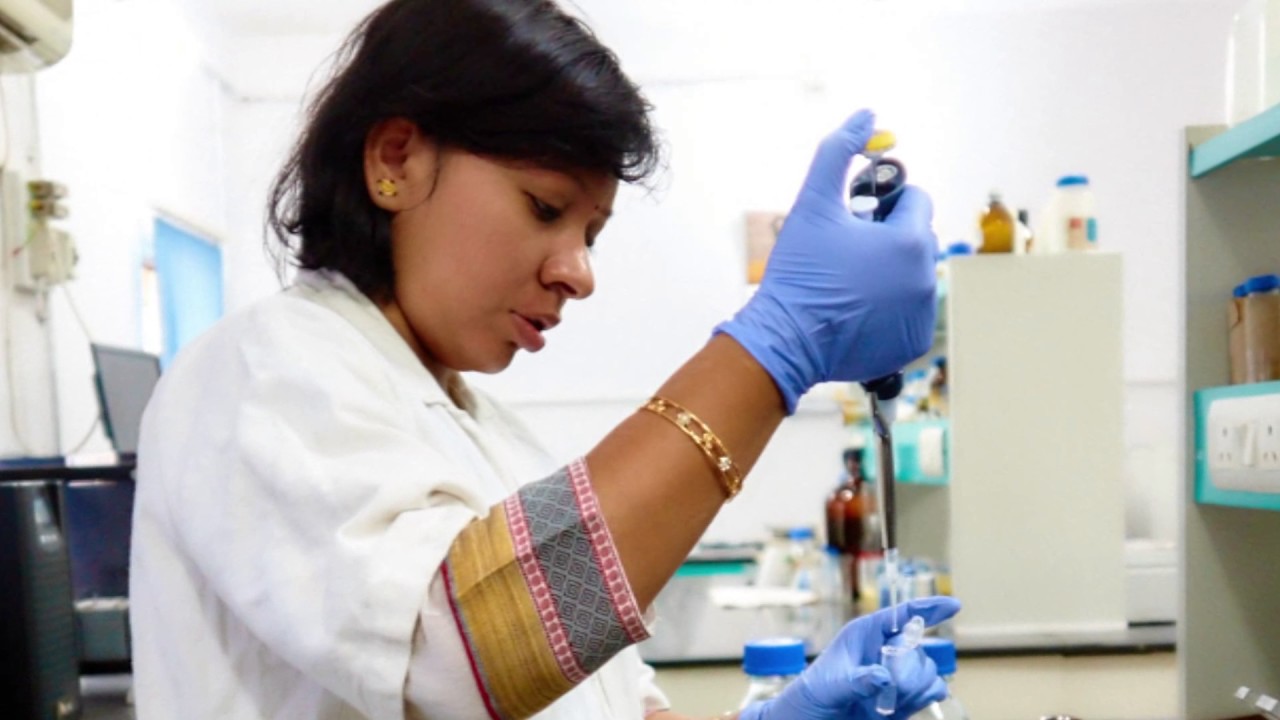
Dr. Sumona Karjee Mishra is a highly decorated scientist and entrepreneur who co-founded Prantae Solutions in Bhubaneswar, Odisha, in 2015. Her biotech startup has caused a breakthrough in healthtech by focusing on neglected aspects of health disorders, such as chronic kidney disease (CKD) and pregnancy complications like preeclampsia, a dangerous condition affecting 10% of pregnancies globally by restricting fetal growth and forcing premature births. She had a very insightful conversation with us explaining her purpose and vision for Prantae Solutions. The interview can be found below:
Can you tell me about some of the products at Prantae Solutions, the problems they solve?
Starting with CKD which is chronic kidney disease, these are the three primary focuses in which we are developing diagnostics. Focusing primarily on developing early diagnosis for the identifying chronic kidney disease because it is a silent disease. The prevalence of chronic kidney disease is increasing rapidly. There are no major diagnostic solutions at point of care available, which is reliable and clinically accurate. So, this is one of the segments of non-communicable disease, which requires a huge attention. We have a device currently in the market called ProFlo, which quantitatively measures the primary biomarkers of chronic kidney disease, that is urine albumin and creatinine to give ULCR and serum creatinine to give EGFR. The platform itself is responsible for testing, quantifying and auto-calculating to identify which of the 5 stages of CKD the patient lies in. Accordingly the healthcare provider or the patient can decide what kind of management or treatment is needed.
We also take care of another often neglected disorder which is pregnancy complications.
So, there is a complication called preeclampsia, which impacts both mother and the unborn child. It has a prevalence rate of around 10% around the world. Sudden clinical symptoms include increase in blood pressure, swelling, increase in protein in the urine, it actually impacts multiple organs of the mother and restricts the growth of the baby. So, if we can identify whether the amount of protein or albumin, which is present in the urine, whether its increasing more than the normal in the first trimester and the subsequent trimesters, accordingly we can identify whether the pregnancy is a high-risk pregnancy, whether it requires special attention. Because preeclampsia is often associated with premature birth, postponing delivery as much as safely possible can minimize its impact and maximize the baby’s growth.

- You co-founded Prantae in 2015 in Bhubaneswar, Odisha. Particularly at that time Odisha was not a typical deep-tech hub. What were the specific challenges of building a medical device and diagnostics company from this location and what surprised you about what was possible there?
There are two aspects to it. In Bhubaneswar, there are not many companies which are working in the diagnostic sector. At the same time, Bhubaneswar provides an ample or at least a relatively strong talent base of students from both biotech and software backgrounds. As a founder, we are already done with our PhDs and postdocs. The technological expertise we have but in order to develop a product you need a team. For building a team, the kind of human resource required— students with a background in science, biotech, engineering, biomedical science—those students are available because of the various engineering colleges that we have in Bhubaneswar. So, building our team has been a very easy thing for us and another important fact about it is when you are in Bhubaneswar rather than in Bangalore, the attrition rate is very low. As a result, when you build your team, you train your team, you know that the team is going to stay with you for a long time and you can develop your technology- that is one of the positives of having Bhubaneswar as our centre.
Yet, when you need certain external services because the entire product cannot be built in-house, getting those services in Bhubaneswar is really difficult. We have to reach out to other states and find where it can be done. Yet, in the digital era getting those vendors and communicating with them online is not as much of a challenge. Ultimately, challenges were there but the solutions were also there. So, I won’t say that Bhubaneswar has been limiting for any reason for us as a geographical location.
- Prantae now holds several patents in a stellar achievement in IP for a startup. What is your philosophy or approach to intellectual property for a company working in healthcare innovation?
We always believe that if you want to make a startup which wants to bring a breakthrough in healthcare or a healthtech, you can’t make a rearrangement or put a new wrapper over an old technology. If the old technology could serve the purpose, then our requirement would not have been there. Bringing real change to healthcare requires true innovation and invention. And once you invent something, protecting it is vital. Patents, publications are the various means through which you can actually protect your intellectual property. Right now, we have 9 patents and 23 trademarks, 7 design registrations. So, these are the things. which makes your technology yours.Developing a technology takes a lot of time and money. If it cannot be protected, then you cannot leverage it. So, IP protection is a major thing for us. We have always invested in that. And in fact, we have been a winner of the CII-IPR award for 4 consecutive years.
- Your academic path has been extremely decorated from a PhD from the International Centre for Genetic Engineering and Biotechnology, followed by an Entrepreneurship Development Course at Cambridge Judge Business School and the Goldman Sachs 10,000 Women program at IIM Bangalore. How did each of those experiences shape you and the work that you do?
My academic path till PhD has not been for any entrepreneurial journey. It is just for the quest of science and understanding technology. At that point of time, entrepreneurship was not what I was investing my intellect and time. I was completely unbiased. I wasn’t focusing only on what I needed for my entrepreneurial journey; instead, I was learning each and every thing that the research lab would provide.
I have been to one of the best labs in India, ICGEB, an international organisation supported by the United Nations. The learning was extremely helpful, not as an entrepreneur, but as a scientist, and also as a human being. As graduate or PhD students, we learn how to execute projects, manage timelines, and train human resources by teaching junior students. Those trainings have actually helped us in developing the product, managing our human resources, and securing a huge amount of funding. Since we are a biotech company sustained by funds from the Department of Biotechnology, Department of Science and Technology, the training has been really helpful for us to secure those grants. We got support from the government as well. I secured the IGNITE fellowship which was an on-campus programme and I got support from the Department of Biotechnology to get the training done. Similarly for the Goldman Sachs programme as well, we got a fellowship through which we completed the programme. But these two courses have actually helped shape me as an entrepreneur to understand the product which we are making: how to incorporate deep tech, but at the same time, how to keep it easy to use from the user-perspective so that it can go to the masses. Using high tech which would require extensive training on the part of the user is not viable. If they have to make certain behavioural changes to use a product, it likely won’t work. Besides that, the legal aspect of the companies, the investment and the regulatory aspects behind running a company, I actually understood through these programmes. So, as an entrepreneur, it is not only about the technology that you have to take care of. You have to take care of multiple facets of the startup, like regulatory, production, equity investment, funding, everything you have to manage. And all these things actually help us to do those parts of the business.
- Prantae received the TATA Trust–Harvard SAI Livelihood Creation grant. Did that change the trajectory of Prantae and if yes, how?
On 1st June, 2015 when I started the company, I was very sure that we wanted to do something in the domain of pregnancy complications, especially preeclampsia. Unfortunately,when we were discussing with various partners who were mostly males,they were under the notion that pregnancy complications are not a serious enough issue, because they had never heard of preeclampsia. They advised us that it was not a very good idea for a startup and we should work on something simple, easy and doable. It was a huge setback for us
Then when we finally applied for this Tata Trust grant, and presented our idea in front of judges from the Harvard Business School, various entrepreneurs and reputable business people who were present, they appreciated our idea and gave us the grant. It was a big morale boost for us. We started believing in our idea. We started working on our idea and eventually after getting the Tata Trust, we keep on getting grants and we keep on getting support. Actually, you can say with this Tata Trust that we could break the mould and we can get to the people who really understand that these kinds of problems do exist and it requires solutions because if we are talking about 5 million women across the world being impacted every year by this disorder. It is a really big problem which needs to be addressed.
You can say Tata Trust is something which has actually shaped Prantae Solutions.
- You’ve spoken about gender equality as a value embedded in Prantae’s culture. In an industry where women-led deep-tech startups remain rare, what structural changes do you believe the ecosystem — investors, institutions, government — needs to make for that to change?
The ecosystem needs to believe. There has been some change and they have started believing but they need to believe more. They seem to think that if a difficult situation arises, a woman might not be able to handle it so a man is needed. It ignores that women from the prehistoric times have stood against all odds to protect what is dear to them. If a woman has built a startup, she is equally committed as a man and should be supported not only in documents or speeches but in actual reality.
What are ideas for the future about expanding Prantae Solutions?
The products being developed at Prantae Solutions aim to serve the general public, as non-communicable conditions like chronic kidney disease (CKD) and preeclampsia impact individuals across all economic classes. However, the burden falls hardest on economically weaker sections, where treatments like dialysis or premature infant NICU care can cause devastating financial loss and a total depletion of livelihood. By implementing simple, early-diagnosis point-of-care tests, the startup aims to significantly alleviate this massive economic strain on both families and the healthcare system. Ultimately, their vision is to partner with the government and private sectors in primary healthcare to reduce mortality rates and save lives through accessible innovation. Because non-communicable disorders are interconnected, where chronic kidney disease (CKD), diabetes, hypertension, and cardiac arrest can trigger one another, Prantae’s primary focus is expanding early diagnosis to manage these linked conditions effectively. Detecting diabetes early can prevent CKD, just as early CKD diagnosis in a diabetic patient can avert the need for dialysis or transplants. Consequently, Prantae is actively developing products across the diabetic, cardiac, and CKD segments. Envisioning the next five years, we are expanding our manufacturing capabilities and product portfolio. As a serious, DSIR-certified R&D company, we have already filed a patent on an innovative ECD product integrated with AI and simulation. Alongside our current work on HbA1c, multiple pipeline products are set to launch, with some arriving in 2026 and others following through 2027 and 2028.”
Could you expand on how you are integrating AI into your biotechnology innovations, and what specific role it plays in your upcoming products?
Our philosophy is simple: wherever technology can improve our product, we will adopt it, and AI is a key part of that. When handling massive amounts of health data, an AI engine is essential for interpreting, analyzing, and presenting it effectively to patients and healthcare providers. For instance, in ECG monitoring, AI can filter noise and highlight critical signals for healthcare providers who may only have limited specialized training. This is vital because India faces a severe shortage of specialists like cardiologists and nephrologists, particularly in tier-three and tier-four cities. By utilizing AI and machine learning, data can be interpreted so that non-specialist doctors in remote areas can easily understand the results and identify appropriate treatments. Ultimately, integrating AI allows us to solve both major healthcare challenges: detecting the disease itself, and accurately identifying its specific stage and required therapy to save patient lives.
By integrating AI, we can solve both core challenges: detecting the presence of a disease and identifying its specific stage, complications, and required therapy. This concludes our discussion, and your insights have wonderfully clarified every question. Thank you so much for your time
