
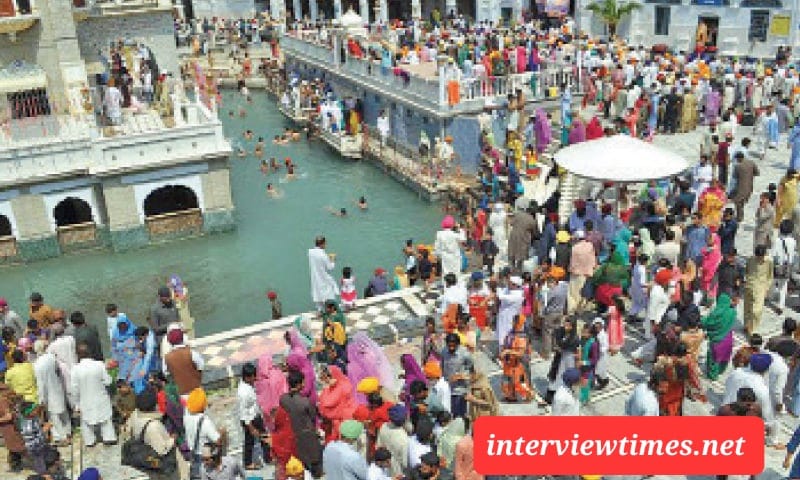
In a remarkable display of devotion and cultural connection, over 6,000 Sikh pilgrims from India and other parts of the world crossed the border into Pakistan this April to celebrate Baisakhi, one of the most sacred festivals in the Sikh calendar. The event, which commemorates the founding of the Khalsa by Guru Gobind Singh in 1699, also marks the Sikh New Year and the spring harvest, making it a moment of both spiritual and seasonal renewal.
This year’s pilgrimage was especially significant, as it came at a time when cross-border relations between India and Pakistan remain tense. Despite the geopolitical backdrop, the two countries honored a long-standing bilateral agreement that allows religious pilgrims to visit select shrines in each other’s territory. The journey was facilitated by the Evacuee Trust Property Board (ETPB) in Pakistan, which manages Sikh and Hindu religious sites, and coordinated with the Shiromani Gurdwara Parbandhak Committee (SGPC) and the Indian Ministry of External Affairs.
The focal point of the pilgrimage was the Gurdwara Janam Asthan in Nankana Sahib, the birthplace of Guru Nanak, the founder of Sikhism. Pilgrims were also taken to other sacred locations including Gurdwara Sacha Sauda, Gurdwara Panja Sahib in Hasan Abdal, and Gurdwara Dehra Sahib in Lahore. These gurdwaras, deeply rooted in Sikh history and heritage, provide spiritual sanctuaries where devotees offer prayers, perform kirtan (devotional singing), and participate in langar (community meals).
Pilgrims described their journey as deeply emotional. For many, it was not merely a religious obligation, but a homecoming to the land of their ancestors. As the region of Punjab was divided during the partition of India in 1947, several Sikh families were displaced, and many of their historical shrines were left on the other side of the border. Visiting these sacred sites is, for them, a reclaiming of spiritual space and historical memory.
The Pakistani government made special arrangements to ensure the safety and comfort of the pilgrims. Security was heightened along the pilgrimage routes, medical teams were deployed at the gurdwaras, and free transport and lodging facilities were arranged in partnership with local Sikh communities. The ETPB officials emphasized their commitment to preserving Sikh religious heritage and providing a welcoming environment for visitors.
This year, the Baisakhi celebrations were also marked by cultural performances, poetry recitations, and seminars on Sikh philosophy and history. At Nankana Sahib, a special congregation was held in memory of the martyrs who have defended Sikh values through centuries. Pilgrims lit candles, sang hymns, and shared stories of sacrifice and resilience, creating an atmosphere of unity and reverence.
One of the notable aspects of this pilgrimage was the growing number of young Sikhs participating, many of whom were traveling to Pakistan for the first time. For these young people, raised on stories of partition and division, the trip provided a powerful opportunity to connect with their roots. Some spoke of feeling overwhelmed with emotion upon entering the gurdwaras they had only read about in history books or seen in pictures.
Despite the success of the pilgrimage, there were challenges as well. Visa approvals were delayed for some pilgrims, and there were concerns about the capacity of facilities at certain gurdwaras given the large turnout. Nonetheless, the event was largely smooth, and both Indian and Pakistani officials expressed satisfaction over the cooperation extended on both sides.
The pilgrimage also served as a reminder of the potential for religious diplomacy in improving bilateral relations. While political tensions often dominate the narrative between India and Pakistan, moments like these highlight the power of faith and culture to build bridges. Sikh leaders on both sides have long advocated for more regular and smoother access to religious sites across the border, including calls for increasing the number of visas, simplifying the process, and even expanding the scope of the Kartarpur Corridor, which currently allows visa-free travel for Indian pilgrims to Gurdwara Darbar Sahib in Kartarpur.
In his address to the pilgrims, the President of the Pakistan Sikh Gurdwara Parbandhak Committee (PSGPC) reiterated the country’s commitment to preserving and promoting Sikh religious heritage. He emphasized that the holy shrines of Pakistan are not just historical monuments but living symbols of the region’s pluralistic past.
As the pilgrims returned home, many carried not just prasad and souvenirs but a sense of spiritual fulfillment and deeper connection to their identity. Their journey was a testament to the enduring power of faith, transcending borders, politics, and divisions. Baisakhi 2025 will be remembered not just for its rituals and ceremonies but for reaffirming a shared cultural bond that continues to inspire hope for a more understanding future between two neighbors long at odds but linked by heritage.
