
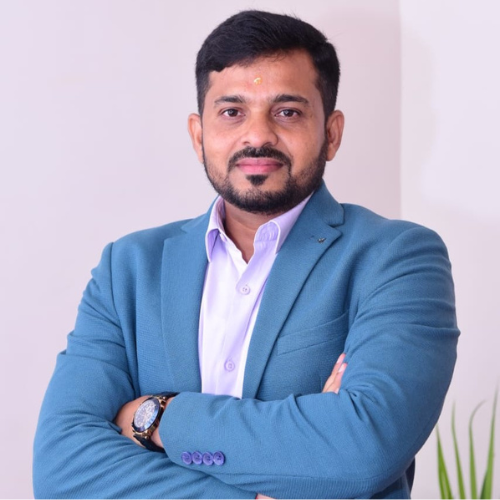
 FEATURE: At a time when the Indian education system is often criticized for prioritizing memorization over meaning, one man is changing the narrative from the grassroots up. Alexzandar Das is not just an educational reformer—he is a visionary who is reshaping how education is delivered, understood, and experienced in rural India. His journey, rooted in humble beginnings and shaped by deep conviction, is a powerful testament to what passion and purpose can achieve.
Born into a modest lower-middle-class family, Alexzandar grew up in an environment where education was respected, but resources were scarce. His father, the late Satyananda Das, was a dedicated primary school teacher who believed education was not just a privilege, but a right. That belief became a guiding light in Alexzandar’s life. Inspired by his father’s selfless service and driven by his own struggles, he chose a path not of convenience but of commitment—to make quality education accessible, equitable, and empowering.

Today, as the Chairman of Siksha Trust and the Kalinga Group of Institutions (KGI), Alexzandar has built a vibrant educational ecosystem that spans rural Odisha. From Kalinga Nagar Polytechnic to St. Xavier International School and Kalinga Higher Secondary School, his institutions serve thousands of students, many of whom are first-generation learners. But Alexzandar’s mission goes far beyond building campuses—it’s about nurturing minds and changing lives.
One of his most urgent concerns is the outdated focus on rote learning that still dominates classrooms. “We’re training children to clear exams, not to face life,” he says. He believes this approach limits creativity and crushes confidence. High marks, he argues, are not the ultimate measure of success—real education must cultivate skills, values, and the courage to innovate. Entrance exams for higher education and jobs are increasingly skill-based, yet our schools remain fixated on memory-based assessments. For meaningful change to happen, he insists, we need to shift both systems and mindsets—especially among parents.
Under his leadership, KGI has taken bold steps to reform how students learn. Alongside the regular curriculum, students receive hands-on training, skill-based education, and real-world exposure. This blend of academic and practical learning prepares them not just for exams, but for life. His vision aligns with the National Education Policy 2020, but he knows policy alone won’t bring change—it must be lived and practiced in every classroom.
Alexzandar’s work is particularly groundbreaking because of where it takes place—rural India. Operating in areas often overlooked by policymakers and investors, he has created platforms where rural students thrive. One of his most impactful innovations is Odisha’s first rural FabLab, a space where students experiment with 3D printing, robotics, and sustainable technologies. This rural innovation lab empowers students to become creators, not just consumers, of technology.
The results are already visible. A group of KGI students recently won the “Innovate 2” competition in Bhubaneswar, earning a ₹1 lakh prize—proving that with the right support, rural talent can compete on any stage. Through the Kalinga Academy of Civil Services, another of Alexzandar’s initiatives, rural aspirants now have access to Delhi-level UPSC coaching—removing the geographic and financial barriers that have long held back bright minds from smaller towns and villages.
His vision also extends to entrepreneurship and community development. Through skill clusters like the Soro Stone Cluster and the Haripur Royal Dress Cluster, he’s helping revive local crafts and create sustainable livelihoods. His efforts under the Pradhan Mantri Kaushal Vikas Yojna (PMKVY) and UDYAMITA show his deep commitment to youth-led entrepreneurship.
Alexzandar’s impact doesn’t stop with education or entrepreneurship. His social wing, the Aryalex Foundation for Social Activities (AFSA), plays a crucial role in community welfare. From disaster relief and health camps to educational support for orphaned children, AFSA is a lifeline for many in need. During the tragic Coromandel Express train accident, he quickly extended help, offering free education to affected children—a move that speaks to his instinct for service and solidarity.
Environmental stewardship is also woven into his educational philosophy. Through the “Greenvocate” initiative—a term he coined by blending ‘green’ and ‘advocate’—students are taught to lead sustainable lifestyles. They carry the message of environmental responsibility into their homes and communities, encouraging their families to reduce plastic use, plant trees, and adopt greener habits. Clean-up drives during field trips and local events instill a sense of civic duty and ecological awareness.
Concerned by the rise in student stress and digital distractions, Alexzandar has also prioritized mental well-being. Moral education, empathy, and emotional intelligence are key elements of the KGI curriculum. He believes that nurturing kind, confident, and self-aware individuals is just as important as producing academically successful ones.
His efforts have not gone unnoticed. Alexzandar has received several prestigious awards, including the Best Youth Entrepreneur Award in Bangkok and the Shilpi Sahoyogi Samman for his work in cluster development. Most recently, he was honored with the Sustainability Global Changemaker Award by the ESG Research Foundation in Dubai in January 2025. Under his leadership, KGI was also named the Best Institution for Holistic Education by Assocham in Bhubaneswar.
The journey doesn’t stop here. He is now expanding KGI’s programs to include undergraduate and postgraduate degrees like B.Tech, M. Tech, BBA, BCA, and MBA. A Sports Academy is in the works, focusing on football, cricket, badminton, and basketball. A Drone Excellence Centre is also being developed to explore drone applications in agriculture and emergency services.
Alexzandar’s global engagements—including visits to Manchester United Club and Leeds Trinity University—have inspired a Girls Football Program in Odisha, promoting gender equality in sports and opening new doors for young women.
Ultimately, his dream is to establish a Rural University that becomes a hub for value-based education, civic awareness, entrepreneurial thinking, and emotional resilience. He encourages young people to see education not just as a path to personal success but as a way to contribute to society and participate in democratic processes. “If educated people avoid politics, the system will never change,” he says.
Alexzandar Das is more than an educator. He is a nation-builder, a reformer, and a compassionate leader whose work reminds us that the future of India lies not just in its cities but in the untapped potential of its villages. His story is proof that change, when driven by vision and rooted in values, can start small—and still transform an entire nation.
