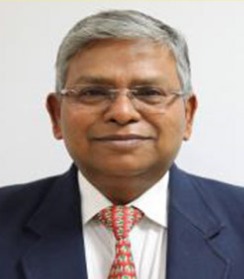
Mr. Amresh Kumar. A suave and articulate gentleman, Mr Kumar lucidly elucidated all the questions with elan.
Here is the excerpt of the interview with Mr. Kumar,MD-OHPC.
Could you provide an overview of your corporation’s current hydropower projects in Odisha and their capacity?
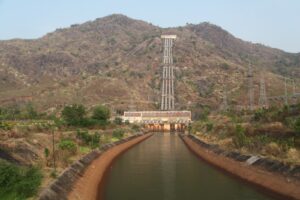
Starting with an installed capacity of 1273.53 MW through the transfer of assets in 1996 from Government of Odisha and OSEB, OHPC currently has an installed capacity of 2999.80 MW from 6 projects, namely 600 MW Upper Indravati Hydro Electric Project in Mukhiguda, 510 MW Balimela Hydro Electric Project atBalimela, 320 MW Upper Kolab Hydro Electric Project at Bariniput, 287.80 MW Hirakud Hydro Electric Project at Burla, 250 MW Rengali Hydro Electric Project atRengali, 72 MW Chiplima Hydro Electric Project atChiplima, and 60 MW from the Machkund Hydro Electric Project(joint scheme with APGENCO) at Machhakund. Through these Hydro Electric Projects, OHPC contributes nearly 25% of the power demand of the state. OHPC plays a key role in meeting the peak requirement of the state and helps in providing clean, affordable, and quality power to the people of Odisha. During the outage of thermal power plants, OHPC plays a huge role in meeting the immediate power requirements of the state because of its inherent characteristics of quick start and ramp up and thus helps in managing the grid stability, especially during peak hours. OHPC, through its subsidiary GEDCOL, plays a key role in developing renewable power and aligning with the vision and the strategic action plan of the state to decarbonize the economy and help in energy transition.
What innovative technologies or approaches is your corporation employing to ensure sustainable and environmentally friendly power generation from hydropower sources?
OHPC has taken a proactive approach to renovate, modernize, and upgrade its power plants by deploying state-of-the-art technology to achieve the life extension of the old power plants operating for more than 35 years. OHPC has completed the Renovation and Modernization of the Hirakud Hydro Electric Project in Burla, increasing its capacity by 52.30 MW. The Hirakud Hydro Electric Project in Burla has been operating for the last 67 years, and through Renovation and Modernization, the plant is likely to achieve 100 years of operation reckoned from 1956 when its 1st unit was commissioned. The Renovation and Modernization of the ChipilimaHydro Electric Project has also been completed. Furthermore, the renovation and modernization of 360 MW capacity of Balimela Hydro Electric Project is also in progress. For new hydroelectric projects, state-of-the-art technology and modern project management approaches will be deployed for fast-track development in a sustainable and environmentally friendly manner.
Hydropower projects can sometimes face environmental concerns and community opposition. How does your corporation address these challenges while pursuing its energy goals?
Hydro Power Projects more often than not suffer due to environmental issues and community opposition at large. OHPC, as its core value, places the environment as topmost agenda and is committed to complying with all environmental standards. OHPC identifies potentialenvironmental issues cropping up during development of hydro power and formulates a systematic action plan together with a monitoring mechanism. Constant interaction with local and environment authorities further leads to improved compliance. A dedicated team works to comply with environmental standards and provides a suitable mechanism in the contract to deal with environmental norms. OHPC strongly believes that hydroelectric projects are for the people, and hence engaging with the community holistically is the key driver for the successful implementation of the Hydro Electric Project. Good Rehabilitation and Resettlement (R&R) scheme for the Project Affected People (PAP)helps in winning the heart of the local community.
Could you share insights into the economic and social benefits that your hydropower projects have brought to local communities in Odisha?
Hydro Electric Projects are characteristically located in far-flung areas with infrastructure constraints. Hydroelectric projects kick-start the economic and social growth of the local communities through the creation of new infrastructure, i.e. roads, electricity, schools, hospitals, communication, etc., which results in job creation and new opportunities for livelihood. Hydro Power Projects have contributed to the improvement of health, education, and sports facilities in the vicinity of the project. During the COVID-19 Pandemic, OHPC contributed about Rs 24.86 Crore to successfully combat the deadly COVID-19 pandemic by opening COVID Hospitals in Balasore and Gajapati Districts.
Given the increasing emphasis on renewable energy sources, how does your corporation envision the role of hydropower in Odisha’s overall energy mix in the coming years?
The mix of renewable energy in the energy basket has to increase to nearly 40% of the energy requirement by 2030. The share of energy from fossil fuel-based thermal power plants has to witness a sharp decline in the coming years. Hydro Electric Power Plants have been included in the renewable energy sources, which has opened up unprecedented avenues for the growth of hydro power in the overall energy mix. The state has been able to achieve more than 35% renewable mix due to the significant contribution of hydro power of the order of nearly 2100 MW by OHPC. Further,142 huge water reservoirs in Odisha are not only a source of food security but can also potentially turn out to be a source ofenergy security, since reservoirs are now termed as water batteries by development of pumped storage projects. Moreover, reservoirs can be utilized for Floating Solar Projects integrated with Pumped Storage Projects. The share of renewable energy is increasing many folds in the overall energy mix of the power system. Due to the inherent constraints of intermittency of Renewable Energy Power, energy storage is being prioritized globally. Pumped Storage Projects (PSPs) have to play a significant role in the stability of the grid as well as act as the enabler for Renewable Energy sources, especially solar and wind. OHPC is aggressively planning to develop 3 PSPs, namely Upper Indravati PSP, Upper Kolab PSP, and Balimela PSP, totaling 1.4 GW. Besides, OHPC has also identified off-stream closed-loop PSPs with a total capacity of about 10 GW, which will help the state in decarbonizing the industrial sector. Furthermore, OHPC has planned to commence 63MW Kharag Hydro Electric Project in Khandhamal District shortly.
Climate change can impact water availability and river flows, affecting hydropower generation. How does your corporation prepare for and adapt to these potential changes?
Climate change is a definite business risk to the Hydro Power Sector. Hydro Electric Projects in Odisha are storage-based projects. Climate change has affected the temporal distribution of water, and the prudent strategy is that reservoir management should be done in such a way that there is minimum or no water spillage from the reservoir. Reservoir operation is done in consultation with the Water Resources Department and Meteorological Department with predictive analysis.Odisha has a reservoir management protocol which addresses the need to flood control, irrigation, water-supply together with hydro power generation so as to maximize the benefits of multipurpose project.
Balancing energy needs and environmental conservation is often a delicate task. What is your corporation’s long-term strategy to ensure responsible and sustainable growth in the hydropower sector in Odisha?
Despite contributing to critical energy needs and climate change mitigation goals, the hydropower sector has faced intense criticism from civil society due to its negative impacts on people and the environment. The long-term strategy for ensuring the sustainable growth of Hydro Power involves promoting the operationalization of a hydro power sustainability assessment tool and protocol. This aims to measure and guide the performance of hydro power projects in terms of environmental, social, technical, and economic sustainability. Third-party assessments conducted by independent accredited assessors can provide a critical and objective evaluation of hydroelectric projects. The implementation of a sustainability framework and an independent regulatory mechanism can lead to greater transparency and accountability, enhancing credibility with stakeholders.