

Scientific progress becomes more meaningful when people can use it. For a young researcher, that may mean learning a technique needed by industry. For a working professional, it may mean acquiring the skills to handle a changing technological landscape.
At CSIR–Institute of Minerals and Materials Technology in Bhubaneswar, a recent development brings that connection into focus: the inauguration of an Advanced E-Learning Centre under the CSIR Integrated Skill Initiative.
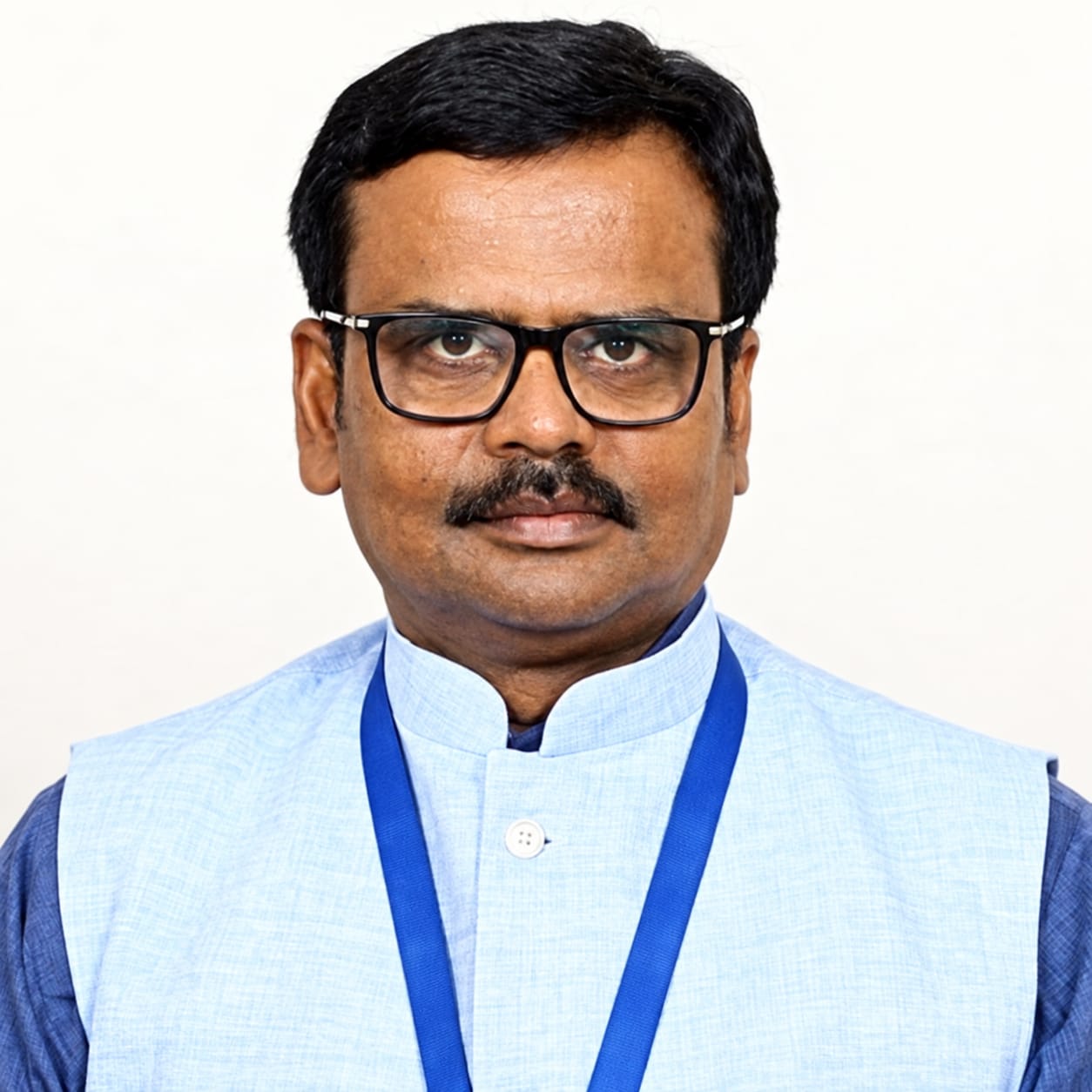
The institute’s Director, Dr. Ramanuj Narayan, brings a career spanning industrial research, materials science and academic leadership to this effort.
Experience Across Industry and Research
Dr. Narayan assumed charge as Director of CSIR-IMMT on 1 May 2023. Before this appointment, he served as Chief Scientist and Chair of the Department of Polymers and Functional Materials at CSIR–Indian Institute of Chemical Technology, Hyderabad.
His professional journey also includes positions at Asian Cosmos R&D, Tata Steel and Tata Autocomp Systems during 2002–2008. His research interests encompass coatings, polymers, functional materials and third-generation solar cells. Source: CSIR-IMMT’s official director profile
That combination offers a useful perspective on the relationship between discovery and application. A laboratory investigates what is possible. An industrial workplace must also consider whether a solution can be produced reliably, used effectively and sustained in practice.
Moving between these environments can help a scientific leader understand the questions each needs the other to answer.
A New Platform for Learning
On 27 July 2026, CSIR-IMMT inaugurated its Advanced E-Learning Centre under the CSIR Integrated Skill Initiative. The initiative’s official account records that Dr. Vinay Kumar inaugurated the facility; a government announcement also identifies Dr. Narayan’s presence at the event. Source: CSIR Integrated Skill Initiative, PIB announcement
The centre is intended to support online and hybrid training, workshops and knowledge sharing. At the inauguration, Dr. Narayan highlighted the importance of digital learning infrastructure in helping students, researchers and professionals develop practical capabilities. Source: inauguration report
The opportunity is clear: scientific institutions can extend their educational reach when learning is no longer confined to physical attendance. Its lasting value will depend on the quality of the training and how effectively learners apply it.
Why This Matters for Odisha
For Odisha’s students and businesses, the relationship between research and skills deserves attention.
Consider a manufacturer seeking technical expertise or a graduate trying to understand how classroom knowledge translates into work. Both benefit when institutions make specialised knowledge easier to access and connect learning with practical problems.
This is where a research institute’s wider contribution becomes visible. Alongside generating knowledge, it can help develop the people capable of putting that knowledge to use.
Dr. Narayan’s experience across corporate and scientific settings provides a relevant starting point for that conversation.
Nation Building Through Knowledge
As the 2nd CMD Roundtable 2026 approaches with the theme “Beyond Business – Towards Nation Building,” scientific capability and workforce development belong within the wider discussion of leadership.
Industrial ambition needs people who can investigate, adapt and solve problems. Educational ambition needs meaningful connections with the world in which learners will work.
The story emerging from CSIR-IMMT offers a practical question for both business and institutional leaders: how can knowledge reach more people—and help them contribute more effectively?
For Odisha, that is a conversation worth carrying beyond the laboratory.
By Snigdha Mishra