Apple’s newest flagship has arrived, but behind the polished glass, advanced cameras and artificial intelligence lies a business story that may prove more significant than the device itself.
The iPhone 18 Pro and iPhone 18 Pro Max become available from September 18 across India and more than 65 countries and regions, marking the global commercial debut of Apple’s latest Pro generation. India is part of the first wave rather than a secondary launch market.
What makes the launch particularly significant for India is happening away from Apple’s retail stores.
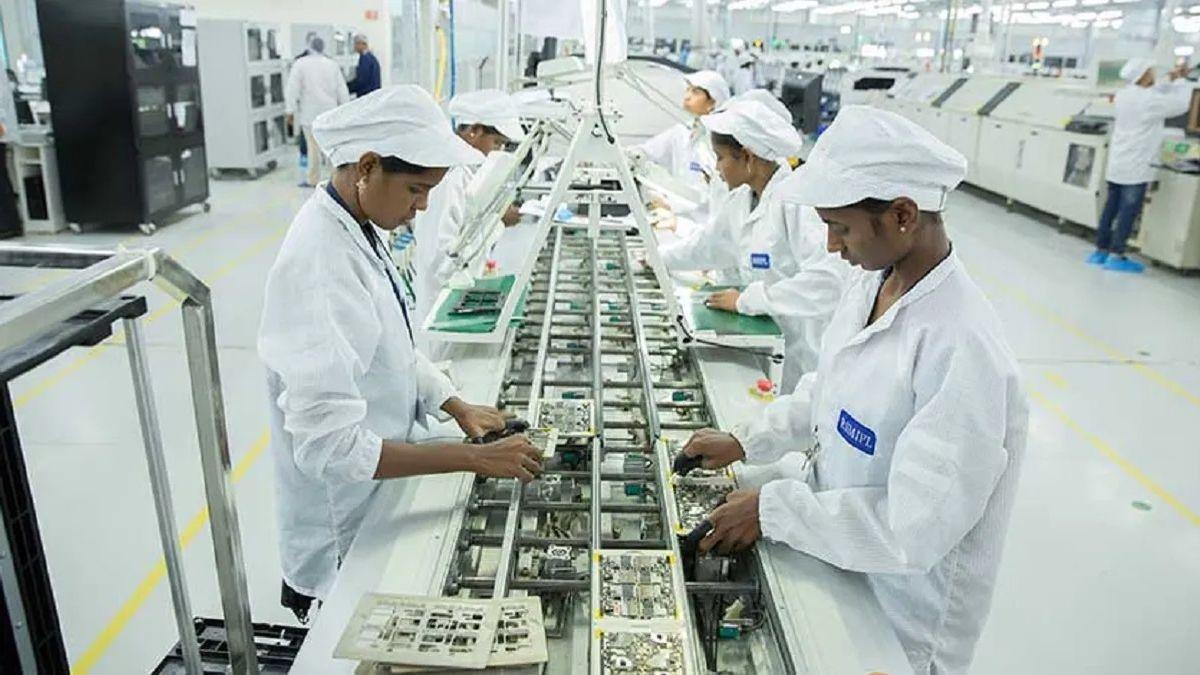
Factories operated by Foxconn and Tata Electronics in India have been producing iPhone 18 Pro and Pro Max units for export, with production reportedly running around the clock ahead of the global launch. The Economic Times reports that India-made Pro models are reaching overseas markets from the first day of global sales—a milestone in Apple’s expansion of its Indian manufacturing base.
The message is increasingly clear: India is not merely buying Apple’s premium products. It is becoming part of the industrial system that supplies them to the world.

From an iPhone Launch to a Manufacturing Story
Apple officially introduced the iPhone 18 Pro generation earlier this month, positioning it around four pillars: camera, performance, battery and intelligence.
The phones are powered by Apple’s new A20 Pro chip and a next-generation vapour-chamber cooling system. Apple says A20 Pro provides graphics performance up to 40% faster than the iPhone 17 Pro and incorporates a Dual 16-core Neural Engine designed for increasingly demanding on-device artificial-intelligence workloads.
The camera system represents another major element of Apple’s premium positioning. Its new 48MP Fusion Main camera introduces variable aperture, giving photographers greater physical control over depth of field and light entering the camera. Apple describes it as its most advanced iPhone camera system to date.
The devices also arrive with iOS 27, the next generation of Apple Intelligence and Siri AI, as Apple attempts to make artificial intelligence a more integrated part of the everyday smartphone experience.
But from a business perspective, where these devices are being manufactured is becoming almost as interesting as what is inside them.
Made in India, Headed for Global Shelves
India’s role in Apple’s supply chain has expanded substantially over the past several years.
For the iPhone 18 Pro launch, Foxconn and Tata Electronics have been identified as the two manufacturers producing the Pro models in India. Reports ahead of the September 18 launch said finished devices were being transported from India to international markets, including through chartered flights.
The important milestone is launch-day parity.
India had already demonstrated its ability to manufacture standard iPhone models close to global launch schedules. Producing the more sophisticated Pro range in time for worldwide launch-day availability represents a further step in the development of the country’s electronics-manufacturing ecosystem.
That distinction matters.
Apple’s Pro models sit at the technological and commercial peak of the iPhone portfolio. Bringing their production into India requires an ecosystem capable of meeting demanding standards in precision manufacturing, component integration, testing, quality control and logistics.
The development therefore extends beyond one smartphone.
It is an indicator of India’s growing role in high-value electronics manufacturing.
Tata Electronics Emerges as a Strategic Indian Player
One particularly important dimension of Apple’s India story is the emergence of Tata Electronics.
For decades, India’s relationship with global technology brands was largely defined by consumption, software services and back-office operations. Tata’s growing participation in sophisticated electronics manufacturing represents a different proposition: an Indian industrial group becoming part of the physical supply chain behind one of the world’s most valuable consumer brands.
Foxconn remains a major iPhone manufacturing partner in India, while Tata Electronics has been increasing its involvement in the ecosystem.
Industry reporting ahead of the launch indicated that Foxconn continued to account for the larger share of iPhone 18 Pro production in India, while Tata was expected to increase its share of Pro-series manufacturing.
This creates an intriguing intersection of two powerful corporate stories—Apple’s supply-chain diversification and Tata’s ambition in advanced electronics manufacturing.
India Is Becoming More Than a Consumer Market for Apple
Apple’s relationship with India is increasingly multidimensional.
There is the consumer opportunity created by a growing premium-smartphone market.
There is the retail opportunity, reflected in Apple’s expanding direct presence in India.
And increasingly, there is the manufacturing and export opportunity.
The iPhone 18 Pro launch brings these three dimensions together.
India is among the first-wave markets receiving the device. At the same time, Indian factories are participating in producing Pro models for overseas customers.
That represents an important shift in India’s position within the Apple ecosystem—from market to manufacturing base, and increasingly to export platform.
A ₹1.65-Lakh Statement of Premiumisation
The iPhone 18 Pro starts at ₹1,64,900 in India, while the Pro Max begins at a still higher price point.
That pricing is significant from a branding perspective.
Apple has rarely competed by trying to become the cheapest smartphone manufacturer. Instead, the iPhone has been positioned around an ecosystem combining hardware, software, services, design, privacy and brand aspiration.
India presents an interesting test of that strategy.
It remains one of the world’s most price-conscious major smartphone markets, yet the premium end of the industry has become increasingly important. Apple’s decision to include India in the first wave of availability illustrates the country’s growing strategic relevance to the company’s global product cycle.
The launch therefore tells two different stories simultaneously: India as a premium consumption market and India as a high-value production base.
Apple Intelligence Moves to the Centre
The iPhone 18 Pro also arrives at a moment when artificial intelligence is changing the basis of competition across the technology industry.
Apple’s response is built around Apple Intelligence and Siri AI.
According to Apple, Siri AI is designed to become more personal, conversational and context-aware, while keeping privacy and security central to the experience. The company is also using the enhanced Neural Engine and memory architecture of A20 Pro to increase on-device AI capabilities.
That strategy is significant for Apple’s brand.
The smartphone battle is gradually moving beyond processor speeds and camera megapixels. The next competitive frontier is increasingly about how intelligently devices understand their users and how effectively AI becomes integrated into daily activities.
For Apple, the challenge is to bring AI into the ecosystem without weakening the privacy proposition that has become an important part of its brand positioning.
Camera, Performance and Battery Remain the Hardware Pillars
Apple has not abandoned the traditional foundations of the iPhone Pro proposition.
The 48MP variable-aperture Fusion Main camera is intended to give photographers greater creative control. The A20 Pro chip and new thermal architecture target sustained performance, while redesigned batteries and silicon efficiencies are intended to extend endurance.
Apple says the iPhone 18 Pro can deliver up to 36 hours of video playback, while the Pro Max reaches up to 45 hours under its stated test conditions.
These improvements reinforce Apple’s established strategy: rather than treating individual specifications as isolated features, the company attempts to integrate hardware, silicon, operating system and services into a single premium ecosystem.
The Bigger India Manufacturing Transformation
Apple’s Indian expansion should also be understood within the wider transformation of India’s electronics industry.
India produced mobile phones worth approximately ₹24 lakh crore between FY2020-21 and the latest reported period, according to industry reporting on the country’s smartphone production-linked incentive programme.
Apple’s supply-chain development has become one of the most visible examples of that transformation.
Reuters previously reported that Apple had been increasing production in India as part of efforts to diversify its supply chain. In March 2025 alone, Apple suppliers shipped approximately $2 billion worth of iPhones from India to the United States, a record at the time for Tata and Foxconn.
The iPhone 18 Pro launch builds upon that longer trajectory.
It does not mean Apple has replaced its broader Asian manufacturing network, nor does one launch establish India as the dominant centre of iPhone production. But it does demonstrate that India has become increasingly integrated into Apple’s global manufacturing strategy.
A Powerful Brand Meets an Emerging Manufacturing Power
There is an interesting symbolism surrounding the September 18 launch.
An iPhone 18 Pro purchased in an international market may represent Californian design, Apple’s proprietary silicon and a globally coordinated network of suppliers—but India is increasingly becoming part of the manufacturing story behind that product.
That is a substantially different economic relationship from simply importing and selling smartphones.
Manufacturing creates opportunities around suppliers, engineering capabilities, logistics, component ecosystems, workforce development and exports.
And when the product involved belongs to one of the world’s most recognisable premium technology brands, the signalling effect becomes even stronger.
What the iPhone 18 Pro Story Really Represents
For consumers, September 18 is primarily the day a new iPhone reaches stores.
For Apple, it is another global product cycle.
For India, however, the launch carries an additional meaning.
It illustrates the country’s gradual movement from being primarily a destination for global technology products toward becoming a participant in the sophisticated manufacturing networks that produce them.
The iPhone 18 Pro therefore represents more than another premium smartphone launch.
It sits at the intersection of brand power, artificial intelligence, premiumisation, global supply-chain diversification and India’s manufacturing ambitions.
And that may ultimately be the bigger story behind Apple’s newest iPhone.
From selling iPhones in India to making Pro iPhones in India for the world, Apple’s evolving footprint reflects a larger transformation in India’s place within global technology manufacturing.