


In the industrial landscape of Odisha, Damanjodi occupies a distinctive position. Nestled in Koraput district, it forms the upstream heart of National Aluminium Company Limited’s integrated aluminium operations—where bauxite from the Panchpatmali hills feeds one of the country’s important alumina-refining complexes.
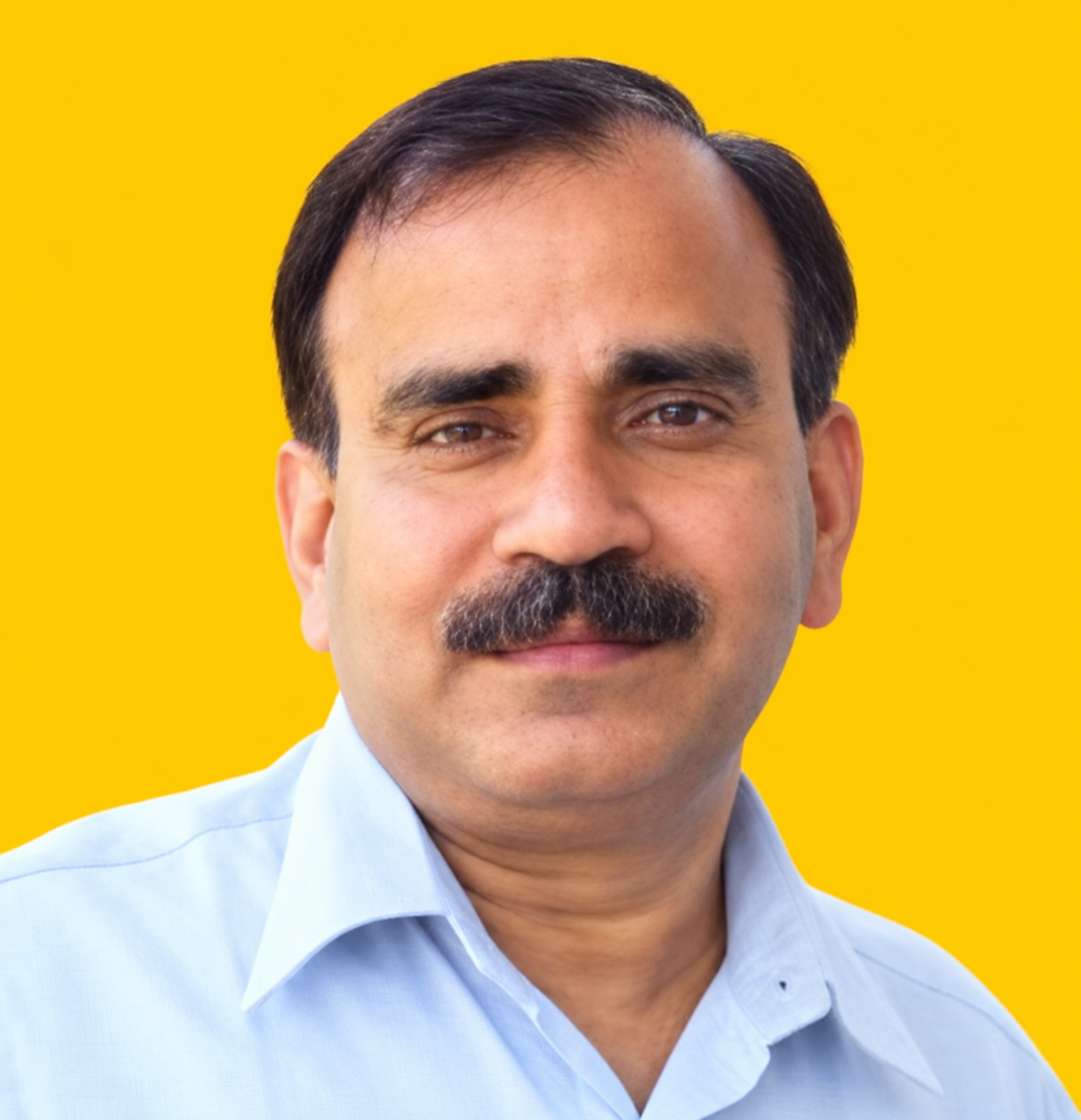
At the centre of this critical operational ecosystem today is Shri Amarendra Kumar Mishra, Executive Director (Mines & Refinery), NALCO, Damanjodi.
NALCO’s current official directory confirms Mishra as Executive Director (M&R) of its Mines & Refinery Complex at Damanjodi. His elevation represents the latest chapter in a professional association with the Navratna public-sector enterprise that began more than three decades ago.
A Journey That Began in 1994
According to NALCO’s regulatory disclosure dated March 7, 2026, Amarendra Kumar Mishra joined NALCO on January 19, 1994, as a Graduate Trainee.
Before being promoted to Executive Director, he was serving as EPO-ED (M&R). NALCO stated that in this position he was responsible for the overall administration, operation and maintenance of the Mines & Refinery Complex at Damanjodi.
The progression—from entering the organisation as a Graduate Trainee to assuming executive responsibility for a major integrated industrial complex—gives his professional journey particular significance.
It is also a story closely intertwined with the evolution of NALCO itself and with Odisha’s emergence as one of India’s most important aluminium-producing regions.
Damanjodi: Where NALCO’s Aluminium Value Chain Begins
Understanding Mishra’s present responsibility requires understanding the strategic importance of Damanjodi.
NALCO is a Schedule ‘A’ Navratna Central Public Sector Enterprise with an integrated presence spanning bauxite mining, alumina refining, aluminium smelting and power generation. The Government of India currently holds 51.28% of the company’s equity.
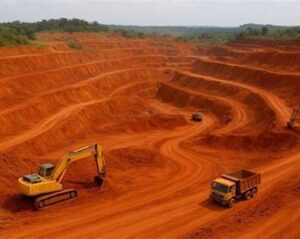
At Panchpatmali in Koraput district, NALCO operates a fully mechanised opencast bauxite mine that has been in operation since November 1985.
The mines currently have a stated capacity of 68.25 lakh tonnes per annum. Bauxite extracted from Panchpatmali is transported to NALCO’s Alumina Refinery at Damanjodi through a remarkable 14.6-km single-flight, multi-curve cable-belt conveyor system with a capacity of 1,800 tonnes per hour.
The Damanjodi Alumina Refinery has a stated present capacity of 21 lakh tonnes per annum. Alumina produced there feeds NALCO’s aluminium smelter at Angul, while surplus alumina can be supplied to third parties and export markets.
Together, the mines and refinery constitute a critical starting point in NALCO’s integrated aluminium value chain.
That makes leadership at the Mines & Refinery Complex much more than an administrative responsibility. It sits at the intersection of resource security, mining operations, refining, maintenance, productivity, infrastructure and long-term industrial planning.
Pottangi: Preparing the Next Chapter
One of the most significant developments associated with NALCO’s current mining strategy is taking shape at Pottangi in Koraput district.
In August 2026, NALCO achieved an important milestone towards operationalising its captive Pottangi bauxite mines with the execution of a government land lease deed covering land required for the overland conveyor corridor and water-intake facility.
Amarendra Kumar Mishra, in his capacity as Executive Director (Mines & Refinery), signed the lease deed on behalf of NALCO alongside IDCO Chief General Manager (Land) Harischandra Rout. NALCO Director (P&T) Jagdish Arora was present during the signing.
The development marked an important step in completing land-related formalities required for the mine’s operationalisation.
According to reporting on the project, NALCO has obtained a mining lease covering 111 million tonnes of bauxite at Pottangi. The captive mine is expected to strengthen the long-term supply of bauxite required for the company’s alumina-refinery operations.
For Damanjodi, that raw-material security has strategic significance.
From Mining to Refining: Managing an Integrated Industrial Ecosystem
The significance of the Mines & Refinery Complex lies in the close integration between its operations.
Bauxite extraction at Panchpatmali is not an isolated mining activity. The ore feeds directly into the Damanjodi refinery, where it enters the next stage of the aluminium value chain.
From there, alumina moves onward to NALCO’s aluminium smelter at Angul and to markets beyond Odisha.
This interconnected structure means that efficiency and continuity at the mining and refining stages have implications across the larger organisation.
For an Executive Director overseeing Mines & Refinery, therefore, operational responsibility exists within a much wider industrial context.
It is a context that Mishra knows from within.
His journey since 1994 gives the story an unusual continuity: an executive now responsible for the complex began his NALCO career as a Graduate Trainee more than three decades earlier.
Leadership Grounded in Institutional Experience
Senior leadership in a large industrial enterprise is often discussed through strategy, technology and investment. Equally important, however, is institutional knowledge.
Large mining and refining operations involve interconnected systems—from equipment and maintenance to workforce management, safety, logistics, environmental management and production continuity.
NALCO’s own disclosure specifically records Mishra’s responsibility, prior to his elevation, for the overall administration, operation and maintenance of the Damanjodi Mines & Refinery Complex.
His elevation to Executive Director therefore represents continuity within an operational environment with which he already had direct leadership responsibility.
That distinction gives his profile substance beyond designation alone.
An Industrial Complex with National Significance
Damanjodi’s importance also extends beyond Koraput.
NALCO describes itself as one of the country’s major integrated bauxite-alumina-aluminium-power complexes, with operations extending from the Panchpatmali mines and Damanjodi refinery to aluminium smelting and power operations at Angul.
The Damanjodi operations therefore form part of a wider national industrial chain.
Every tonne of bauxite efficiently extracted, transported and refined contributes to an ecosystem extending into aluminium manufacturing, infrastructure and downstream economic activity.
The strategic task ahead is consequently twofold: sustaining established operations while preparing infrastructure and resources for future requirements.
Pottangi is an important part of that future.
Beyond Production: The Human Side of an Industrial Township
A major industrial complex is also a community.
An example emerged in August 2026 when NALCO Hospital at the M&R Complex strengthened its diagnostic infrastructure with a new gastroendoscope and colonoscope. The facility was inaugurated by Amarendra Kumar Mishra as Executive Director (M&R), with the equipment intended to improve access to gastrointestinal diagnostic services.
While distinct from core mining and refining operations, such developments underline the broader ecosystem surrounding a major industrial establishment—employees, families, healthcare infrastructure and the communities connected to it.
Odisha at the Centre of India’s Aluminium Story
Odisha possesses some of India’s most significant mineral resources, and aluminium has become an important component of the state’s industrial identity.
NALCO occupies a distinctive place in that story because much of its integrated production architecture is concentrated within Odisha.
The company’s captive Panchpatmali Bauxite Mines and Alumina Refinery operate in Koraput district, while its aluminium smelter, captive power facilities and captive coal mines are situated at Angul.
Within that architecture, Damanjodi is where raw mineral resources begin their transformation into industrial value.
And that places the Mines & Refinery Complex—and the leadership responsible for it—at a strategically important point in both NALCO’s operations and Odisha’s industrial economy.
From Graduate Trainee to Executive Director
There is a simple fact at the heart of Amarendra Kumar Mishra’s professional story that perhaps communicates its scale better than any embellishment could.
January 19, 1994: Graduate Trainee.
2026: Executive Director, Mines & Refinery.
Between those two milestones lies more than three decades within one of India’s significant public-sector aluminium enterprises.
Today, as NALCO works to sustain its established Panchpatmali-Damanjodi operations while advancing the Pottangi bauxite project, Mishra’s responsibility places him at an important intersection between the company’s operational legacy and its next phase of raw-material security.
For The Interview Times, his journey represents a leadership story rooted not merely in designation, but in institutional experience, operational responsibility and progression from within.
In an era when leadership transitions frequently make headlines, there is something equally compelling about another kind of story—the story of a professional who entered an organisation as a trainee, grew through its ranks and, more than three decades later, assumed executive responsibility at the heart of one of its most important industrial complexes.
Key Profile
Name: Shri Amarendra Kumar Mishra
Current Designation: Executive Director (Mines & Refinery)
Organisation: National Aluminium Company Limited (NALCO)
Location: Mines & Refinery Complex, Damanjodi, Odisha
Joined NALCO: January 19, 1994
Entry Position: Graduate Trainee
Current Operational Context: Mines & Refinery Complex, Damanjodi
Current Strategic Development: Pottangi captive bauxite mines project