

The story of aerospace manufacturing begins long before an aircraft reaches the runway. It takes shape in engineering decisions, production processes, component inspections and the relationships between manufacturers and their customers. Within this demanding business, leadership is measured through the ability to turn technical ambition into dependable industrial performance.
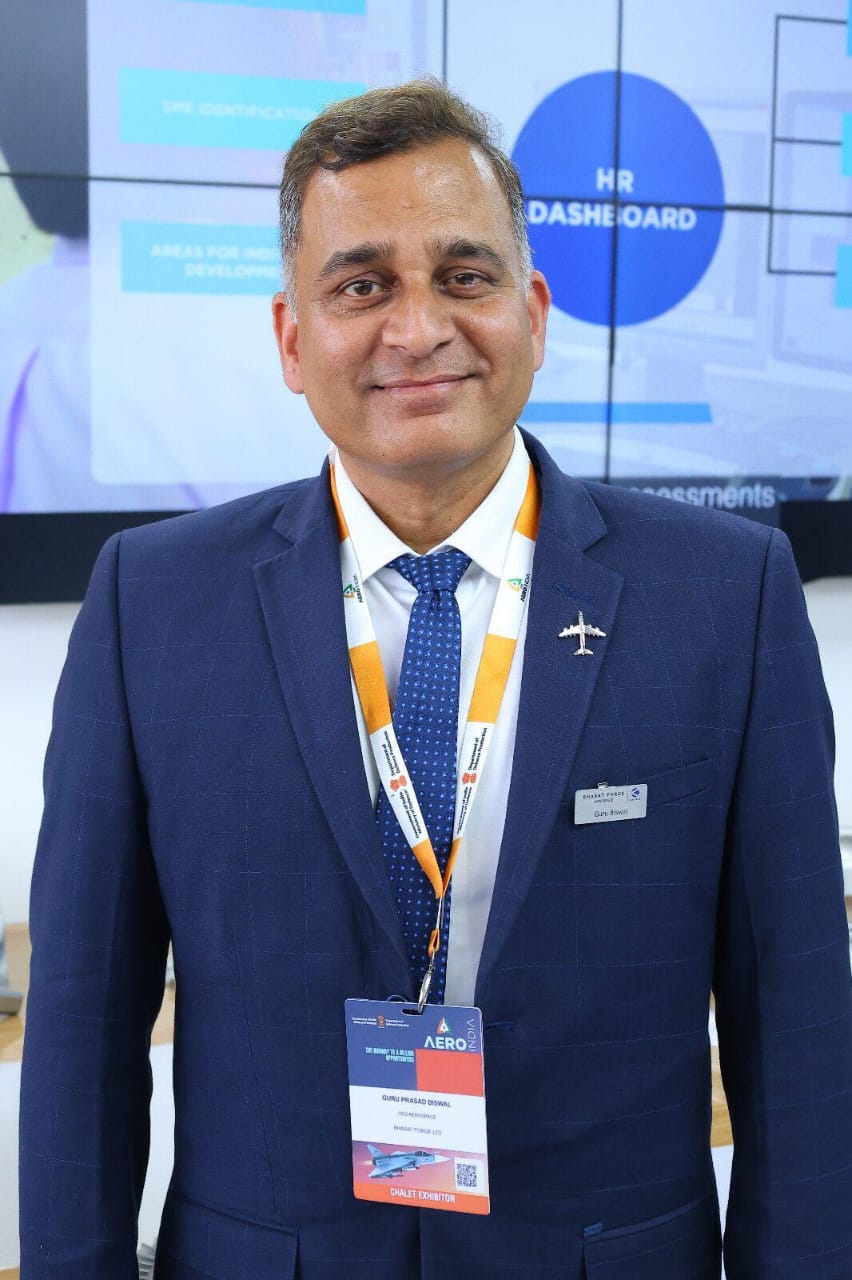
Guru Prasad Biswal’s role at Bharat Forge Limited places him within this critical manufacturing ecosystem. The company’s Integrated Annual Report 2025–26 lists him as Mr. Guru Biswal, Chief Executive Officer – Aerospace Business, confirming his position in its senior management. His work provides a relevant perspective on the leadership required as Indian enterprises pursue more sophisticated roles in aerospace manufacturing. Bharat Forge’s official corporate governance report
A Leadership Role in Advanced Manufacturing
Bharat Forge’s business extends across automotive, aerospace, defence, energy, rail, marine and other industrial sectors. Its corporate reporting describes an engineering and manufacturing enterprise focused on high-performance components and advanced solutions. Aerospace forms part of this broader industrial portfolio, bringing specialised manufacturing requirements and international customer relationships into focus. Bharat Forge Integrated Annual Report 2025–26
The company publicly introduced Biswal as CEO of its aerospace division through its September 2023 “Discover Bharat Forge” series. That introduction associated his role with the division’s emphasis on continued growth and innovation. His inclusion in the subsequent 2025–26 senior-management disclosures establishes continuity in that leadership position. Bharat Forge’s leadership introduction
Viewed from a business perspective, such a role requires connecting several priorities: the development of manufacturing capability, the demands of customers, the effective use of investment and the ability of teams to execute consistently. It is a setting in which commercial strategy and engineering discipline must work together.
A Significant Aerospace Milestone in Pune
A concrete example of the division’s development emerged in March 2026. Bharat Forge inaugurated a landing-gear components machining facility in Mundhwa, Pune, developed in collaboration with Liebherr-Aerospace & Transportation SAS.
Liebherr’s official announcement identified Biswal, alongside Bharat Forge Vice Chairman and Joint Managing Director Amit Kalyani, as leading Bharat Forge’s participation in the inauguration. The announcement placed the company among the first in India—and among the first at scale—to operate original-equipment-manufacturer-approved landing-gear component machining capabilities. Liebherr’s official announcement
For a leadership feature, this milestone provides a more meaningful foundation than broad claims of success. It shows a specific addition to the business’s manufacturing capacity and a documented collaboration with an international aerospace organisation.
The commercial implication is the opportunity to undertake specialised work within an established global supply chain. From an industrial perspective, it illustrates how investment and collaboration can help develop capabilities within India.
Building a Broader Aerospace Portfolio
The same announcement described Bharat Forge’s aerospace manufacturing portfolio as covering aero-engine components, airframe structures and landing-gear subsystems for civil and military aviation. It identified products including turbine and compressor parts, forged rings, shafts and discs, and referred to an advanced aerospace ring mill being established in India. Liebherr’s announcement on Bharat Forge’s aerospace capabilities
Taken together, these developments suggest a business direction centred on broadening the range of manufacturing work the company can perform. They also provide context for the responsibilities associated with leading its aerospace operations.
The importance of this approach lies in capability depth. A manufacturing organisation’s competitive position depends on what it can deliver reliably, how effectively its operations support customer requirements and whether its capabilities remain relevant as those requirements evolve.
Partnerships as a Route to Industrial Development
The collaboration with Liebherr offers a useful lens through which to examine the relationship between international partnerships and domestic manufacturing.
A partnership’s value can extend beyond a single commercial announcement. Its longer-term significance lies in the production capability it supports and the opportunities it creates for a business to participate in demanding customer programmes.
The Pune facility illustrates this connection between collaboration and execution. The wider lesson is that industrial development becomes tangible when strategic relationships result in functioning facilities, specialised processes and the capacity to perform more complex work.
For Indian business leaders, this is a practical dimension of global competitiveness: building an organisation that customers can depend on for specific, technically demanding requirements.
The Leadership Challenge Behind Precision
Biswal’s position invites attention to a form of leadership that often receives less public visibility than consumer-facing entrepreneurship.
Manufacturing leadership involves bringing together people, technology, investment and operational systems. Its outcomes emerge through teams and institutional processes, making it important to distinguish an executive’s responsibilities from the collective achievements of the organisation.
The documented developments at Bharat Forge provide the context for assessing his role. They show an aerospace business expanding its capabilities while engaging with international industry partners. They do not require attributing every corporate milestone to one individual to make the leadership story meaningful.
Instead, the story rests on the responsibility of guiding a specialised business within a larger engineering enterprise.
Connecting Business Capability with Nation Building
For Interview Times’ wider conversation on leadership and nation building, aerospace manufacturing offers a compelling subject. It draws attention to how enterprises can contribute through engineering expertise, specialised production and sustained participation in international industry.
The relevant question is how business ambition becomes lasting capability. Facilities and equipment are part of that answer; the ability of an organisation to use them effectively is equally central.
Guru Prasad Biswal’s role at Bharat Forge Aerospace belongs within this discussion. His leadership position, together with the division’s documented manufacturing developments, provides a grounded example of the connection between corporate responsibility and industrial progress.
As India’s manufacturing conversation places greater emphasis on advanced capabilities, leaders of specialised businesses deserve attention for the work of translating strategy into execution. In aerospace, that work takes place through precision, partnerships and the steady development of organisational competence.