
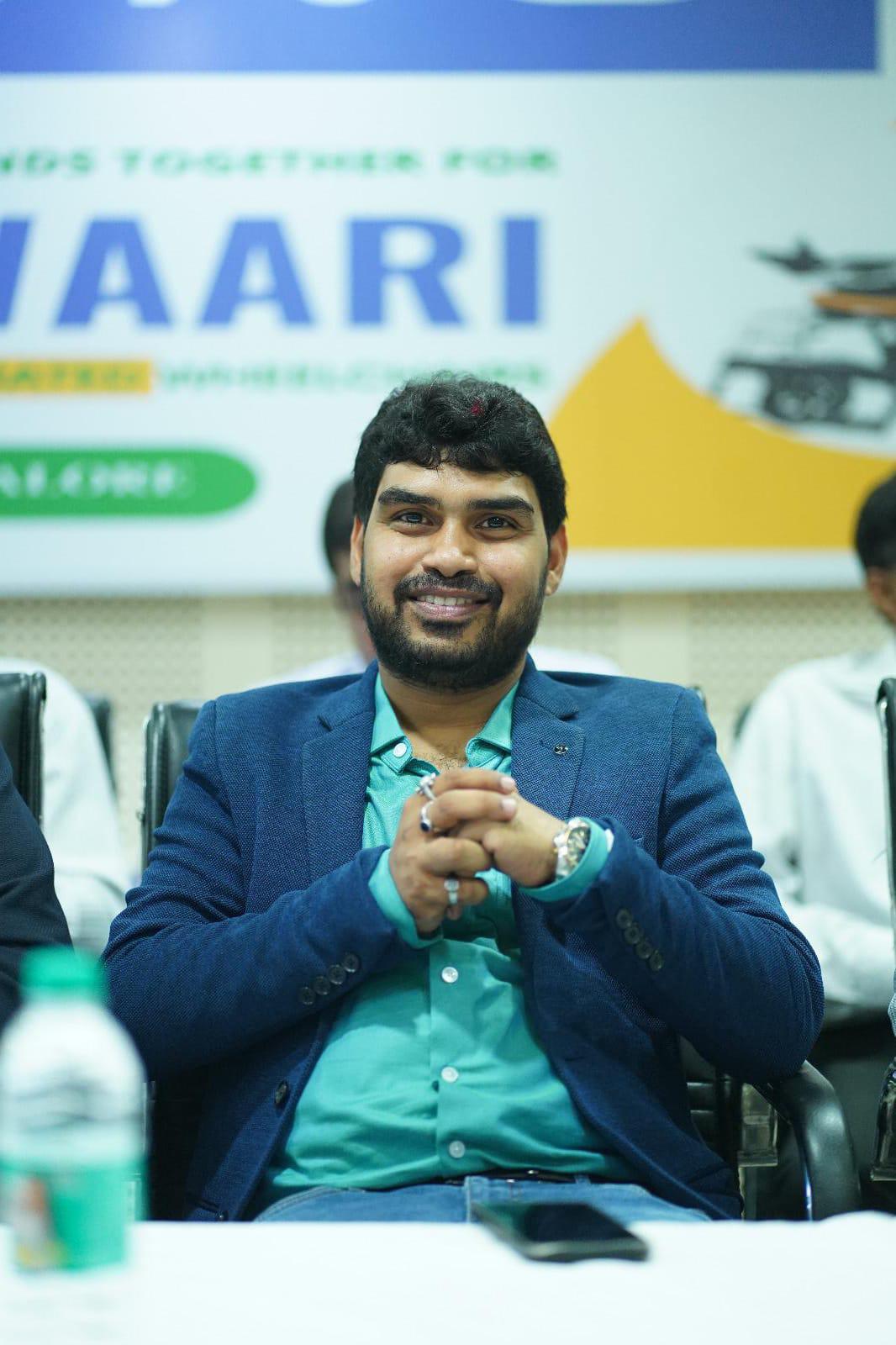
Born in a Village of Odisha Mr. Braja kishore Pradhan started his journey with nothing but a thought of making a difference in a society with the dream in his eyes and struggles he had faced in the past has turned early-life struggles into a mission for change. Growing up, he witnessed children drop out of school, families struggling with illness, and women denied basic opportunities experiences that shaped his commitment to empowerment over charity. Braja Kishore had a home neither poor nor rich, but close enough to the deprivation of the poor that he could feel it bearing down on him. He saw neighbors suffer in silence, and the experience stuck with him. “I knew at a young age that money does not yield happiness, but helping others does,” he says.
College years turned out to be the preliminary step of his social life. He, amongst friends, planned events and campaigns raising the cause of the rights of women and children, which otherwise go unnoticed, into attention-grabbing prominence. These activities instilled a sense of philanthropy within him and imparted a valuable lesson: “Your purse can be small, but your heart must be big.” After graduation, Braja Kishore established a successful professional life at Bangalore working as a marketing professional, then forayed into business entrepreneurship. On the surface, he had it all success, recognition, and financial security. But within, a vacuum existed. In prosperity, he realized that ordinary material success could not fill the inner urge within him. That was the time when a sentence that was once told to him by his father had a profound impact on him: “If you run for power, money, and name, you will keep running for the rest of your life. Fulfillment is through selfless service.”
These words became a compass, guiding him back to the path of social impact. Driven by a vision to create meaningful change, he founded Aahwahan Foundation, channeling his energy and resources into initiatives that could touch lives at scale. What started with supporting classroom learning soon grew into a multifaceted effort for women’s empowerment, community development, environmental conservation, and more.
Under his leadership, Aahwahan Foundation has established strong partnerships with corporate CSR efforts across India, creating a unique template where sustainability of impact meets social responsibility. Today, countless communities have the benefit of its efforts, from children sitting in classrooms to women acquiring skills and empowerment, and villages seeing development happen. For Braja Kishore, the road is anything but recognition; it is the lesser-known victories: a girl completing school, a family accessing medical attention, a society gaining a beacon of hope. “Every individual whose life we have impacted is a reminder our fight is the stepping stone for someone else,” he says. From rural lanes of Odisha to spearheading a movement across the country for the welfare of society, the life of Braja Kishore Pradhan is a shining example of the strength of compassion, persistence, and single-minded devotion. His life tells us that true success isn’t gauged on the parameters of money or advertisements, but on the number of lives that are changed and hopes that are awakened.
Aahwahan Foundation is a non-profit organization dedicated to improving the lives of underprivileged communities and working toward environmental protection across India.
Through its meaningful initiatives, the foundation brings hope, dignity, and positive change to countless lives. Aahwahan Foundation truly stands as a symbol of compassion, responsibility, and social commitment.
Mr. Pradhan’s journey is guided not by personal ambition, but by a deep and selfless commitment to serve humanity. Every step he takes is fueled by compassion, integrity, and a strong desire to uplift those in need. Under his visionary leadership, Aahwahan Foundation has grown into a powerful force for social and environmental change. Today, the organization stands as a shining beacon of hope, inspiring countless lives and creating lasting positive transformation.
Q. Every social entrepreneur has a defining moment. What was the turning point in your life that inspired you to create Aahwahan Foundation and dedicate yourself to social impact?
Answer- The inspiration behind Aahwahan Foundation came from witnessing the challenges faced by underserved communities, especially in rural India, and from the values of compassion and service instilled in me by my father. While entrepreneurship gave me opportunities to grow professionally, it also made me realize my responsibility towards society. I founded Aahwahan Foundation with the belief that real success lies in creating opportunities and improving lives. Since then, our mission has been to drive sustainable change through education, healthcare, women empowerment, and environmental conservation.
Q. You have worked closely with some of India’s most remote villages and tribal communities. What is one experience that completely changed the way you view development and progress?
Answer- Working in some of India’s most remote villages and tribal regions changed my understanding of development completely. I realized that progress is not about infrastructure alone, but about dignity, access, and opportunity. One experience that stayed with me was seeing children eager to learn but deprived of basic educational facilities. Since then, I believe true development begins when we reach the last mile and empower the most underserved first.
Q. If you could take every policymaker, corporate leader, and urban citizen to one village you’ve worked in, what would you want them to see and understand?
Answer- I would want them to experience the resilience, simplicity, and strength of people in our villages who continue to build their lives with limited resources. They would see children eager to learn, women striving for dignity and independence, and communities ready to grow with the right support. It would highlight how even small interventions in education, health, and livelihood can create transformational change. Most importantly, it would reinforce the shared responsibility we all have in shaping inclusive and sustainable development.
Q.Aahwahan Foundation works across education, healthcare, women empowerment, environment, and livelihoods. Which initiative has touched your heart the most, and why?
Answer- Every initiative of Aahwahan Foundation is equally close to my heart because each one addresses a fundamental pillar of community development. Education gives hope, healthcare ensures survival and dignity, women empowerment brings balance to society, and environmental work secures our future. Livelihood initiatives connect all these efforts by creating sustainability and independence. For me, true impact lies in the integration of all these areas working together for holistic change.
Q.Through programs like Education on Wheels, school adoption, and Pink Rooms, you’ve transformed learning spaces for children. What gives you the most hope when you interact with the next generation?
Answer- What gives me the most hope is the curiosity and determination I see in children, even in the most challenging circumstances. When given the right environment, they learn quickly, ask meaningful questions, and dream beyond their limitations. Initiatives like Education on Wheels, school adoption, and Pink Rooms show how access and dignity can unlock true potential. The next generation gives me confidence that meaningful change is not only possible, but already underway.
Q.Whether it is healthcare on wheels, solar villages, or rural development projects, what are the biggest challenges you face while bringing change to underserved communities, and how do you overcome them?
Answer- Working in underserved communities comes with challenges such as difficult terrain, limited infrastructure, and awareness gaps, but these are natural parts of deep grassroots work. We overcome them through strong local partnerships, community participation, and persistent on-ground engagement. Innovation like mobile healthcare and solar village models helps us reach where traditional systems cannot. For us, patience, adaptability, and trust-building are the true foundations of sustainable impact.
Q. You often meet people at their most vulnerable moments. Is there a particular story of a child, farmer, woman, or family that you will never forget?
Answer- In the course of our work, I have met many children, women, and families whose strength in difficult circumstances has deeply moved me. One moment that always stays with me is seeing a child’s face light up when they are finally able to study in a proper learning environment. These experiences remind me that small interventions can restore hope in powerful ways. Rather than one story, it is this collective resilience that continues to inspire and guide our journey.
Q.Many young Indians want to create impact but don’t know where to start. What lessons has your journey taught you about leadership, resilience, and service?
Answer- My journey has taught me that leadership begins with listening to people on the ground and understanding their real needs. Resilience is built when you stay committed to the mission even when progress is slow and challenges are many. True service is not about position, but about consistent action that improves lives in meaningful ways. For young India, I would say start small, stay committed, and let impact guide your path
Q. Looking ahead, what do you believe are the three most urgent issues that rural and tribal India must address over the next decade?
Answer- Over the next decade, I believe the most urgent priorities for rural and tribal India are quality education, accessible healthcare, and sustainable livelihoods. These three pillars are deeply interconnected and form the foundation of long-term development. Alongside this, environmental sustainability must remain central to protect future generations. If we focus on these areas with consistency and inclusion, transformation will naturally follow.
Q. When future generations look back at Aahwahan Foundation and your life’s work, what do you hope they will say about the change you helped create?
Answer- I hope future generations see Aahwahan Foundation as a humble effort that contributed to meaningful and sustainable social transformation. More than achievements, I would want them to remember the intent of bringing dignity, opportunity, and hope to underserved communities. If our work has helped inspire collective responsibility and grassroots change, that would be our greatest success. Ultimately, I hope they say we tried to make development more inclusive, compassionate, and people-centered.
