Subhechcha Ganguly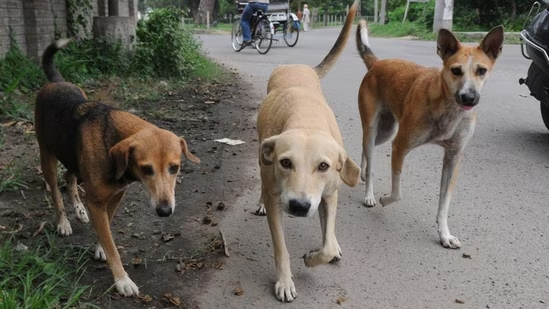
Morocco is facing growing international criticism after animal welfare groups accused authorities of conducting a large-scale cull of stray dogs as the country prepares to co-host the 2030 FIFA World Cup.
A joint investigation led by the International Animal Welfare and Protection Coalition (IAWPC) alleges that hundreds of thousands of stray dogs are killed each year, warning that as many as three million could ultimately be targeted. Campaigners have described the alleged operation as a “mass slaughter”.
According to the IAWPC, some animals are reportedly shot or poisoned, while others are left to starve. Testimonies collected by the group describe dogs being confined in cramped, poorly ventilated enclosures without adequate light or care. The organisation says it has compiled a 91-page dossier containing photographs, official documents and witness accounts detailing methods including shooting, strychnine poisoning and burning.
Activists claim the killings intensified after Morocco was confirmed in 2023 as a co-host of the 2030 tournament alongside Spain and Portugal. In a separate report, campaigners alleged that approximately 300,000 animals had already been killed annually prior to the World Cup announcement, with figures rising since then.
Government Denial and Proposed Legislation
Morocco’s embassy in London has “categorically” denied that any cull is linked to the World Cup, stating that the country remains committed to “humane and sustainable animal management”.
In August, Moroccan authorities proposed draft legislation introducing prison terms of two to six months and fines of up to $2,000 for individuals who intentionally kill, torture or injure stray animals. However, the bill has drawn criticism for including penalties against those who “shelter, feed or treat” stray animals — a clause opponents argue could criminalise acts of compassion.
Animal welfare organisations acknowledge that Morocco faces genuine challenges in managing its stray dog population, including rabies risks highlighted by the World Health Organization. However, they argue that mass culling is ineffective and may exacerbate public health concerns through what experts call the “vacuum effect,” where removed animals are quickly replaced by unvaccinated strays.
Morocco had previously endorsed TNVR (trap-neuter-vaccinate-return) programmes in 2019 as a long-term solution. Activists, however, question the consistency and scale of their implementation amid the country’s preparations for one of football’s biggest global events.