
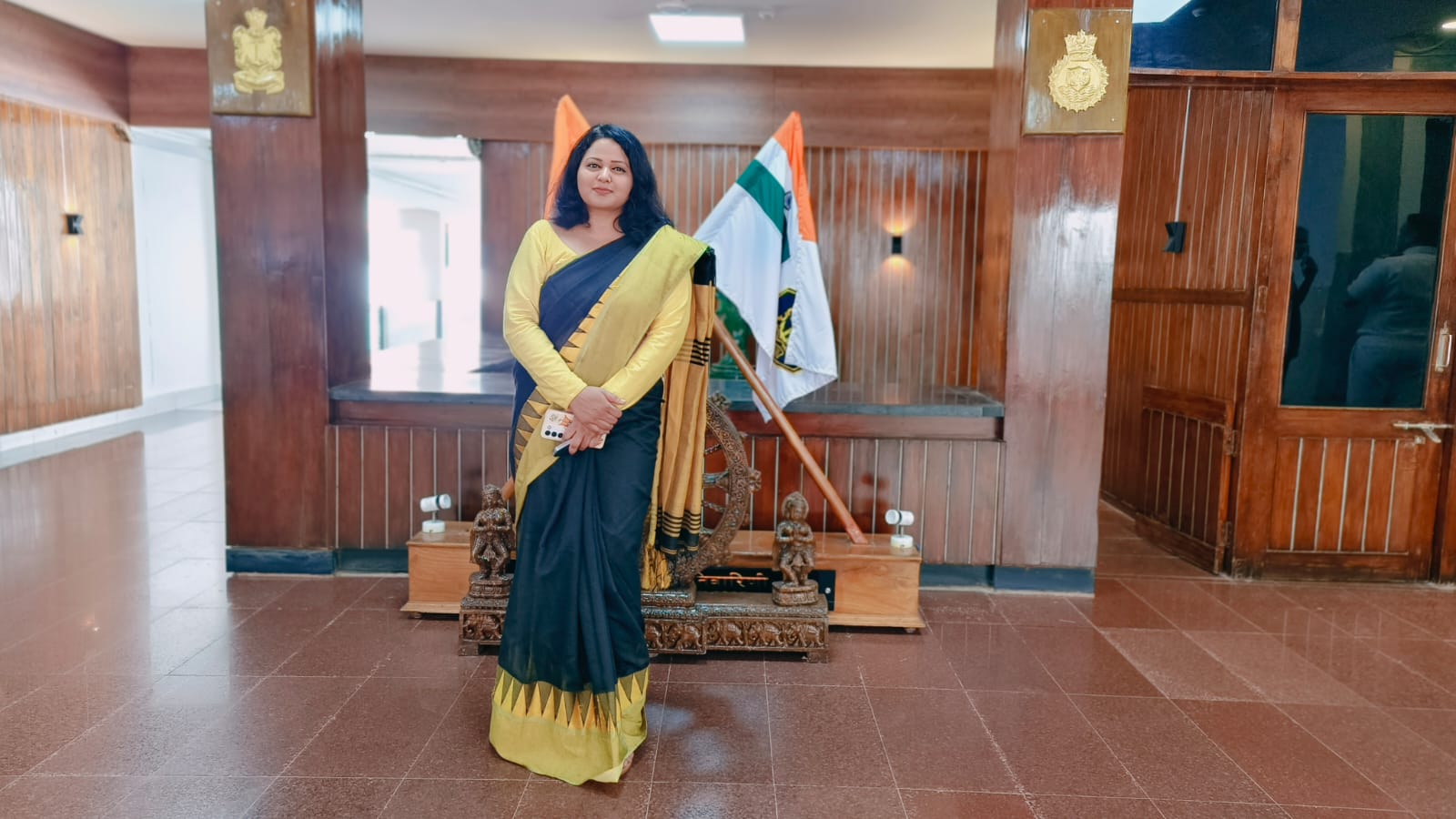
There are leaders who build institutions, and there are leaders who quietly rebuild hope. In the evolving landscape of healthcare leadership in Odisha, Dr. Smita Padhi, Chief Operating Officer of HCG Panda Cancer Hospital, stands at the intersection of compassion, strategy, and purpose — a professional whose journey from a young medical officer in a district hospital to a transformative healthcare leader reflects a deeper philosophy: healthcare is not merely a service; it is a social responsibility.
Her story does not begin in corporate boardrooms or polished conference halls. It begins in the relentless urgency of a district hospital ward — a place where fifty to sixty deliveries a day were not statistics but lived realities. As a medical assistant surgeon serving rural communities, Dr. Padhi learned early that leadership is not a designation; it is a response to human need. Managing overcrowded wards, navigating administrative gaps, and stepping forward where systems struggled shaped the foundation of a leader who would later redefine cancer care delivery in Odisha.

Her transition into healthcare administration began during her tenure at AMRI, now Manipal Hospital, where she stepped into the role of Assistant Medical Administrator, managing duty doctors and Ground hospital operations. What initially appeared to be an operational responsibility soon evolved into a larger calling. Rapid promotions to Assistant Medical Superintendent and Medical Head followed, and eventually she went on to lead as (Interim) Unit Head of Care Hospitals, Bhubaneswar, gaining exposure to complex, multi-specialty ecosystems.
Her leadership philosophy matured further at Hi-Tech Medical College and Hospital in Bhubaneswar, where she served as CEO under the mentorship of H’ble Chairman Dr Tirupati Panigrahi. That phase expanded her understanding of comprehensive healthcare management, yet it also sparked a pivotal question — could focused, single-specialty care create deeper social impact than broad-spectrum hospital models?
The answer unfolded when she stepped into her current role as COO at HCG Cancer Hospitals.
Moving from multi-specialty environments into oncology was not an easy decision. Cancer care is intense, emotionally demanding, and deeply specialized. Yet, as she studied the prevalence of cancer across Odisha — the stigma attached to diagnosis, the geographical gaps in treatment access, and the financial challenges faced by families — she realized that this was not just a professional shift but a mission.
Today, under her leadership at HCG Hospital, expansion is driven not by numbers alone but by necessity. The hospital is building collaborative networks, strengthening outreach programs, and planning new integrated centres to serve underserved regions. The vision extends beyond Bhubaneswar, reaching toward southern and western Odisha where patients often travel hundreds of kilometres for follow-ups — an exhausting reality for those requiring frequent chemotherapy, radiation, and diagnostic monitoring.
Her approach reframes growth as healthcare accessibility.
One of the most powerful aspects of Dr. Padhi’s leadership is how community engagement is woven into the hospital’s operational DNA. Instead of waiting for patients to arrive, the hospital goes to them. ASHA workers are trained to identify early signs of cancer at the grassroots level. Within just six months, this initiative helped them to identify multiple patients and send them for timely intervention and early treatment — a testament to how local networks can transform early detection and treatment, which is a very important in Cancer Care
For her, CSR is not a department; it is a philosophy. Free screening camps, awareness drives in industrial belts like Barbil,Joda, Angul, Jatni and etc. And targeted education programs in pollution-prone/industrial regions demonstrate how HCG Panda’s outreach bridges the gap between hospital infrastructure and public health realities. In areas where contaminated water sources and industrial exposure may contribute to rising cancer risks, the hospital’s teams are not only treating disease but actively studying patterns and promoting prevention.
Through the organisation’s foundation, financially vulnerable patients receive support when life-saving treatments such as immunotherapy or advanced radiation become unaffordable. She speaks candidly about the economics of cancer care — where a single treatment cycle can cost lakhs — and how CSR initiatives must evolve to address these stark realities. “Healthcare leadership,” she believes, “is meaningful only when it reduces suffering beyond hospital walls.”
Technology has also been a transformative force during her tenure. Precision radiation therapies, genetic testing, and advanced diagnostic protocols have reshaped treatment outcomes in Odisha. Yet, she remains cautious about the growing hype around artificial intelligence in medicine. While acknowledging AI’s potential to assist doctors, she emphasizes the need for stronger legal frameworks and accountability before it can be trusted as an independent decision-maker in healthcare.
Her reflections on women’s leadership add a deeply human dimension to the narrative. Empathy, she says, is not merely an emotional trait but a strategic strength — one that drives inclusive decision-making and patient-centric systems. Rather than focusing solely on business metrics, she measures success through patient satisfaction, treatment outcomes, and the emotional reassurance families carry when they leave the hospital.
Beyond her professional responsibilities, Dr. Padhi maintains a disciplined separation between work and personal life — a balance she credits for sustaining resilience in an emotionally demanding field. A devoted mother and a leader shaped by both professional challenges and personal growth, she embodies a leadership style rooted in quiet strength.
Looking ahead, her vision for HCG Cancer Hospitals is expansive: robotic-assisted procedures, bone marrow transplant programs, cardiac integration, and decentralized cancer centres that eliminate the need for patients to travel to metropolitan hubs. The goal is clear — to ensure that geography does not determine survival.
As conversations around CSR and healthcare innovation take centre stage at the upcoming conclave, Dr. Smita Padhi’s journey stands as a powerful reminder that leadership in medicine is not only about infrastructure or technology. It is about reimagining responsibility — transforming compassion into strategy and turning vision into access.
In the corridors of oncology wards and the villages where awareness camps unfold, a new model of healthcare leadership is quietly emerging — one that sees hospitals not as isolated institutions but as living bridges between science, society, and hope.
