We have only one planet for all of us, no matter who you are and where you from. Everything is made to sustain on balance, so as the Mother Earth, and everything within and on her lap are interconnected and interdependent. Unfortunately, the greed to have and grab more has pushed us to the extremes, and climate change has become a reality today.
Now, mitigating climate change and putting things back on a path of reversal is a big challenge for the global community. There are collective responsibilities and individual responsibilities, whether, countries, industries, institutions, consumers.

Fashion is a 3 trillion dollar industry; at the same time, it is also the second-largest polluting industry in the world after petrochemicals. The fashion industry accounts for about 10% of the global carbon emissions and is responsible for about 20% of industrial wastewater. According to reports, 85% of all textiles go to landfills each year and account for around 35% of global microplastic pollutions.
The industry is struggling hard to shift the course toward a sustainable pathway along with international organization, Governments, institutions, consumers and individuals.

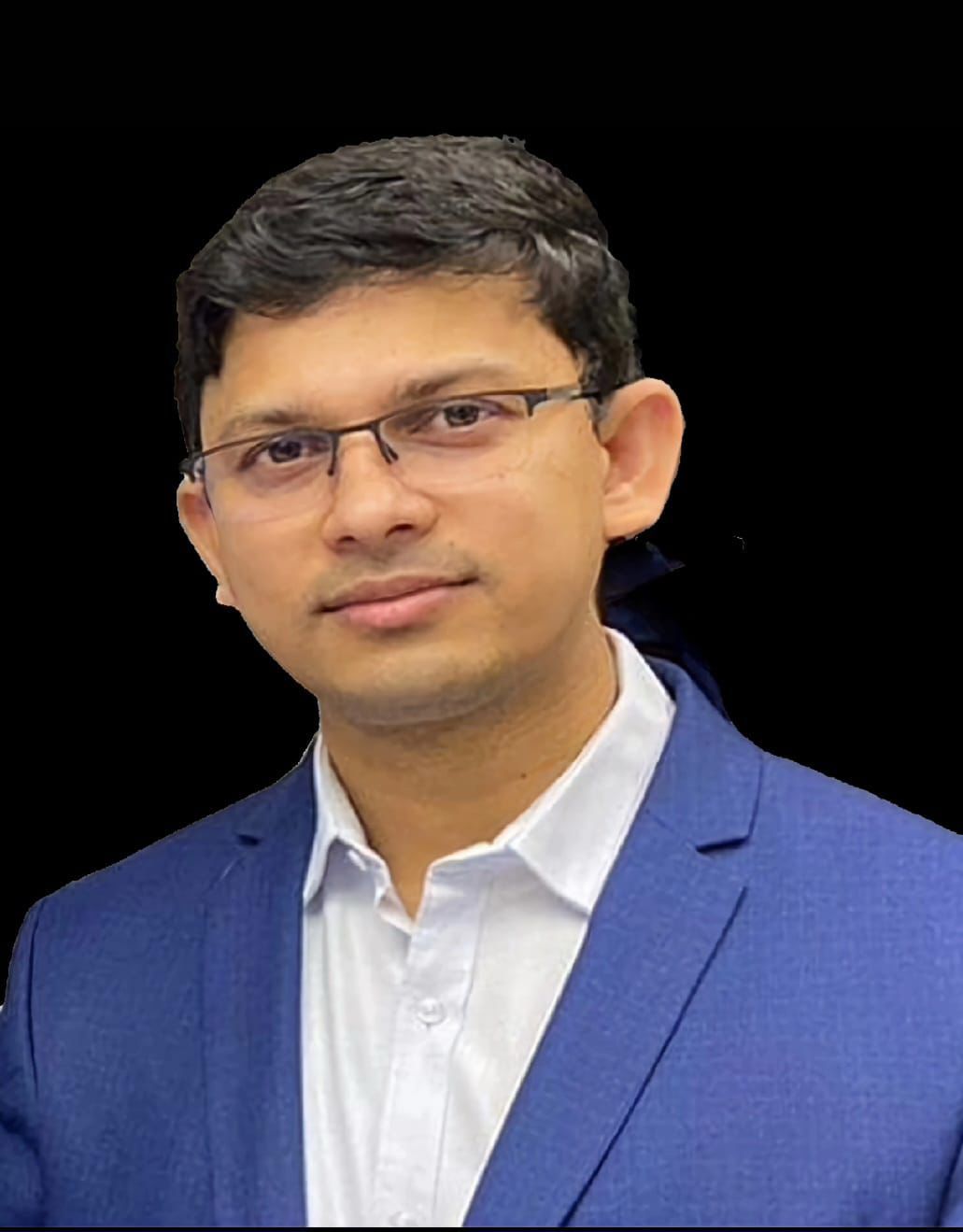
Here is a man from Odisha who has introduced a revolutionary concept of “Farm to Fashion” beyond the popular conception and misconception of sustainable fashion. He is none other than the illustrious Professor, Dr. Binaya Bhusan Jena, from the National Institute of Fashion Technology (NIFT), Bhubaneswar. He is also the Chairman of Textile Association of India (TAI), Odisha Unit, and the former Director of NIFT, Bhubaneswar. Here is a brief conversation with this legendary Professor.
Can you brief about yourself to our readers?
Well! But, you have already introduced me. What more can I say? I am a professor-turned eco-activist and an advocate of inclusive and sustainable fashion. Born in 1972 in the village Sihopara in Rajkanika Tehsil of Kendrapara District.
I am the 5th child of my parents, Shri Siva Prasad Jena and Ratnamani Jena. My father was an exemplary teacher, and my mother a homemaker. I did my schooling from R, N. High School, Rajkanika, and my Graduation from Kendrapara College in Economics Honours and Masters in Economics from Ravenshaw College.
I also did an MBA in Marketing from Pondicherry Central University, then my M.Phil and Ph.D. from Jawaharlal Nehru University (JNU), New Delhi. I worked in the development sector before joining academics. While doing my Ph.D., I worked with many national and international NGOs, civil society organizations, and industries.
As a student, I joined Lok Shakti Abhiyan, a movement headed by Late Shri Rabi Ray, the former Speaker of Lok Sabha as National Youth Convener. I organized many meetings across the states to fight corruption and excessive centralization of power. There I got an opportunity to meet and work with many prominent leaders.
Social and environmental activism has been in my blood; very much influenced by my grandfather and father. I, along with my immediate elder brother, late Sripati Jena, used to do a lot of plantation drive, cleaning of public amenities like ponds and drains right from our childhood days. We always had a heart and concern for people living in distress and went out to help them whatever best we could be doing.

How did you get into NIFT, and how has your experience been so far?
So far, the journey has been very exciting. Joined in 2005, a non-fashion person getting into the shoes of fashion is absolutely challenging and equally rewarding. I had the opportunity to visit one of the fashion shows at NIFT, Delhi, at the invitation of one of my close friends working there. After the show, I had hundreds of questions in my mind – why and what of the runway and catwalk?
I have always been curious about who makes our clothes and accessories. Neither I had seen any factory nor any designer working on it. Started knowing about the sector and realized that fashion is one of the largest employment generating sectors in the world and contributes significantly to the Indian economy.
So, the economics of fashion motivated me to work for the industry. To my serendipity, there was an advertisement for Assistant Professors at NIFT in 2005. I was teaching at the University of Delhi at that time. So, I applied and was selected, and joined NIFT, Gandhinagar. Then rest is history.

Your “Farm to Fashion” concept has got wide popularity. Can you provide us with more insights about this to our readers?
This is a very simple concept. It talks about integrating the entire fashion value chain from farm to fashion so that every single actor is visible and can be monitored for his contribution to an eco-friendly fashion value chain.
Transparency is a big challenge in the fashion value chain. But in “Farm to Fashion,” the concept not only talks about responsible and environment-friendly behavior by each value chain actor but also about inclusive economic justice for all.
Before the advent of synthetic fiber and synthetic dyes, we used everything natural and eco-friendly without putting any pressure on the environment and ecology. Unfortunately, the practices, skills, and ecosystem have been marginalized as a result.

Nevertheless, there are initiatives all around us by many brands, designers, NGOs, and fashion houses attempting to offer something in the name of sustainable fashion. But that is not enough.
We have a suitable environment to grow natural fiber and natural dyes and more than 500 handloom clusters in the country. We can bring back a completely eco-friendly fashion value chain from farm to fashion. We can create alternative-farming opportunities for farmers, opportunities for extractors of fiber and dyes, and further processing yarn to fashion.
Based on the concept of “Farm to Fashion,” the model at NIFT Bhubaneswar has also got equal appreciation. Can you please tell me something more about it?
Yes, the model was recognized and appreciated by the Parliamentary Standing Committee on Labour, and the model was also recommended for implementation by all other NIFT Campuses.
The Model developed at NIFT Bhubaneswar is a collective initiative by the NIFT Bhubaneswar fraternity and its extended community. It is the 1st ever fashion institution where the students and academia can get an opportunity to see the entire eco-friendly fashion value chain. In addition, the campus has a natural dye and natural fiber garden.
We have more than 60 different varieties of dye-yielding and 10 different varieties of fiber-yielding plants, all sourced locally from within the state. Besides, we have also done plantation for rearing Tussar and Mulberry ‘Ahimsa Silk’.
Now under the leadership of the Director NIFT, Bhubaneswar, we have got 180KV rooftop solar electrification on the campus. We have a bio composting facility, made provisions for rainwater harvesting, and installed five bee boxes for pollination on the campus. We never use any chemical fertilizer or pesticides.
The model is unique, whereby the students can experiment with natural dyes and natural fiber collected from the campus itself and transform that into eco-fashion.

You talked about Ahimsa Silk. What is it exactly?
Ahimsa silk is a process and name given to silk produced in a non-violent way. The common practice of silk production happens by a violent method of killing the moth inside the cocoon by steaming and boiling it. Else you cannot get the filament. But in the case of Ahimsa Silk, the cocoons are only harvested and processed after the moth has hatched the cocoon.
The process then becomes more tedious in terms of deriving silk. You can get a filament now; you get a broken cocoon that can give you short staples to be spun together like wool or cotton yarn. But this is ethical, environment-friendly, and non-violent, unlike the popular practice of silk production. Just imagine, around 10,000 silkworms are killed to produce one silk sari if it is not Ahimsa Silk.
What is your opinion about the present structure of the global fashion industry.
It is predominantly unsustainable, exploitative, and oppressive. The competition and profit motive have created a complex supply chain for the industry. In addition, there is a lack of transparency in the supply chain. This makes things worse and allows the industry to easily avoid their responsibility.

Odisha does not have a base for the fashion industry. What is your take on this?
I do not agree with this. Odisha has got everything to become a leader in fashion, particularly in eco-friendly fashion. On one side, we are surrounded by art, culture, and architecture, standing tall in front of us as a guiding tower.
On the other side, we have 100s of small and large handloom and handicraft clusters with different and unique traditional knowledge and skills. And in the middle, we have the resources, an eco-system, and agro-climatic conditions to grow natural fibers and dyes. So the base is already there.
The only thing required is to develop the ecosystem. Besides, Odisha is one of the very exciting destinations for textiles and garment manufacturing. Need further invest in strengthening the fashion. The presence of industries like Aditya Birla and Shahi Exports will attract further investment in the value chain. So, we can certainly have a great future for the fashion industry in Odisha.
Is there any separate market growing for eco-friendly fashion?
There is no such thing as a separate eco-friendly market. There are eco-friendly consumers all around the world. Due to rising environmental consciousness and concern for responsible production and consumption, the demand for eco-friendly fashion is rising very fast in domestic and international markets. Yet, there are few takers.
So, I see an opportunity for our state as a leading producer of eco-friendly fashion and a hub for emerging sustainable fashion enterprise development.
You were involved in a project with Govt. of Ethiopia. Can you please tell us more about your involvement in the project?
In 2012, I went to Ethiopia and three more senior faculty of NIFT to discuss and develop a project for the Ethiopian Textile Industry Development Institute (ETIDI) in Addis Ababa, the Capital of Ethiopia. I contributed as a project development team and was deputed to deliver a few key modules every year till 2016.
One of my most notable contributions in the project is developing an export strategy for the apparel textiles industry of Ethiopia, so as analyzing the Cotton Textiles value chain of the country.
How do you see the culture of Startups growing in Odisha in the next 10 years?
Startup Odisha is doing a phenomenal job. We did not have an entrepreneurial ecosystem in the state. Even then, we see a phenomenal growth of Startups in the state. In fashion, the numbers are very exciting as more young minds join the bandwagon. If the trend continues in the next 10 years, Odisha will be one of the leading states working as a springboard for startups in numerous sectors.
If a startup requires funds for its marketing and growth, where can the organization approach a developing state like Odisha?
Startup Odisha itself gives grants to promising and innovative Startups. There are different types of grants offered by Startup Odisha:
- A monthly grant for about a year
- A grant for marketing and product development
- A need-based grant
Besides, there are many angel investors ready to support innovative Startups. Moreover, there are many Govt. schemes, credit facilities promoted both by the state and Central Govt. available to support the start-ups
Any piece of advice to young entrepreneurs?
The business climate is changing very fast. Yet, there is tremendous scope for everyone to perform and grow. Be consistent and give your best. Remember, the entrepreneurial growth cycle is not the same for everyone. Be ethical, patient, and put in sincere efforts. Do one at a time! Then, things will start falling on your way.