

BHUBANESWAR: In Hinduism, pūja (or pooja) is a profound ritual of worship involving the offering of prayers and gifts to the divine. While it might seem like a mere ceremonial act, pūja encompasses deep symbolic meanings and spiritual significance. It represents a symbolic offering of one’s entire self—mind, body, thoughts, desires, actions, and possessions—to God. The practice of pūja blends ancient Vedic sacrifices with Tantric methods, evolving into a central feature of Hindu worship, celebrated for its accessibility and profound spiritual depth.
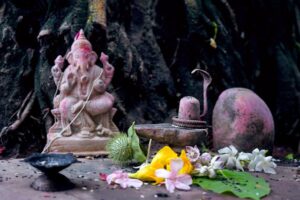
Understanding Pūja
The term “pūja” translates to adore, worship, or revere. It embodies the act of worship, involving several symbolic components:
- Literal Interpretations:
- Purification: “Pū” means to purify or cleanse, and “ja” refers to birth. Thus, pūja can be seen as a means to purify one’s life or birth through ritual cleansing and atonement.
- Discernment: “Pū” also implies discernment, while “ja” signifies manifestation. Thus, pūja represents a practice that cleanses the mind and body, fostering wisdom through divine contemplation.
- Symbolic Interpretations:
- Awakening the Soul: “Pū” as “purusha” (soul) and “ja” as “birth” or “awakening” indicates that pūja awakens the divine presence within oneself or the worshipped object.
- Offering of Flowers and Water: “Pū” as “pushpam” (flower) and “ja” as “jalam” (water) signifies that pūja involves offering flowers, water, and prayers, reflecting devotion and reverence.
- Repetition of Sacred Names: The breakdown of “pūja” into “pa” (parayana, or repetition of God’s names) and “ja” (japa, or mental recitation) highlights the worship practice involving both verbal and mental recitations of divine names.
The Ritual Process
Pūja is conducted in a structured format, reflecting its spiritual significance:
- Invitation (Ahvanam): The ritual begins with the formal invitation of the deity, symbolizing respect and the importance of conducting the ceremony with sincerity and devotion.
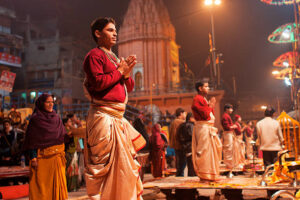
- Offerings (Samarpana): Offerings include prayers, ceremonial seats, cleansing water, food, flowers, and more. These offerings engage the senses and symbolize various aspects of devotion:
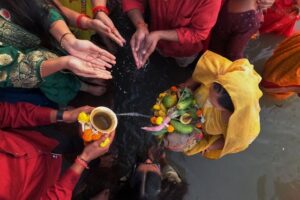
- Food (Naivedyam): Represents material possessions and the divine provision of sustenance.
- Flowers (Pushpam): Symbolize purity, selflessness, and the blossoming of positive qualities.
- Water (Arghyam): Used for cleansing, symbolizing purification and life.
- Incense (Dhupam): Represents the cleansing of the mind and removal of ignorance.
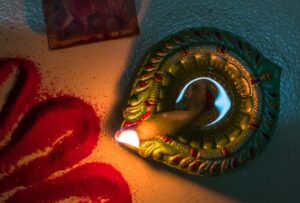
- Light (Deepam): Symbolizes divine knowledge and guidance.
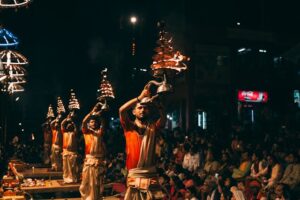
- Remains of the Offering (Prasad): The food remnants, or prasadam, are consumed by devotees, symbolizing the divine grace and purification received through the ritual.
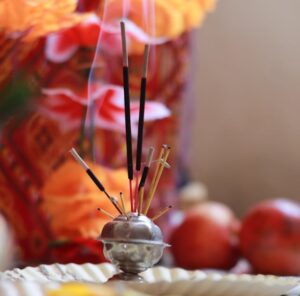
Symbolic Significance of Pūja Objects
Each object used in pūja has symbolic meaning, contributing to the ritual’s spiritual depth:
- The Image: Represents the divine presence and helps focus the devotee’s mind. It is not merely an idol but a living incarnation of the deity.
- Purna Kumbha: An earthen or metal pot symbolizing the goddess and encompassing the divine consciousness.
- Sandal Paste (Gandham): Symbolizes the removal of desires and impurities.
- Light (Deepam): Represents knowledge, purity, and divine presence.
Pūja is more than a ritual; it is a heartfelt declaration of love, devotion, and surrender to the divine. It provides a structured approach to worship that involves the mind, body, and senses in a holistic practice. Through pūja, devotees cultivate discipline, concentration, and spiritual growth, while expressing their deepest reverence and devotion to God. It bridges the mundane and the divine, offering a pathway to grace and liberation.
