
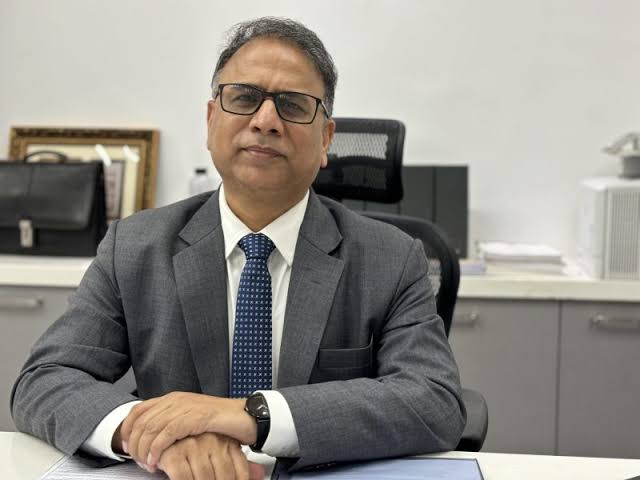
 FEATURE: Long before “net-zero” became boardroom jargon, Odisha was already plotting a radical transformation of its power sector. The story begins three decades ago, but its protagonist today is Mr. Vishal Kumar Dev, the understated yet relentlessly driven Principal Secretary of Energy whose office in Bhubaneswar now hums like a mission-control centre for India’s eastern green-energy revolution.
Mr. Dev inherited a legacy of reform rather than a blank slate. In 1995, Odisha became the first state in the country to rip apart its monolithic electricity board, spinning generation, transmission and distribution into separate corporations and daring private firms to take the reins of distribution. That pioneer’s spark never quite went out, yet by 2020 the state’s grid still resembled a sturdy old dhow in a sea filling fast with sleek renewable super-tankers. Mr. Dev, by temperament more architect than caretaker, set out to rebuild the vessel mid-voyage.
The second wave arrived like the monsoon. Odisha assumed full ownership of the Odisha Power Generation Corporation, then persuaded Tata Power to pick up a majority stake in four distribution companies under a refreshed public-private model. It was a characteristically Odia bargain: the public retained the moral weight of ownership while the private partner brought capital, discipline and a taste for risk. Parallel to that, the one-of-a-kind “single-buyer” model—GRIDCO purchasing power in bulk before feeding it to DISCOMs—proved surprisingly nimble, insulating consumers from tariff shocks even as coal prices gyrated.
Yet Mr. Dev’s true ambition lay in turning Odisha’s abundant sunlight, steady coastal winds and vast reservoirs into the backbone of its next growth chapter. He helped craft the Renewable Energy Policy of 2022, a charter of incentives that slashed red tape on land allotment, wiped away wheeling charges and eased the duty burden on green electrons. The response was immediate. In January 2025, at the Utkarsh Odisha Investors’ Conclave, Central PSU heavyweights—MCL, IOCL, HPCL, NLC, ONGC and more—inked nine memoranda of understanding that promise to pump ₹1.24 lakh crore into 18 gigawatts of new renewable capacity. Those figures roll off Mr. Dev’s tongue almost casually, as if they represent mere waypoints rather than thunderclaps heralding change.
Rather than dwelling on the towering investment figures or sweeping policy milestones, Mr. Dev gravitates toward the projects themselves—the 1,700-megawatt pump-storage cascade OHPC is carving into the state’s hillsides; the audacious 3-gigawatt floating-solar expanse planned for Hirakud reservoir; the green-hydrogen ecosystems germinating in the bustling port towns of Paradeep and Gopalpur. Each initiative slots neatly into a grand mosaic whose edges stretch toward 2030, when Odisha expects to have added 10.96 GW of new renewable capacity and created 150,000 green-collar jobs.
None of this would matter if electrons could not travel. Here Mr. Dev turns tour-guide, tracing transmission lines across an imaginary map: 16,512 circuit-kilometres of steel and aluminium already in place; 198 extra-high-voltage substations keeping frequency as steady as a tabla beat; five giant 765-kV grid stations and nine 400-kV units queued for construction. The numbers sound abstract until he brings them to life with a small anecdote: during a cyclone last year, grid availability never dipped below 99.9 percent. “Resilience,” he says, “isn’t jargon here—it’s weatherproofing lives.”
Even so, bringing solar panels to a fisherman’s roof in Kendrapara or a rice farmer’s pump in Bargarh requires boots-on-mud pragmatism. Odisha has electrified 99 percent of its villages, but Mr. Dev refuses to let the remaining dots on the map become footnotes. Where extension cables can’t snake, state-funded solar micro-grids now bloom. Schemes like PM-KUSUM and PM-Surya Ghar sound national, yet Odisha seasons them with its own subsidies and the rarest of bureaucratic spices: timely disbursal. By 2027, three lakh households are expected to harvest rooftop power, nudged along by a ₹1,800-crore state purse.
Critics point to classic obstacles—land acquisition, tariff battles, grid intermittency. Mr. Dev confronts each with the cool confidence of a chess player who knows the endgame. Twenty-five percent of the state’s generation already comes from hydro, gifting Odisha a peaking resource that smooths solar’s sundown slump. Fifty-seven reservoirs have been earmarked for floating panels, marrying water conservation with electricity generation. Funding gaps are bridged through concessional multilateral finance, risk-shared PPPs and what Mr. Dev dubs “Odisha’s quiet superpower”: a reputation for actually delivering on promises.
The horizon he sketches is almost audacious. By 2047, when India celebrates a century of independence, Odisha sees itself as a USD 1.5-trillion economic powerhouse exporting surplus green electricity, churning out five million tonnes of green hydrogen a year for its steel and aluminium smelters, and counting its energy sector not as a utility but as the pulse of its prosperity.
For now, Mr. Vishal Kumar Dev remains focused but measured, observing the early results of Odisha’s ambitious energy transition with cautious optimism. From grid modernization to large-scale renewable integration, the foundational shifts are already visible. Across cities and rural landscapes, rooftop solar panels are becoming more common, pump storage and floating solar projects are gaining momentum, and industrial clusters are being reimagined with clean energy at their core. As the state navigates the next phase of implementation, Mr. Dev continues to steer the roadmap with a clear vision: making Odisha not just energy secure, but a leader in India’s green economy. The journey is far from over—but the direction is unmistakably forward.
