Interview Times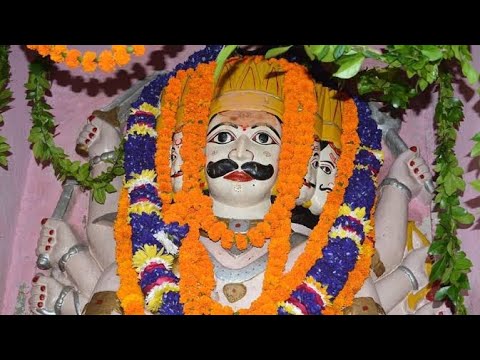
FEATURE: While effigies of Ravana go up in flames across the country amid chants celebrating Lord Ram’s victory on Dussehra, a unique and sacred ritual takes place in a small locality of Kanpur. In the heart of Shivala, the chants of ‘Jai Lankesh’ and ‘Lankapati Naresh ki jai ho’ fill the air, as locals and devotees gather to worship the demon king himself.
This peculiar temple, known as the Dashanan Temple, is unlike any other. It remains locked throughout the year and opens its doors just for one day—Vijay Dashmi, the very day Ravana is traditionally defeated by Lord Ram. On this day, the temple’s ten-headed, five-foot-tall idol of Ravana is brought out for worship before being locked away again for another year.
Thousands of devotees, defying the more conventional traditions of Dussehra, gather at the Kailash Temple in Shivala, where Ravana is revered not as a villain but as an embodiment of Shakti (power) and Gyan (knowledge). In this temple, Ravana is honored as a great devotee of Lord Shiva and is believed to be the protector of both Lord Shiva and Goddess Chinmastika.
Kanpur’s Dashanan Temple is one of the seven temples in India dedicated to Ravana. Others include the Ravana Mandir in Bisrakh (Greater Noida), the Kakinada Ravana Temple (Andhra Pradesh), the Ravangram Ravana Temple in Vidisha (Madhya Pradesh), as well as temples in Mandsaur, Jodhpur, and Kangra. However, the uniqueness of Kanpur’s temple lies in its annual ritual of unlocking Ravana’s idol for just 12 hours on Dussehra.
The temple was built in 1868 by a local resident and has since become a site of reverence and curiosity. Worshippers believe that Ravana’s appearance on Dussehra offers them protection from negativity and enhances their intellect, owing to Ravana’s famed wisdom and knowledge. From early morning until late into the night, devotees line up to catch a glimpse of the demon king, believing that his blessings can rid them of negative planetary influences and fulfill their wishes.
The day of Ravana’s worship is marked by traditional rituals, including offerings of mustard oil and ridged gourd flowers. It is believed that by performing this aarti and making these offerings, devotees can improve their planetary equations and ward off ill effects from their lives.
The fair that springs up around the temple adds to the festivities, with the demon king decked out in full glory. The temple is closed only after the effigies of Ravana, Kumbhkaran, and Meghnad are set ablaze elsewhere in the city.
Philosophically, the temple’s annual celebration serves as a reminder that even those with immense knowledge and power, like Ravana, can fall due to arrogance. For the devotees who visit the Dashanan Temple each year, this rare and fascinating ritual is a blend of devotion and reflection, offering them a unique perspective on the story of Dussehra.
In this small corner of Kanpur, while most of the country celebrates the triumph of good over evil, Ravana is revered as a symbol of power, knowledge, and devotion—ushering in an entirely different dimension to the age-old festival.