
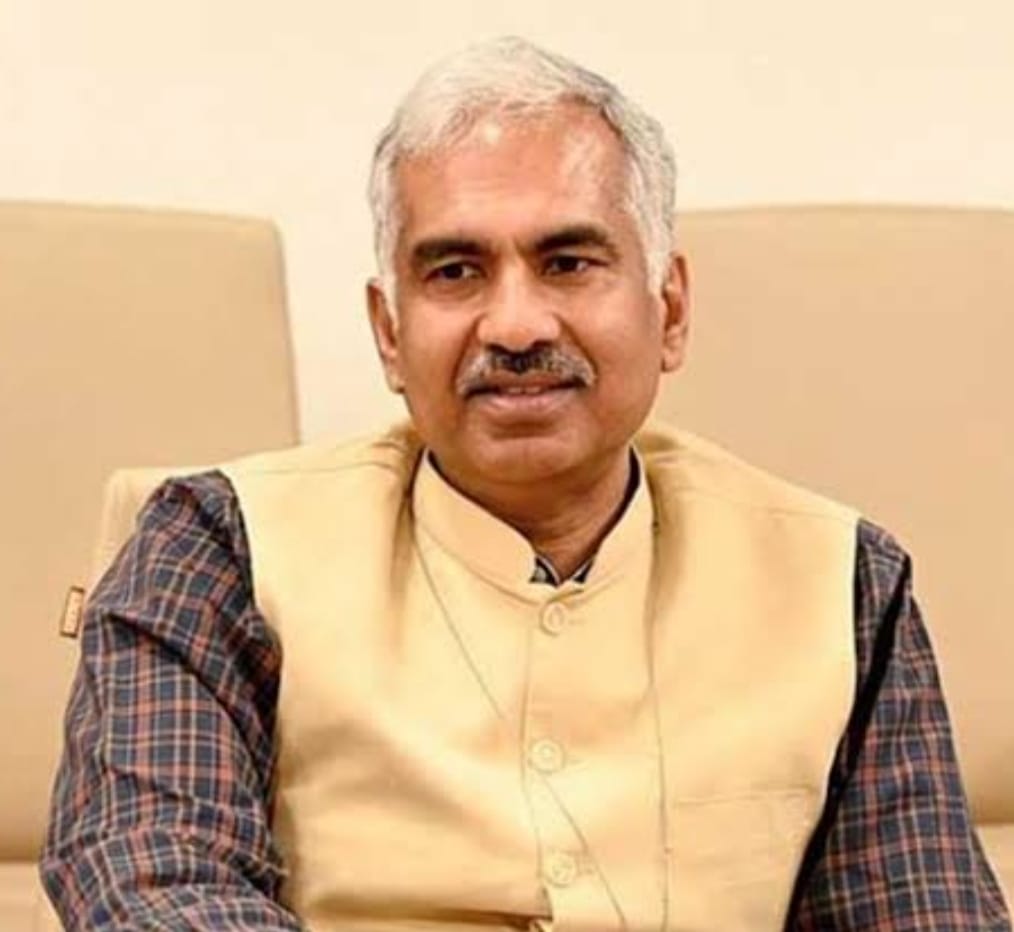
 FEATURE: Manoj Ahuja, a 1990-batch IAS officer of the Odisha cadre, stands as a quintessential example of leadership that combines vision, pragmatism, and an unwavering commitment to public service. With an illustrious career spanning over three decades, Ahuja’s administrative journey weaves through an array of critical responsibilities, showcasing his ability to navigate complex challenges with strategic finesse. As Odisha’s Chief Secretary since June 2024, he continues to be a driving force in transforming the state’s governance landscape.
A Scholar and a Statesman
Ahuja’s academic credentials reflect a foundation built on intellectual rigor and a global perspective. With a Bachelor’s in Mechanical Engineering from Thapar Institute of Engineering and Technology, an MBA from Punjab University, and a Master’s in Public Administration from Harvard University, his educational trajectory has endowed him with both analytical and managerial acumen. These attributes are evident in his administrative style, which seamlessly combines technical precision with a human-centric approach.
This blend of education and experience enabled Ahuja to transition smoothly from his early days as Sub-Collector in Kalahandi district to pivotal roles such as Principal Secretary in the Cooperation Department and Commissioner in the Steel and Mines sectors. His tenure in these positions showcased his remarkable capacity for problem-solving and vision-driven policymaking. Ahuja demonstrated a keen ability to identify systemic inefficiencies, streamline administrative processes, and implement transformative policies. These initiatives not only addressed immediate challenges but also laid a strong foundation for sustainable growth, making a lasting impact on Odisha’s socio-economic fabric and earning him widespread respect as a leader focused on holistic progress.
Spearheading Agricultural Transformation
During his tenure as Union Secretary of Agriculture and Farmers’ Welfare, Ahuja played a transformative role in reshaping India’s agricultural policies. Recognizing the limitations of a production-centric approach, he advocated for a shift towards demand-driven agricultural value chains (AVCs). His emphasis on integrating these chains with global markets was not merely a call for modernization but a strategic pivot towards making Indian agriculture globally competitive.
Ahuja’s insistence on financial inclusivity through instruments like bill discounting and bridge financing resonated with stakeholders, ensuring liquidity and economic stability across the agricultural ecosystem. His ability to simplify bureaucratic processes and foster accountability underscored his commitment to creating an enabling environment for all stakeholders. This approach mirrored a seasoned chess player strategizing multiple moves ahead, balancing precision with foresight to create lasting impact. By aligning policy frameworks with grassroots realities, Ahuja ensured that even the most vulnerable participants in the value chain felt empowered, fostering trust and collaboration while setting a benchmark for sustainable agricultural reform and economic resilience.
Architect of Odisha’s Administrative Renaissance
Ahuja’s return to Odisha as Chief Secretary in July 2024 marked the beginning of a new chapter in the state’s governance. One of his immediate challenges was overseeing preparations for the Rath Yatra, a globally renowned event that draws millions of devotees annually. Within days of assuming office, Ahuja demonstrated his characteristic ability to mobilize resources, convening meetings with senior officials to ensure seamless execution of this complex operation.
Another notable milestone under his leadership is the organization of the 18th Pravasi Bharatiya Divas in January 2025. With global dignitaries and diaspora members expected, Ahuja constituted 14 sub-committees to oversee every aspect of the event, from parking logistics to VIP seating. This meticulous planning reflects his penchant for precision and his ability to navigate high-pressure scenarios with ease.
A Pillar of Integrity
Ahuja’s tenure as Chief Secretary is also marked by his firm stance on ethical governance. His directive to curb lobbying and undue influence in employee transfers showcases his unwavering commitment to transparency. Citing Rule 23 of the Odisha Government Servants’ Conduct Rules, 1959, he issued a clear warning against circumvention of administrative processes, emphasizing that integrity and fairness must remain non-negotiable pillars of public service.
Such measures not only reinforce accountability within the administration but also set a precedent for principled governance, reflecting Ahuja’s belief that public trust is the cornerstone of effective leadership. By prioritizing fairness and transparency, he has cultivated a culture of ethical decision-making. His unwavering commitment to integrity inspires confidence among stakeholders and strengthens the foundation of governance, demonstrating that ethical leadership is not merely an ideal but a practical pathway to sustainable progress and enduring public confidence.
Championing Distributed Growth
At a workshop on fostering service-led growth in Tier-II and Tier-III cities, Ahuja articulated Odisha’s commitment to geographically distributed development. By streamlining regulatory processes and creating robust infrastructure tailored to smaller cities, he emphasized the importance of skilling initiatives that align with localized needs.
This vision underscores his ability to think holistically, ensuring that Odisha’s growth story is inclusive and sustainable. His collaboration with central entities, such as the Ministry of Electronics and Information Technology, further highlights his role as a bridge between state and national priorities.
A Legacy of Resilience
Ahuja’s leadership journey is one of resilience and adaptability. Whether managing the intricacies of India’s education system as Chairman of the Central Board of Secondary Education (CBSE) or steering Odisha’s development as Chief Secretary, he has consistently demonstrated an ability to balance ambition with pragmatism.
Consider his response to the challenges posed by Odisha’s geographical vulnerabilities. From skillfully addressing the state’s agricultural needs to fostering industrial growth in Steel and Mines, Ahuja’s strategies have consistently prioritized the welfare of Odisha’s people. His approach can be likened to an engineer fine-tuning a complex machine, ensuring that every component works harmoniously to achieve optimal results.
The Road Ahead
As Odisha prepares to host pivotal events like the Pravasi Bharatiya Divas, Ahuja’s extension as Chief Secretary is not just a formality but a necessity. His ability to manage high-profile events while maintaining focus on long-term developmental goals positions him as a leader uniquely suited to navigate the state through a transformative phase.
Ahuja’s legacy will likely be defined by his ability to harmonize Odisha’s rich cultural heritage with its aspirations for modernity. From promoting skill development in smaller cities to streamlining agricultural value chains, his contributions encapsulate a governance model that is both inclusive and forward-thinking.
In the annals of Odisha’s administrative history, Manoj Ahuja will be remembered not just as a bureaucrat but as an architect of change—a leader who turned challenges into opportunities and set a benchmark for others to come.
