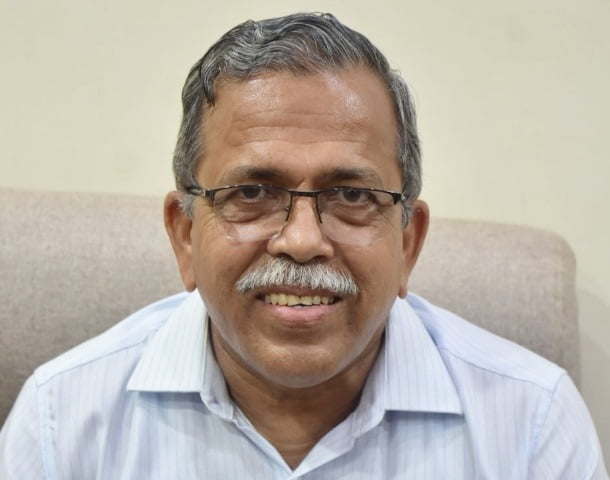
Suparjya swain

FEATURE: In a world where fashion is often dictated by fleeting trends, Salina Samal stands out as a leader with a deeper purpose—empowering women, preserving Odisha’s rich cultural heritage, and driving economic change. As the Managing Director of Tripathaga Textiles, she has not only established a thriving business but has also created a movement centred on employment, empowerment, and innovation. Through her work, she has provided opportunities to hundreds of women, uplifted artisans, and introduced Odisha’s traditional handloom and craft to a global audience. By seamlessly blending heritage with contemporary fashion, Salina is transforming the textile industry while ensuring that the essence of Odisha’s artistry remains alive and celebrated.
Born in a small village where education was a rare privilege rather than a necessity, Salina witnessed her father’s determination to change this reality by establishing an English-medium school. This spirit of transformation deeply influenced her. Though her early education was scattered across different schools due to limited local opportunities, she pursued her higher studies at KIIT Science College and later at the Institute of Technical Education and Research (ITER), Siksha ‘O’ Anusandhan (SOA) University, where she completed her engineering degree. However, engineering was never her true calling. Fashion and textiles fascinated her, but her family, like many others, did not recognize it as a viable career option. With no formal fashion schools in Odisha at the time, Salina found herself navigating an unfamiliar terrain. She initially worked as a SAP consultant for a few years before pursuing management studies at SP Jain School of Global Management. Yet, the pull toward textiles remained strong, prompting her to take the leap of faith and venture into the garment industry.

Her vision was not limited to setting up a small business; she aimed to put Odisha’s textile heritage on the global map. Her journey began with extensive research—traveling to Delhi and Mumbai to learn the workings of the commercial textile industry, understanding machinery, compliance, and market demands. Armed with this knowledge, she returned to Odisha to establish her factory with just 25 machines and 50 women employees. Her first major breakthrough came when she secured a government tender to manufacture handloom Nehru jackets for CET College. The challenge was immense—tight deadlines, limited resources, and an all-women workforce with no prior experience. Yet, driven by sheer determination, her team worked day and night to complete the order, proving that women were more than capable of handling high-pressure production demands.
Tripathaga Textiles is more than just a garment manufacturing unit; it is a movement toward women’s empowerment. Salina consciously ensures that 80% of her workforce consists of women, providing them not just employment but a nurturing environment where they can thrive. From celebrating birthdays and festivals to ensuring a safe and comfortable workspace, she has cultivated a familial culture within her factory. Her leadership extends beyond offering jobs—she actively trains and mentors freshers, giving opportunities to those who might struggle to find employment elsewhere. Today, the company has grown to 200 machines and a diverse workforce of both men and women, with ongoing expansions.
While many garment manufacturers focus on generic clothing, Salina’s ambition is to blend Odisha’s rich art and craft with contemporary fashion. Her brand, Royal Ally, has successfully introduced the world to handloom fabrics infused with modern aesthetics. Her export journey began with South Africa, followed by Dubai, where her team manufactured traditional garments like kaftan. But her proudest moment came when she showcased Odisha’s art at international platforms such as the Bombay Fashion Week and a special exhibition in Rome, organized by the Indian Chamber of Commerce. Here, she presented Sambalpuri sarees, patachitra art, and handloom fabrics, mesmerizing global audiences who had never before seen these indigenous designs.

She is on a mission to make Odisha’s handloom more accessible, affordable, and appealing to younger generations. “Why should handloom only be reserved for special occasions? Our cotton fabric is perfect for daily wear—we just need to design it in a way that attracts today’s youth,” she explains. By modernizing traditional weaves and incorporating them into western wear, she ensures that these age-old crafts remain relevant in today’s fast-paced fashion industry. Her initiative doesn’t stop at garments. She is actively working with artisans to create contemporary interpretations of patachitra, incorporating mandala and modern art forms to appeal to a wider audience. This fusion not only preserves the craft but also opens new markets for traditional artisans.
Despite her successes, Salina acknowledges the challenges of running a textile business in Odisha. Infrastructure and logistics remain significant hurdles. While Odisha has major ports like Paradip, garment exports still rely heavily on Mumbai due to a lack of specialized facilities. She strongly believes that improved road connectivity and export infrastructure could transform the state into a textile hub. Beyond business, her personal mission is to create more employment opportunities for women, ensuring financial independence and security. “Women should never consider their careers a second priority. Life’s uncertainties demand that they stand strong and be self-sufficient,” she says, emphasizing the need for economic empowerment in reducing social inequalities.
Looking ahead, she envisions Odisha as a future global destination for garment manufacturing. Despite the state’s abundant heritage, culture, and skilled workforce, it remains largely untapped on the global stage. Through Tripathaga Textiles, she aims to showcase Odisha’s potential to the world, making it a hub for high-quality, homegrown garment manufacturing. She dreams of flagship stores in major cities showcasing Odisha’s rich handloom legacy. More than anything, she wants to create a safe, inclusive workspace where women can thrive, unshackled by societal constraints.
Her journey is a testament to what passion, resilience, and vision can achieve. By weaving tradition into modernity, empowering women, and challenging industry norms, Salina Samal is not just shaping a successful business—she is shaping the future of Odisha’s textile industry.