


In the fast-evolving world of technology and entrepreneurship, there are builders—and then there are boundary-pushers.
Those who don’t just participate in industries, but create them.
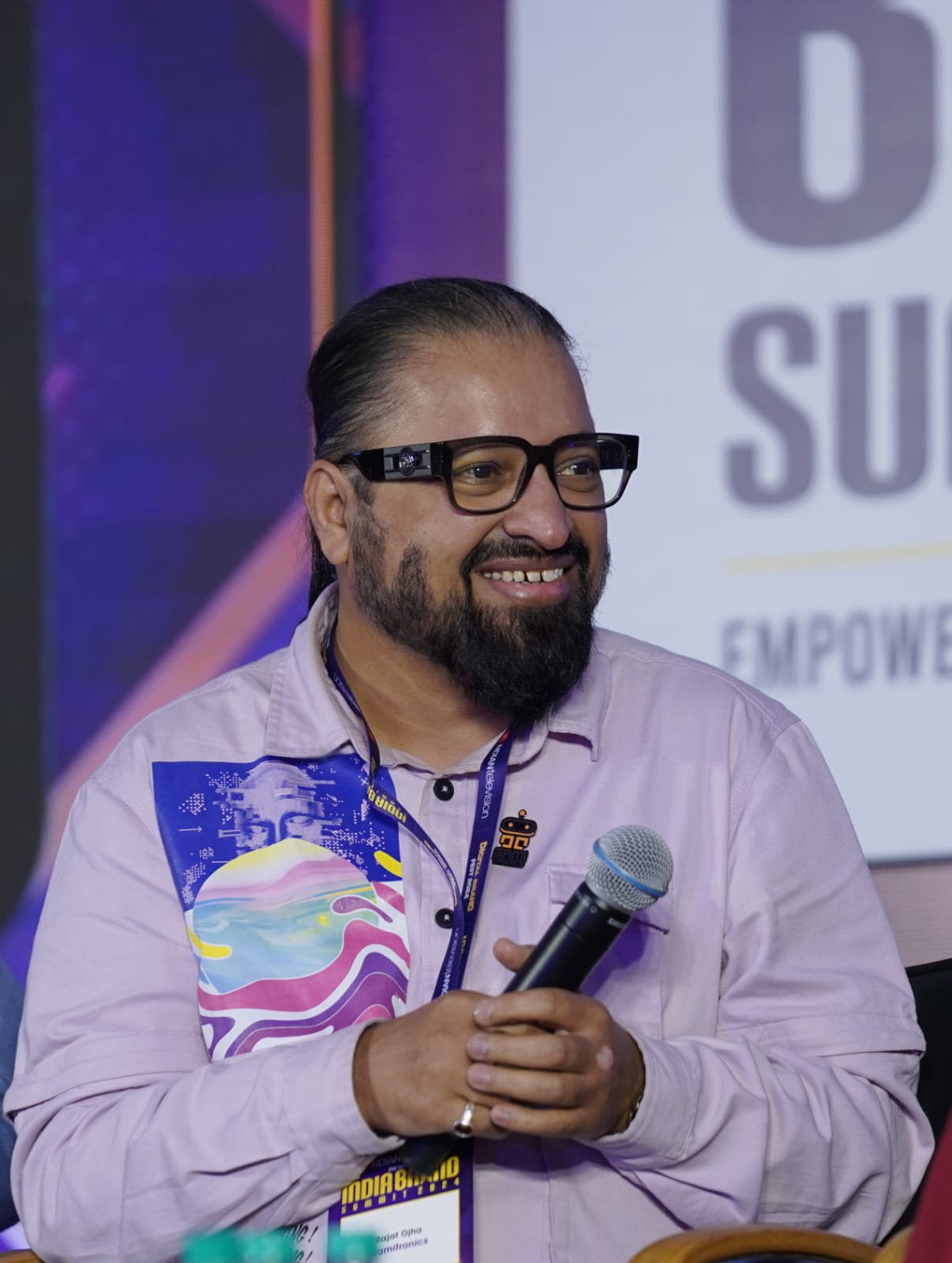
Rajat Ojha belongs firmly to the latter category.
From pioneering early game development in India to building theme parks, digital museums, and AI-powered gaming experiences, his journey is not one of linear success—but of relentless reinvention.
This is not just the story of a gamer turned entrepreneur.
This is the story of a mindset that refuses to build for the present—and instead, builds for what comes next.
The Defining Shift: From Building Games to Building Destiny

For Rajat Ojha’s, the transition from gamer to entrepreneur was not triggered by opportunity—but by realization.
“The moment I understood that I had learned the art of building, I knew I shouldn’t just build games—I should build companies.”
At its core, this shift reflects a deeper philosophy:
building for others fulfills their vision, but building businesses allows you to shape your own destiny.
It’s a subtle but powerful distinction—one that separates creators from entrepreneurs.
Thriving Where No One Else Exists
If there is one consistent pattern in Rajat Ojha’s three-decade journey, it is this:
He chooses to operate where no one else is looking.
Long before gaming became mainstream in India, he was building games.
In the early 2000s—before smartphones even existed—he was experimenting with mobile gaming.
In 2006, when virtual reality was still conceptual, he was already developing VR experiences—years before the world caught up.
This instinct to move early is not driven by market trends.
It is driven by curiosity—and risk.
“I’ve never built businesses because there was money in them. I’ve built them because they could create impact.”
Risk as a Philosophy, Not a Strategy
In most boardrooms, risk is managed.
In Rajat Ojha’s world, risk is embraced.
By his own admission, his biggest “mistake” has been taking risks too early and too often—something that even deterred investors at one point.
But what others saw as recklessness, he saw as inevitability.
“I’m a dreamer—but I also know how to convert dreams into reality.”
This mindset has defined his leadership:
– Out of multiple high-risk bets, only a few succeeded
– But those few became disproportionately impactful
For Ojha, failure is not a dead-end—it is part of the operating system.
From Digital Worlds to Physical Experiences
One of the most fascinating aspects of his journey is how he translated gaming psychology into real-world environments.
Moving beyond digital games, Ojha ventured into theme parks—redefining them as “physical games.”
His approach is rooted in a simple but profound insight:
Human experience—whether digital or physical—follows the same emotional rhythm.
He compares it to a DJ reading a crowd:
– When to excite
– When to overwhelm
– When to slow down
– When to surprise
This philosophy has been applied across:
– Immersive theme parks
– Experiential storytelling environments
– Digital-first museum transformations
In Odisha, this thinking led to the transformation of the State Museum in Bhubaneswar into one of India’s first fully digital museum experiences—bringing heritage into the digital age.
Innovation Beyond Industry Boundaries
Rajat Ojha’s career defies categorization.
From gaming to VR, from theme parks to museums, and now to AI-integrated gaming—each move reflects a consistent pattern:
Entering spaces before they are validated.
His latest work includes developing one of the world’s first games with live AI-based commentary—shifting from scripted experiences to dynamic, user-responsive narratives.
This is not incremental innovation.
It is a rethinking of how interaction itself works.
The Builder-Investor: Backing Vision, Not Valuation
Beyond building companies, Ojha has invested in over 70 startups.
But his investment philosophy is unconventional.
He does not back founders chasing money.
He backs those trying to change something.
“Money can be made by anyone. But impact—that’s a different journey.”
Many of the founders he supports left high-paying careers to start from zero—driven not by financial incentives, but by purpose.
His role, then, extends beyond capital:
Strategic guidance
Scaling expertise
Long-term thinking
In his ecosystem, investment is not transactional—it is transformational.
Mainstream Recognition: A Turning Point
In 2022, Ojha’s work crossed into mainstream visibility.
He walked the red carpet at the Cannes Film Festival—a rare moment for someone from the gaming and technology space.
But that was only one part of a larger cultural breakthrough.
The same year, he appeared on mainstream platforms like “The Kapil Sharma Show”& “Kaun Banega Crorepati”—spaces traditionally reserved for film stars and public icons.
Together, these moments marked a convergence:
– National-level recognition
– Entry into mass entertainment platforms
– Growing institutional collaborations across India
But for him, the real significance was not personal.
It was symbolic.
It signaled that gaming—and interactive technology—had finally entered India’s mainstream cultural conversation.
Building for Impact, Not Applause
Despite recognition, his core philosophy remains unchanged:
Don’t chase validation. Build what matters.
He believes the rapid pace of technological evolution is not overwhelming—it is an opportunity.
Every new wave—AI, VR, immersive tech—opens a new dimension for builders willing to explore it.
“I never get tired. I just love building.”
The Founder Mindset: What Sets the Best Apart
After working with dozens of startups, Ojha identifies a clear pattern among founders who stay ahead:
They are not driven by money.
They are driven by change.
They identify gaps others overlook—and build solutions before markets demand them.
Profit, in this model, is not the starting point.
It is the outcome.
Leadership in One Line
After three decades of building across industries, Ojha distills his leadership philosophy into a single principle:
“Know what’s coming next. Block the noise. Trust your instinct—and go for it.”
Conclusion: Building the Future Before It Arrives
Rajat Ojha’s journey is not about gaming.
It is about imagination at scale.
It is about taking risks when validation doesn’t exist.
About building industries before they are recognized.
About choosing impact over immediate reward.
In a world increasingly driven by trends, his approach offers a different blueprint:
Don’t follow the future.
Build it.